
Building Cambodia’s next generation of economic governance
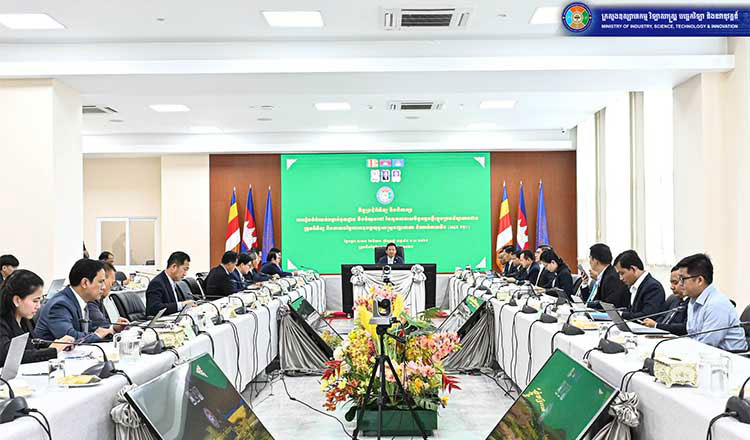 (File Photo) SME meeting. Supplied
#opinion
For much of the past decade, Cambodia’s SME agenda has been characterised by an abundance of good intentions. Successive policy frameworks have recognised that small and medium-sized enterprises are the backbone of the national economy. New institutions have been created. Dedicated financing mechanisms have been established. Entrepreneurship programmes have expanded.
Skills development initiatives have been introduced. Digital government platforms have been developed.
On paper, Cambodia has not lacked policies. What has often been lacking is the ease with which businesses can access them. That is why the directives issued by Prime Minister Hun Manet during the full cabinet meeting on July 24 deserve close attention. His instruction was not to draft another SME masterplan. Nor was it to launch another flagship programme.
Instead, the prime minister issued firm instructions to the ministries to accelerate implementation of one of the most practical reforms currently underway: simplifying SME registration through the CAM-DX digital platform, eliminating unnecessary inter-ministerial procedures, and ensuring that entrepreneurs no longer have to move from ministry to ministry seeking approvals that government agencies themselves should be coordinating. Equally significant was his announcement that he would personally monitor implementation. That changes the conversation. For years, Cambodia’s SME debate has centred on policy design. Today, the challenge is execution.
Cambodia has built the architecture
To be fair, Cambodia has already invested considerable effort in supporting SMEs.
The SME Bank of Cambodia was established to improve access to finance.
The Skills Development Fund (SDF) was launched to help enterprises upgrade the skills of their workforce through grant financing.
Khmer Enterprise has promoted entrepreneurship and innovation.
Multiple ministries have introduced incentives, digital initiatives and business development programmes.
These are not insignificant achievements.
Yet utilisation of several programmes has fallen short of expectations. The reasons are understandable.
The economic landscape has changed dramatically. Many SMEs are no longer planning expansion.
They are trying to survive.
The prolonged effects of the pandemic, weaker domestic demand, subdued property activity, tighter business cash flows, slower tourism recovery, and more recently the disruption of cross-border logistics following the Cambodia–Thailand border conflict have all created additional pressure on businesses. For many enterprises, particularly those dependent on affordable land transport, supply chains have become less predictable and operating costs have risen.
Against such a backdrop, even well-designed support programmes inevitably face lower participation.
But the economy alone does not explain everything. Implementation complexity also matters. Many business owners quietly acknowledge that government assistance exists. Their frustration is not the absence of programmes. It is the effort required to access them.
The cost of friction
Consider the Skills Development Fund. The intention is excellent. Government and development partners have allocated grant funding so SMEs can upgrade the capabilities of their employees.
Yet many training providers and businesses privately admit that application procedures can be demanding, documentation requirements extensive and qualification criteria difficult for smaller enterprises with limited administrative capacity.
As a result, grant disbursement has not always matched the ambitions of the programme or the expectations of development partners who generously contributed funding.
A similar observation can be made regarding access to finance.
Financing facilities exist. However, many smaller enterprises either do not qualify, struggle to prepare the required documentation or simply choose not to apply because they perceive the process as lengthy and uncertain.
The lesson is not that these programmes have failed. Rather, they illustrate an important principle of public administration. A good programme that is difficult to access often delivers less impact than a simpler programme that businesses can actually use.
Registration should open every door
This is where CAM-DX could become transformational. Its greatest value should not simply be digital registration. Its true potential lies in becoming Cambodia’s single business gateway. Once an SME successfully registers through CAM-DX, that registration should automatically unlock access across government.
The same verified information should be recognized by participating ministries and agencies without requiring entrepreneurs to repeatedly complete identical forms or submit the same documents.
Registration should become a trusted digital passport.
One business.
One digital identity.
One government.
Imagine a newly registered SME automatically becoming eligible for referral to SME Bank financing, Skills Development Fund grants, Khmer Enterprise programmes, export promotion initiatives and government supplier registration – without restarting the administrative process every time. That is where digital government begins to create real economic value.
Government should move the file – not the entrepreneur
Perhaps the most important cultural shift is equally simple.
Government files should move.
Citizens should not.
If an entrepreneur approaches the wrong ministry, the ministry should electronically redirect the application to the correct agency rather than instructing the applicant to start again elsewhere.
Businesses should never become messengers carrying documents between government offices. In the digital era, ministries should communicate with one another so entrepreneurs can focus on serving customers instead of navigating bureaucracy.
Measure ministries by outcomes
The prime minister has indicated that implementation will be monitored personally. One practical way to reinforce accountability would be through a monthly public performance dashboard.
Rather than reporting only how many applications were received, ministries could publish indicators such as average registration time, approval rates, pending applications, processing delays and levels of digital integration. Transparency often becomes one of the most effective drivers of administrative improvement. Healthy competition between ministries can accelerate reform without requiring additional legislation.
A temporary SME survival agenda
Current economic conditions also call for a shift in emphasis.
Many SMEs are not asking how to grow rapidly.
They are asking how to remain open.
This may warrant a temporary cross-ministerial SME Survival Task Force charged with identifying operational bottlenecks and resolving them quickly. Instead of commissioning lengthy studies, the task force could focus on practical interventions that can be implemented within 30 days. Such an approach would recognise that preserving viable enterprises today protects employment, supply chains and future tax revenues tomorrow.
Remove yesterday’s rules
Regulations rarely disappear on their own. Every ministry could therefore undertake a simple exercise.
If Cambodia were designing its business regulatory system from scratch today, would every existing licence, permit and approval still be necessary?
Some undoubtedly would. Others may no longer serve their original purpose. Administrative reform is not always about creating something new. Sometimes it means having the confidence to remove what is no longer needed.
Listen to those who live with the rules
Another opportunity is to build upon the Government–Private Sector Forum (G-PSF), which has long served as Cambodia’s principal platform for public–private dialogue. The Cambodia Chamber of Commerce’s recent initiative to formally open the G-PSF’s incredibly high number of 16 sectoral working groups to international chambers of commerce, foreign business associations and multinational companies represents a significant evolution of the process. By creating a structured pathway for international business organisations to channel policy recommendations, operational challenges and investment priorities into the G-PSF – and by establishing a dedicated working group to recommend their permanent integration ahead of the 20th G-PSF Plenary
Forum – the government is signalling that policy formulation is becoming more inclusive, evidence-based and internationally connected.
This expanded G-PSF architecture could become the natural mechanism through which SMEs, domestic business associations and foreign chambers jointly identify regulations that consume time without adding meaningful value, prioritise the most pressing bottlenecks and recommend reforms with clear implementation timelines. The recent introduction of a Management Information System (MIS) to monitor implementation further strengthens accountability by enabling both government and the private sector to track reform progress more systematically.
As Neak Oknha Kith Meng rightly observed, closer collaboration between Cambodian and international business organisations can strengthen policy dialogue and improve the country’s investment environment. Indeed, the integration of foreign chambers of commerce with the Cambodia Chamber of Commerce would provide a new dynamic in creating a more level business playing field by ensuring that both domestic and international business perspectives are heard through a common institutional platform. If this more inclusive G-PSF model translates into quicker resolution of regulatory bottlenecks and stronger policy coordination, visible improvements will build business confidence far more effectively than additional consultation workshops alone.
The latest performance indicators presented ahead of the 20th G-PSF Plenary Forum are equally encouraging. Of the 179 reform measures endorsed at the 19th Plenary Forum, 169 have reportedly been implemented, representing a 94.4% completion rate. Likewise, 174 out of 198 issues raised by the private sector through the G-PSF’s 16 working groups have been resolved, an implementation rate of 87.9%. These figures suggest that the G-PSF is steadily evolving from a forum centred primarily on dialogue into one increasingly focused on measurable delivery and implementation.
Pay SMEs promptly
One opportunity requires no new funding. Government agencies that procure goods and services from SMEs should aim to settle invoices within a predictable timeframe.
Prompt payment strengthens cash flow, reduces financing pressures and supports enterprise survival without creating another subsidy programme. Sometimes the best support government can provide is to simply honour its own payment commitments efficiently.
A window to demonstrate delivery
The years leading into 2027 and 2028 present an important opportunity for Cambodia – not merely because they coincide with major elections, but because they provide sufficient time for reforms initiated today to produce visible improvements in the daily experience of businesses and citizens.
Ultimately, entrepreneurs will not judge success by the number of policies announced, institutions created or speeches delivered.
They will judge government by much simpler questions. Did registering a business become easier? Did ministries work together? Did paperwork disappear? Did support programmes become easier to access? Did government save me time?
Those are the questions that define confidence.
Cambodia has already built much of the institutional architecture needed to support SMEs. The next phase of reform is unlikely to require many new policies. It requires something both simpler and more difficult: making government feel like one government. If ministries can transform the prime minister’s directive into a frictionless experience for businesses, Cambodia will have achieved far more than faster registration.
It will have strengthened confidence, encouraged formalisation, improved competitiveness and demonstrated that good governance is measured not by what government promises, but by what citizens experience. That may prove to be the most important reform of all.
David Van is a veteran Cambodian business strategist and public policy advisor with over 45 years of multinational corporate, trade and investment experience across Southeast Asia.
-Khmer Times-