Japan’s Role in Peace and Development across ASEAN
 The author has lauded Japan’s contributions to development across the ASEAN region. Post AI
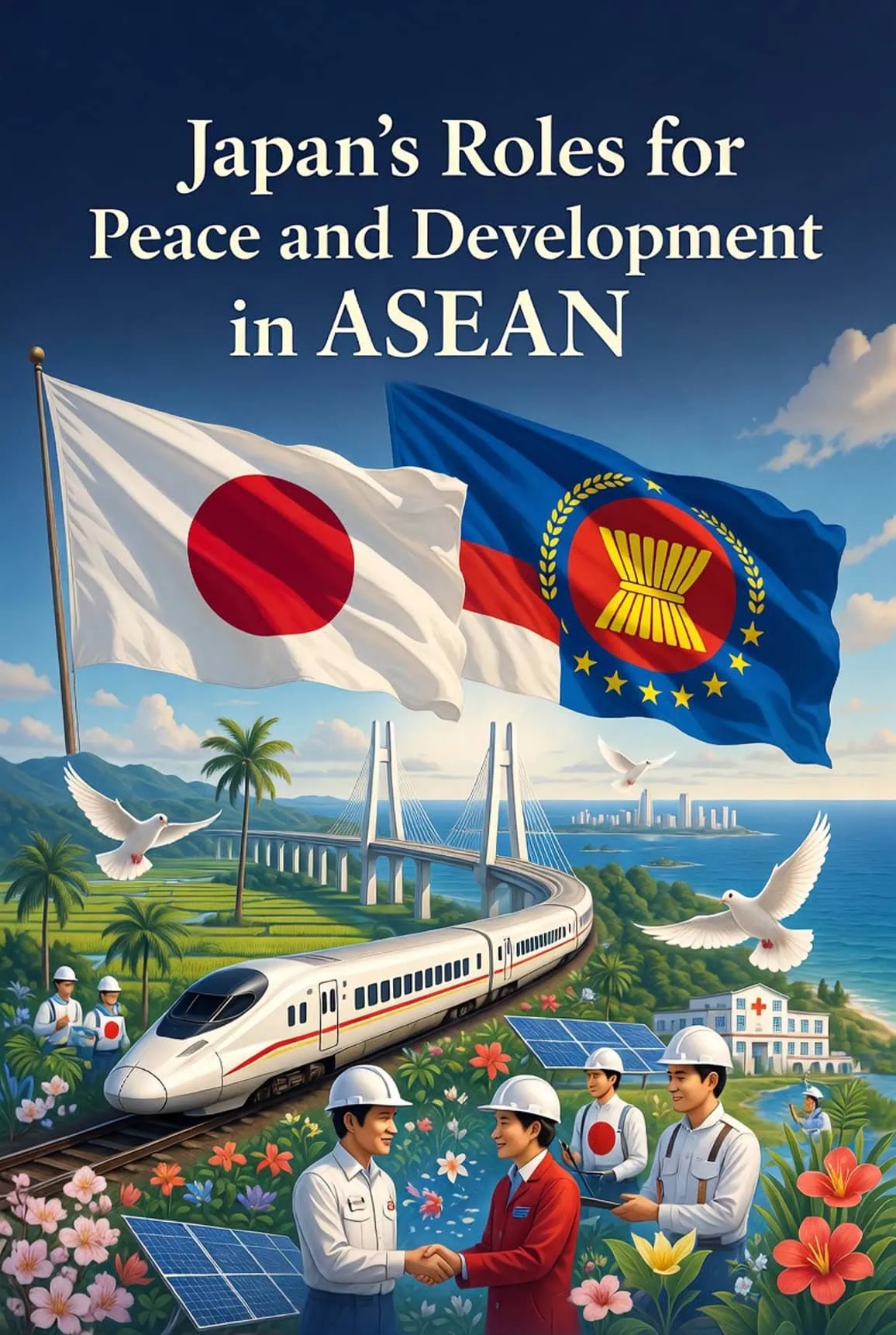
In the dynamic landscape of Southeast Asia, Japan has emerged as one of the most trusted and consistent partners for peace and sustainable development. For decades, through its Official Development Assistance (ODA), technical cooperation via JICA and diplomatic engagement, Japan has supported ASEAN member states in building resilience, fostering connectivity and promoting stability.
As Cambodia continues its journey toward upper-middle-income status, it remains deeply grateful to the US, China, Japan and other international partners whose support has been instrumental in advancing peace and development across the region.
Japan’s engagement in ASEAN is rooted in a philosophy of mutual respect, quality and long-term partnership. Unlike approaches focused solely on rapid investment, Japan emphasises “quality infrastructure”, sustainability, transparency and capacity building — principles endorsed in G20 frameworks and aligned with ASEAN’s own goals for inclusive growth.
Peacebuilding and Post-Conflict Recovery
Japan’s contributions to peace are particularly evident in post-conflict settings. In Cambodia, Japan played a key role in the 1991 Paris Peace Accords and sent its first post-war peacekeeping forces there in 1992. This marked a significant step in Japan’s global peace diplomacy.
Ongoing efforts focus on clearing landmines and unexploded ordnance (UXO). Since 1998, Japan has consistently supported the Cambodian Mine Action Centre (CMAC) with equipment, training, technical assistance and funding. In 2026, Japan provided an $11 million grant for Phase III of the Integrated Mine Clearance and Victim Assistance Project.
These initiatives clear land for agriculture, housing and infrastructure while supporting victims, helping remove the scars of war and enabling safe community development.
Across ASEAN, Japan promotes maritime security, rule of law, and peaceful dispute resolution. It supports capacity building in international law, maritime safety, and counterterrorism. Recent ASEAN-Japan frameworks highlight three pillars: “Heart-to-Heart Partners across Generations”, “Partners for Co-creation of Economy and Society” and “Partners for Peace and Stability”. These emphasise human rights, good governance and conflict prevention.
Japan also contributes to disaster risk reduction and humanitarian response. Through the ASEAN Coordinating Centre for Humanitarian Assistance (AHA Centre), it has helped establish logistics systems, emergency response teams, and health emergency centres, strengthening regional resilience against natural disasters and pandemics.
Driving Sustainable Development and Connectivity
Japan’s development cooperation stands out for its focus on high-quality, durable projects. In Cambodia, recent examples include a $296.2 million ODA loan in 2025 for the Nirodh Water Supply Expansion Project and Phnom Penh City Power Transmission and Distribution System (Phase 3). In 2026, another loan agreement targeted flood protection and drainage improvement in Phnom Penh, addressing climate change impacts and urban sustainability.
These projects deliver clean water, reliable electricity and flood resilience — improving daily lives while supporting economic growth. Japanese assistance also extends to education, health and human resource development through scholarships and technical training, building local capacity for long-term self-reliance.
Region-wide, Japan’s Japan-ASEAN Connectivity Initiative and Partnership for Quality Infrastructure have mobilised billions for roads, ports, railways, power plants and digital infrastructure. From Vietnam’s urban railways to broader Mekong sub-region projects, Japan helps narrow development gaps and enhance connectivity in the Mekong countries (Cambodia, Laos, Myanmar, Thailand and Vietnam).
Mekong-Japan cooperation, established in 2008, focuses on industrial infrastructure, human resource development, green growth and sustainable energy. This framework promotes transparent, environmentally friendly projects that benefit local communities and align with ASEAN’s Master Plan on Connectivity.
Japan’s support extends to public health, digital transformation, green energy, and smart cities. During Covid-19, it contributed significantly to vaccine development and medical supplies. It also backs the ASEAN Centre for Public Health Emergencies.
In education and culture, thousands of ASEAN students have benefited from Japanese scholarships, fostering “heart-to-heart” people-to-people ties.
A Model of Trust and Mutual Benefit
What distinguishes Japan is its approach: non-intrusive, respectful of sovereignty and focused on long-term sustainability.
Japanese projects are renowned for high engineering standards, timely delivery and knowledge transfer. This has earned deep trust across ASEAN, where Japan is often viewed as a reliable partner that helps countries strengthen their own resilience rather than creating dependency.
As ASEAN pursues the ASEAN Community Vision 2025 and beyond, Japan’s support for institutional integration, socio-economic convergence and the rules-based order remains invaluable. In an era of geopolitical tensions, Japan’s emphasis on dialogue, multilateralism and inclusive development helps maintain regional stability.
Cambodia, like its ASEAN neighbours, deeply appreciates the multifaceted support from Japan alongside contributions from the US, China and other partners. Each brings unique strengths: Japan’s quality-focused, peace-oriented model complements others in building a prosperous, stable and connected region.
Looking Ahead
As we move through 2026 and beyond, the ASEAN-Japan partnership is poised to deepen in areas such as digital economy, green transition, supply chain resilience and youth exchange. Japan’s commitment to co-creating a peaceful and prosperous future resonates strongly with ASEAN’s aspirations.
Orkun Japan! From clearing minefields in Cambodia to building resilient infrastructure across Southeast Asia, Japan’s role exemplifies true friendship and partnership. Its quiet dedication, high standards and respect for local ownership continue to light the path for peace and development in ASEAN. Cambodia and the wider region are stronger, safer and more hopeful because of this enduring alliance.
Seun Sam is a policy analyst at the Royal Academy of Cambodia. The views and opinions expressed are his own.
-Phnom Penh Post-