Negotiating Stability: Cambodia–Thailand Border Diplomacy in a Time of Tension
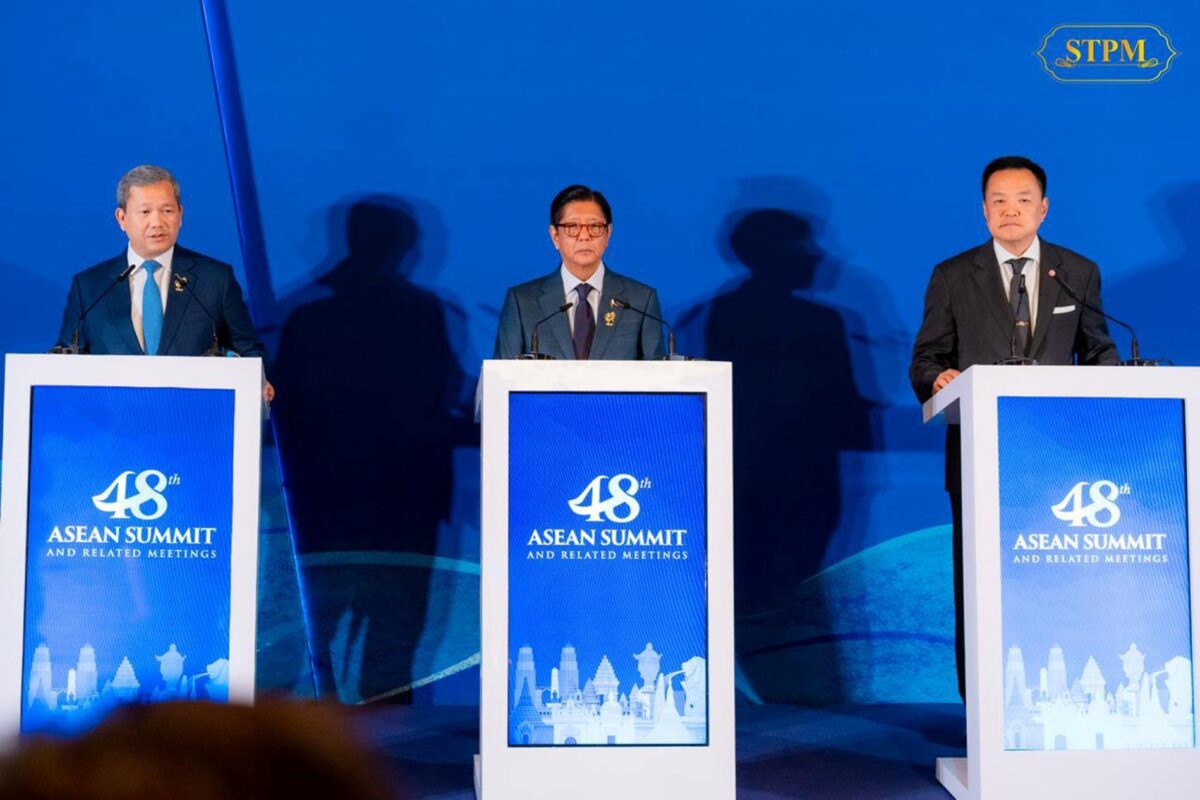 (L-R) Prime Minister Hun Manet, Ferdinand R. Marcos Jr., President of the Philippines, and Thai Prime Minister Anutin Charnvirakul, during their trilateral meeting on May 7. STPM
Cambodia’s negotiating posture must combine diplomatic engagement with verifiable deterrence, ensuring that dialogue does not enable unilateral shifts in the status quo.
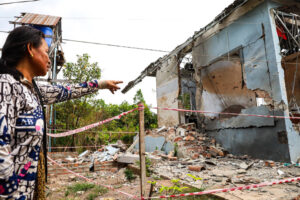
The recent meeting between Cambodian Prime Minister Hun Manet and Thai Prime Minister Anutin Charnvirakul on the sidelines of the 48th ASEAN Summit in Cebu marks a potentially important turning point in Cambodia–Thailand relations. Facilitated by Philippine President Ferdinand Marcos Jr., the dialogue provides a necessary diplomatic off-ramp following the severe border clashes of December 2025.
The extension of the ASEAN Observer Team (AOT) mandate and the resumption of high-level communication are constructive developments for regional stability. Yet diplomacy alone cannot resolve the deeper structural tensions that have historically complicated Cambodia–Thailand border relations. Sustainable de-escalation will require not only political goodwill, but also verifiable restraint, institutional discipline and a rules-based negotiating framework grounded in international law.
For Cambodia, the challenge is not whether to engage diplomatically, but how to do so without allowing negotiations to become vulnerable to unilateral alterations on the ground.
Diplomacy Must Be Matched by Verifiable Conduct
Prime Minister Anutin Charnvirakul’s statements in Cebu — emphasising conflict avoidance and a commitment to moving “step by step in the same direction” — offer a constructive diplomatic opening. If these remarks reflect a genuine institutional shift toward transparent and equitable border management in Bangkok, they would represent a meaningful contribution to ASEAN cohesion and broader regional confidence.
However, successful border diplomacy cannot rest solely on political rhetoric. In international relations, trust is ultimately built through observable conduct rather than declarations of intent.
For confidence to gradually recover, diplomatic engagement must be accompanied by measurable de-escalatory actions. This includes maintaining strict discipline among frontline military units, avoiding unilateral infrastructure expansion in disputed areas and preserving the physical status quo while negotiations are ongoing. These are not merely symbolic expectations; they are essential confidence-building measures that will determine whether negotiations can proceed credibly.
Furthermore, when Bangkok appeals for “sincerity” and mutual trust, the burden of proof inevitably rests on its operational conduct. If Thailand genuinely intends to rebuild bilateral confidence, it must unequivocally halt all civil and military activities within contested border zones and strictly adhere to existing peace declarations and bilateral understandings.
Sincerity in diplomacy cannot coexist with sustained armed posturing. Therefore, an immediate and visible reduction of Thai military demonstrations and forward-leaning deployments along sensitive frontier areas are a necessary prerequisite for credible negotiations. Until Thailand’s calls for trust are substantiated by a verifiable freeze on unilateral border activities, such rhetoric will remain difficult to reconcile with genuine diplomatic engagement.
From Phnom Penh’s perspective, the durability of the current diplomatic track will depend largely on whether these commitments are consistently reflected on the ground.
Preventing ‘Fait Accompli’ Dynamics
Prime Minister Hun Manet’s explicit rejection of boundaries determined through fait accompli addresses one of the central vulnerabilities in prolonged territorial disputes.
Historically, extended demarcation processes can become strategically problematic when one side gradually alters realities on the ground while formal negotiations continue. Such incremental changes — whether through infrastructure development, troop positioning or administrative activity — can create pressure to normalize new facts before final agreements are reached. This risk is particularly relevant in disputes managed through long-term bilateral mechanisms such as the Joint Boundary Commission (JBC), where technical negotiations often proceed slowly and require sustained political consensus.
In this context, Cambodia’s support for a strengthened ASEAN Observer Team is strategically prudent. By introducing an element of regional oversight and independent verification, Phnom Penh reduces the likelihood that unilateral actions can proceed without scrutiny. The involvement of ASEAN mechanisms also reinforces the principle that border stability is not merely a bilateral concern, but one linked to broader regional security and institutional credibility.
The Persistent Influence of Thai Domestic Politics
Any credible analysis of Cambodia–Thailand border tensions must also account for the volatility of Thai domestic politics and its periodic spillover into foreign policy.
The 2008–2011 Preah Vihear crisis remains a significant historical precedent. Although the International Court of Justice ruled in Cambodia’s favour in 1962 — and later reaffirmed key aspects of that ruling in 2013 — the issue repeatedly became entangled in Thailand’s domestic political struggles. Competing factions in Bangkok mobilised nationalist sentiment around the temple dispute, contributing to prolonged military friction despite ongoing diplomatic engagement.
This historical pattern underscores a critical strategic reality: agreements reached at Thailand’s executive level do not always guarantee long-term policy continuity. Cambodian policymakers must therefore approach negotiations with a clear understanding that domestic political pressures inside Thailand can reshape or constrain bilateral commitments. Diplomatic engagement remains necessary, but Cambodia’s negotiating posture must be resilient enough to withstand potential shifts in Bangkok’s internal political landscape.
Public Expectations and Sovereign Credibility in Cambodia
Domestic political dynamics are equally important on the Cambodian side.
For many Cambodians, border negotiations are not viewed simply as technical or bureaucratic exercises. They are deeply connected to questions of national identity, historical memory and sovereignty. Public sensitivity surrounding territorial issues has been shaped by decades of historical disputes, uneven enforcement mechanisms and recurring border incidents.
As a result, expectations surrounding future JBC negotiations are exceptionally high and politically sensitive. The Cambodian public expects transparency regarding the terms of any settlement and demands a firm defence of territorial integrity. For the Hun Manet administration, securing a credible and legally defensible outcome is therefore not only a foreign policy objective, but also a matter of domestic political legitimacy. Any perception that negotiations permit unilateral territorial disadvantage would likely generate substantial public scrutiny.
This reality reinforces the importance of ensuring that future agreements are transparent, verifiable, and firmly anchored within recognized legal frameworks.
The Maritime Dimension and the Role of International Law
The challenges along the land border are mirrored by unresolved maritime claims in the Gulf of Thailand, where overlapping interests carry significant economic and strategic implications.
Thailand’s withdrawal from the 2001 Memorandum of Understanding (MoU) marked a significant departure from the previous bilateral framework governing maritime negotiations. In response, Cambodia’s decision to initiate compulsory conciliation proceedings under the UN Convention on the Law of the Sea (UNCLOS) represents a measured application of international legal mechanisms.
For smaller and medium-sized states, international law often serves as an essential equalising instrument in disputes involving asymmetrical leverage. By shifting the maritime issue into a formalised multilateral legal framework, Cambodia strengthens the legitimacy of its position while reducing the risks associated with purely power-based negotiations.
Importantly, the use of UNCLOS mechanisms should not be interpreted as a rejection of diplomacy. Rather, it reflects an effort to ensure that negotiations proceed within internationally recognised rules and procedures.
Preparing for the Joint Boundary Committee
Assuming bilateral mechanisms continue to stabilise, Cambodia must now focus on technical and institutional preparedness for future JBC negotiations. Confidence in diplomacy requires entering negotiations comprehensively prepared. This preparation must extend beyond political messaging and include rigorous legal, cartographic and administrative coordination.
Several priorities are particularly important:
Archival and Legal Readiness: Cambodia must maintain comprehensive documentation and robust legal interpretations grounded in the Franco-Siamese treaties of 1904 and 1907, as well as subsequent international legal decisions and mapping records.
Institutional Coordination: Effective synchronisation between central authorities, provincial administrations and frontline military units will be essential to prevent localised incidents from undermining broader diplomatic efforts.
Operational Discipline: Maintaining clear command structures and disciplined rules of engagement along sensitive border sectors will remain critical for preventing escalation during negotiations.
Technical preparedness may lack the visibility of summit diplomacy, but it often determines the long-term effectiveness of border negotiations.
A Balanced but Firm Strategic Approach
As both governments move toward renewed diplomatic engagement, Cambodia’s broader strategic framework should remain balanced, disciplined, and grounded in law. Three principles are particularly important:
1. Tie Trust to Verifiable Conduct: Constructive rhetoric from all sides should be welcomed, but confidence can only deepen through observable restraint and preservation of the physical status quo.
2. Maintain Multilateral Observation: ASEAN’s active involvement provides valuable transparency and reduces the likelihood of unilateral escalation.
3. Anchor Negotiations in Law: All negotiations — whether concerning land boundaries through the JBC or maritime claims under UNCLOS — must remain firmly tethered to recognised international legal frameworks.
Ultimately, a peaceful and cooperative border is clearly in the economic and security interests of both Cambodia and Thailand. Neither country benefits from prolonged instability, militarised nationalism or recurring cycles of confrontation.
Achieving durable stability, however, will require more than diplomatic symbolism or temporary de-escalation. It will require sustained political discipline, credible restraint, institutional preparedness and a shared commitment to resolving disputes through law rather than unilateral pressure.
For Cambodia, the appropriate path forward is neither confrontation nor complacency. It is a strategy that combines active diplomacy with credible deterrence — firmly grounded in historical treaties, public mandate, international law and an operational posture capable of discouraging unilateral alterations to the status quo.
Panhavuth Long is founder and attorney at law at Pan & Associates Lawfirm. The views and opinions expressed are his own.