In a Divided World, Cambodia Chooses Engagement for Peace
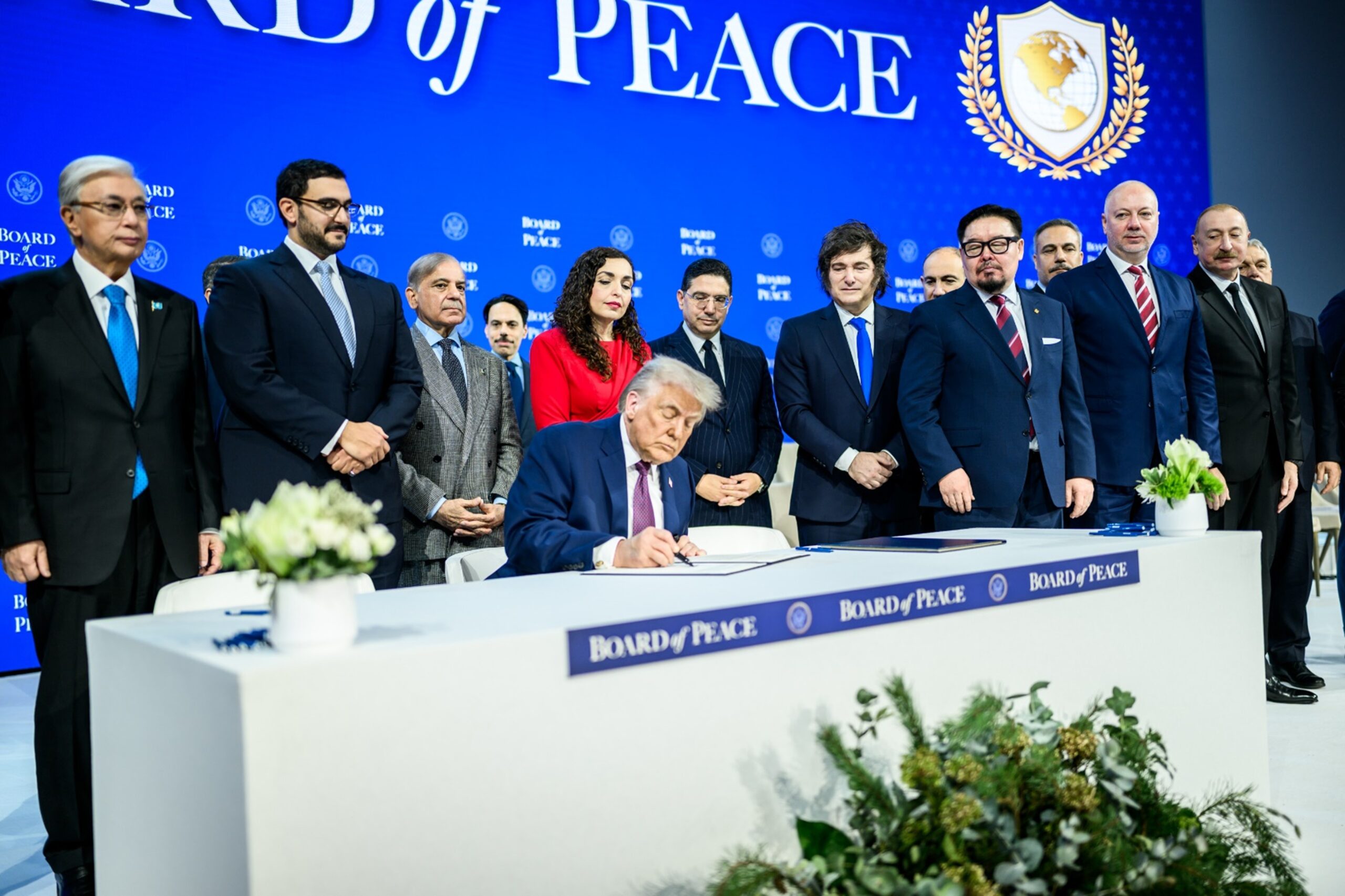 IMAGE: US President Donald Trump ratified the Board of Peace on January 22, 2026. White House
#Opinion
From a legal and institutional perspective, Cambodia’s decision to join the Trump-initiated Board of Peace warrants careful and unemotional assessment. Such decisions should be guided not by symbolism or short-term diplomatic considerations, but by institutional soundness, legal clarity and long-term national interest.
Concerns and Structural Limitations
The first concern lies in the institutional uncertainty surrounding the board itself. Unlike established multilateral bodies such as the UN, ASEAN mechanisms or other treaty-based international organisations, the Board of Peace is not founded on a multilateral convention ratified by states. Its legal status, governance framework, decision-making authority, funding mechanisms and accountability standards remain insufficiently defined. From an international law standpoint, this raises questions regarding predictability, continuity and enforceability.
Second, the initiative’s personalized character presents inherent institutional risks. An organisation closely associated with the authority and political standing of a single individual, however influential, lacks the structural insulation typically required to withstand domestic political transitions. International legal practice generally favours institutions designed to endure beyond electoral cycles and changes in leadership.
Third, geopolitical perception must be carefully considered. In an increasingly polarised international environment, participation in initiatives perceived — rightly or wrongly — as aligned with a particular major power may invite misinterpretation. Cambodia’s foreign policy has long emphasised balance, neutrality and ASEAN centrality. Preserving that posture remains essential to maintaining strategic autonomy.
Fourth, financial and ethical considerations cannot be ignored. Public reports linking certain forms of membership to substantial financial contributions create potential reputational exposure. Even the perception that influence or access may be acquired through payment is inconsistent with principles of good governance and may attract unnecessary scrutiny under international compliance standards.
Finally, the global peace and dispute-resolution architecture is already under strain. The proliferation of new mechanisms risks institutional fragmentation, particularly where mandates overlap without clear coordination.
A Complementary, Not Substitutive, Approach
These concerns justify caution, but they do not justify disengagement. International law does not preclude informal, ad hoc or parallel mechanisms. Historical practice demonstrates that such initiatives have at times facilitated dialogue and confidence-building where formal institutions encountered political deadlock or procedural limitations.
Properly understood, the Board of Peace should not be viewed as a substitute for the UN or existing multilateral frameworks, but as a potential complement. For Cambodia, limited engagement offers an opportunity to contribute constructively to global peace efforts, drawing on its practical experience in post-conflict reconstruction, reconciliation and political stabilisation. The question, therefore, is not whether Cambodia should engage, but under what conditions.
Membership Without Permanence
From a legal and policy standpoint, the most prudent course of action is engagement absent permanent commitment. Non-permanent membership enables Cambodia to participate in good faith, to evaluate the board’s institutional governance and operational effectiveness over time and to contribute to its objectives, while mitigating long-term financial, legal and reputational exposure. Such an approach preserves strategic discretion and accords with the principle of due diligence governing the conduct of international relations.
Permanent membership, by contrast, would imply endorsement of the institution’s durability, governance quality and strategic direction — elements that have yet to be sufficiently tested. In law, commitment should follow demonstrated clarity and performance, not precede them.
Cambodia has now made its position explicit. Prime Minister Hun Manet stated that Cambodia has decided to join the Board of Peace as a founding member, clarifying that the Kingdom is not required to make any financial contribution and that the widely reported $1 billion payment applies exclusively to permanent members.
Addressing public concerns, he emphasised that Cambodia’s participation as a founding member for a three-year term does not require any payment.
This clarification is deliberate and legally significant. Participation as a member — but not a permanent member — allows Cambodia to honour the board’s charter, demonstrate goodwill and contribute responsibly to international peace efforts, while safeguarding its sovereignty, neutrality and long-term national interests.
A Commitment to Peace
Cambodia’s engagement should be understood not as a transactional arrangement or a signal of permanent alignment, but as a principled contribution to peace. At a time when conflicts persist across multiple regions and existing mechanisms face increasing limitations, the international community benefits from cooperative efforts grounded in restraint, proportionality and responsibility.
Cambodia’s approach also reflects principles long associated with ASEAN and many states of the Global South: respect for sovereignty, non-alignment and incremental cooperation. In an international system increasingly marked by polarisation, such calibrated engagement reinforces the value of inclusivity without overcommitment. It demonstrates that smaller and medium-sized states can contribute meaningfully to peace initiatives while maintaining independence and strategic balance.
Should the Board of Peace, over time, demonstrate transparency, effectiveness and genuine complementarity with existing international frameworks, Cambodia retains the sovereign right to reconsider its level of engagement. Until then, membership without permanence remains the most prudent, defensible and legally sound course.
In international affairs, as in law, measured engagement protects sovereignty. Cambodia’s decision reflects responsible state conduct — and a clear commitment to peace at a moment when the world urgently needs it.
Panhavuth Long is founder and attorney-at-law with PAN & Associates Law Firm. The views and opinions expressed are his own.
-Phnom Penh Post-