Change and Its Impact on Human Behavior
 Change and Its Impact on Human Behavior
#opinion
Climate change is often discussed in terms of rising temperatures, melting glaciers, stronger storms, floods, droughts, and sea-level rise. Yet beyond the visible environmental destruction lies another profound transformation that is increasingly shaping the future of humanity: the impact of climate change on human behavior.
As climate conditions worsen across the globe, climate change is no longer affecting only ecosystems and economies. It is influencing how people think, live, interact, consume, migrate, work, and respond to one another. In many ways, climate change is becoming a powerful force that reshapes human behavior at both the individual and societal levels.
Throughout history, human civilization developed around stable environmental conditions. Communities formed near rivers, agricultural systems relied on predictable seasons, and economies expanded through access to natural resources. Today, climate instability is disrupting that balance. Extreme weather events, food insecurity, water scarcity, pollution, and environmental degradation are placing growing psychological, economic, and social pressure on populations worldwide.
One of the most visible behavioral impacts of climate change is migration. As droughts intensify, farmland becomes less productive, and coastal areas face flooding and sea-level rise, millions of people are being forced to leave their homes in search of safety and economic opportunity. Climate-related migration is increasing across many regions, creating new social and political pressures in urban areas and neighboring countries.
Climate change is also influencing patterns of consumption and daily lifestyle choices. In many societies, growing awareness of environmental risks has encouraged changes in energy use, transportation, waste management, and consumer behavior. More people are reducing plastic use, conserving water, adopting renewable energy, and supporting sustainable products. Governments and businesses are similarly adapting to changing public expectations regarding environmental responsibility.
At the same time, climate change can also produce negative behavioral consequences when environmental stress becomes severe.
Competition over shrinking natural resources such as water, food, and land can intensify social tensions and conflict. Economic hardship caused by crop failures, disasters, or rising living costs may increase inequality, frustration, and instability. In vulnerable regions, environmental stress can contribute to crime, displacement, and political unrest.
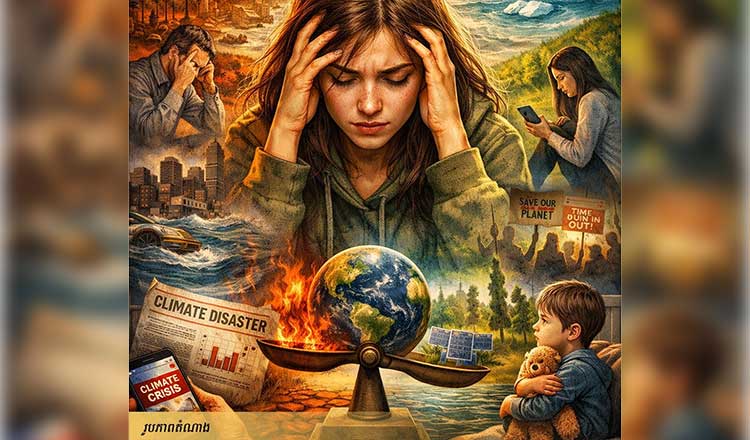
The psychological impacts are equally significant. Scientists and health experts increasingly warn about the rise of climate anxiety, particularly among young people who fear an uncertain future. Repeated exposure to natural disasters, extreme heat, pollution, and environmental loss can affect mental health, emotional stability, and social behavior. Communities recovering from floods, fires, or storms often experience trauma, stress, and long-term emotional hardship.
Climate change is also changing how governments and societies prioritize development. Nations are increasingly integrating environmental protection into economic planning, urban design, agriculture, transportation, and public health policies. Concepts such as green economy, sustainable development, renewable energy, and circular production systems are becoming central to policy discussions worldwide.
Importantly, climate change is influencing human morality and collective responsibility. It is forcing humanity to reconsider its relationship with nature. For decades, industrial growth and excessive consumption often prioritized short-term economic gain over environmental sustainability. Today, climate change serves as a global reminder that human actions carry consequences not only for the environment, but also for future generations.
Young people around the world are becoming more environmentally conscious and socially active.
-Phnom Penh Post-