The Burden of Patience: Why Cambodia Can No Longer Ignore the Pattern of Border Encroachment
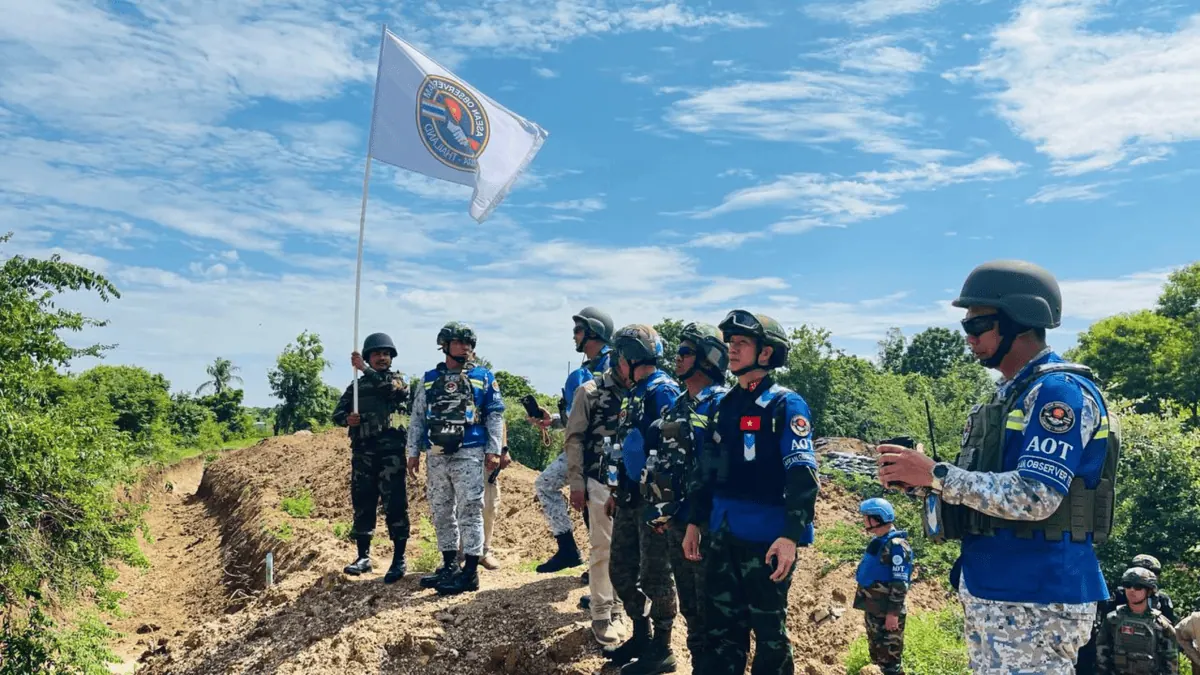 IMAGE: Members of the ASEAN Observer Team (AOT) observe Prey Chan village, in Banteay Meanchey province, on June 23. Defence ministry
#Opinion
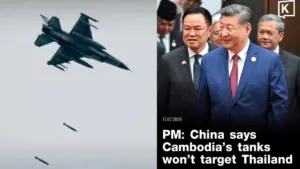
When artillery fire and F-16 airstrikes struck the Cambodia–Thailand border in the summer of 2025, much of the international community described the violence as another “border escalation”. For many Cambodians, however, it represented something far deeper: the latest chapter in what they believe has been a long and recurring pattern of territorial encroachment and military pressure.
After generations of recurring border tensions, many Cambodians believe the time has come for the international community not only to observe these incidents, but also to recognise the human cost borne by those living along the frontier.
Today, many Cambodians ask a simple but profound question: How much longer must we be expected to exercise patience?
The current crisis cannot be understood by examining the events of 2025 in isolation. For many Cambodian citizens, the border issue is not simply the result of administrative mistakes or differing interpretations of historical maps. Rather, it reflects what they perceive as a persistent pattern of challenges to Cambodia’s territorial integrity. When villages are damaged, families are displaced and lives are lost, calls for continued restraint alone offer little comfort to those directly affected.
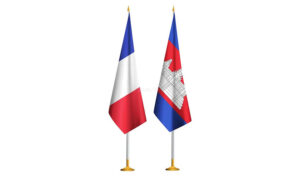
Cambodia’s sovereignty is rooted in more than a thousand years of history. The Khmer Empire established one of Southeast Asia’s great civilisations, and that historical legacy remains central to Cambodia’s national identity. During the colonial period, the Franco-Siamese Treaties of 1904 and 1907 established internationally recognised boundaries that continue to serve as important legal references.
International law has also repeatedly affirmed Cambodia’s sovereignty over the Temple of Preah Vihear. In both 1962 and 2013, the International Court of Justice unequivocally ruled in Cambodia’s favour. Those judgments remain among the clearest legal determinations concerning the border and reaffirm the principle that disputes should be resolved through law rather than force.
Yet legal decisions alone have not always prevented renewed tensions. For many Cambodians, repeated military incidents have created the perception that established international legal rulings have not been fully respected in practice.
Diplomatic patience is an important principle, and Cambodia has consistently demonstrated its commitment to peaceful solutions. However, patience should never be mistaken for acceptance of recurring violations of sovereignty. When border incidents continue to occur over many years, confidence in diplomacy inevitably becomes more difficult to sustain.
The events of 2025 therefore represented more than a military confrontation. They highlighted the continuing vulnerability felt by Cambodian communities living near the border and reinforced concerns that periodic violence could become an accepted feature of regional relations unless more effective preventive measures are taken.
The Cambodian people do not seek conflict. We seek certainty. We seek security. Above all, we seek the ability to live peacefully within internationally recognised borders without fear that another confrontation may erupt.
History should never become a justification for perpetual hostility. Instead, it should remind us that unresolved disputes carry lasting human consequences. Peace requires not only dialogue but also consistent respect for international law, territorial integrity, and the sovereign equality of nations.
Cambodia is not asking the international community to take sides against any nation. Rather, we ask the world to stand on the side of international law, peaceful dispute resolution and the protection of internationally recognised borders. We respectfully call upon the international community, regional partners and international institutions to continue supporting peaceful solutions, encourage respect for the judgments of international courts, and bear witness to the realities experienced by the Cambodian people.
For Cambodia, this is not merely a question of border management. It is a question of sovereignty, national dignity and the fundamental right of every nation — large or small — to live in peace, free from fear and free from coercion.
Tesh Chanthorn is a Cambodian citizen who longs for peace. The views and opinions expressed are his own.
-Phnom Penh Post-