Thai ‘deployment line’ claims challenged; Cambodia insists sovereign territory occupied
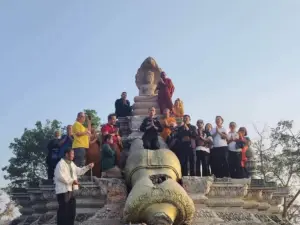
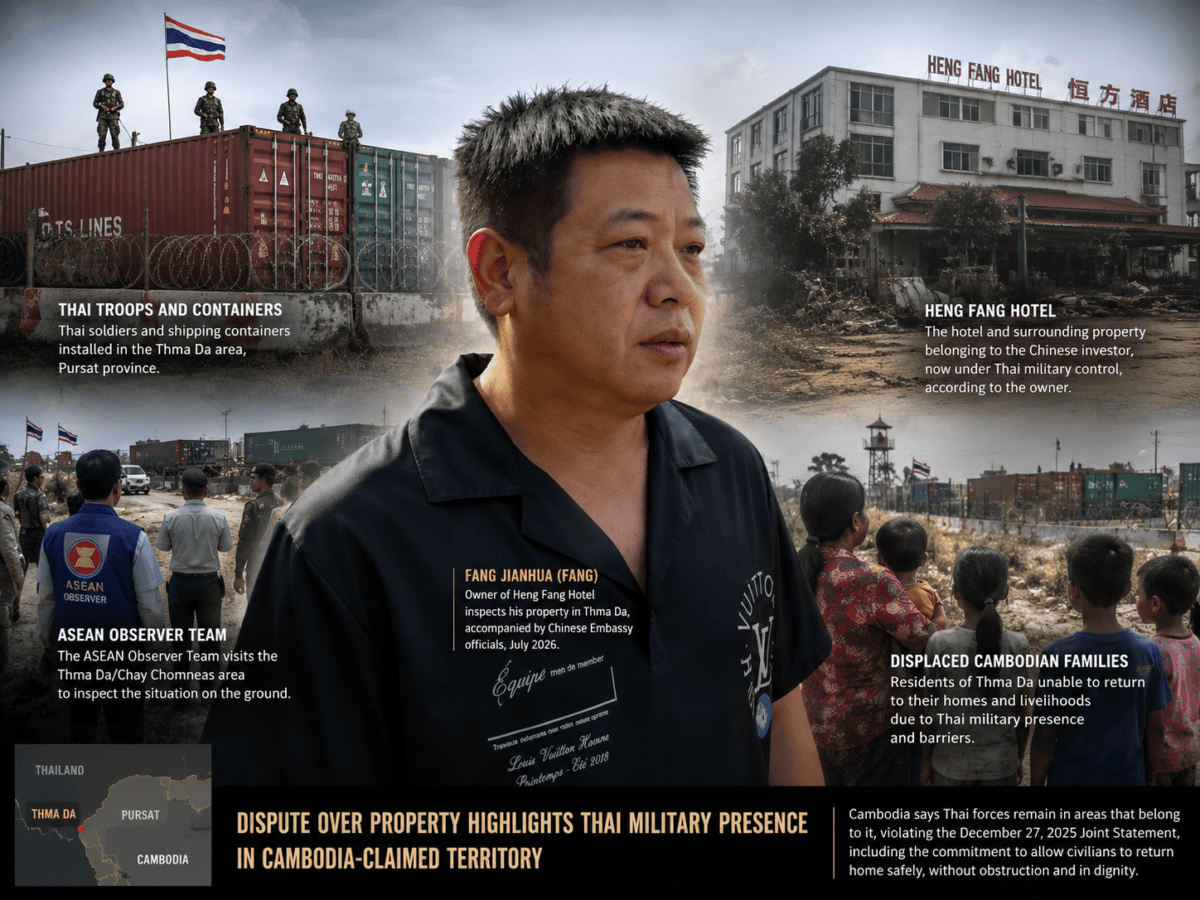
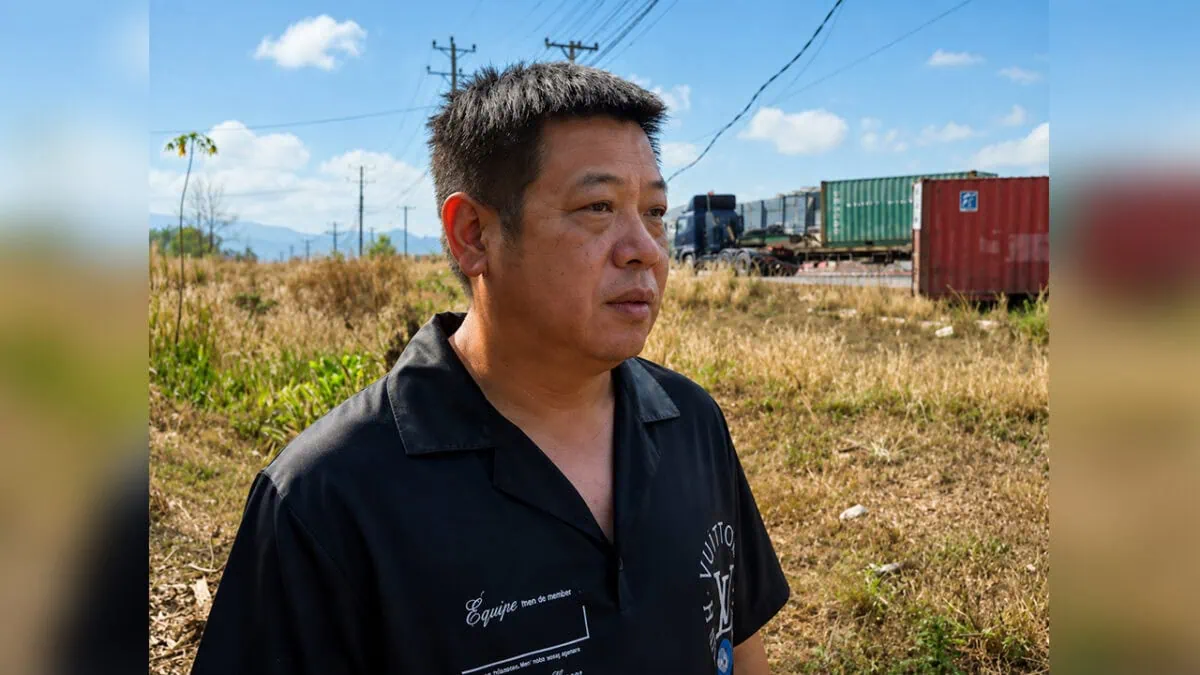 The Chinese owner of Heng Fang Hotel has accused Thai troops of occupying his Cambodian property. Supplied
Thai attempts to justify a continued military presence at the Thma Da border area by invoking a post-conflict “Troop Deployment Line” has come under renewed scrutiny after a Chinese hotel owner accused Thai soldiers of taking control of his Cambodian property. Phnom Penh maintains its position that Thai forces are illegally occupying its territory and that boundaries cannot be altered by force.
The dispute surrounding the Heng Fang Hotel, in Thma Da commune, Veal Veng district, Pursat province, has brought the wider territorial issue into sharper focus after Thailand rejected allegations that its forces had seized the Chinese investor’s land and property.
On August 19, Air Chief Marshal Prapas Sornchaidee, director of Thailand’s Joint Information Center (JIC) on the Thailand-Cambodia situation, told Thai media that ownership of private property should be treated separately from questions of troop deployment and sovereignty.
According to Thai outlet The Nation, Prapas said the ownership, jurisdiction and status of properties in the area would need to be established under bilateral border arrangements.
“These matters must be discussed through documents, coordinates, evidence and intergovernmental mechanisms,” he said.
“Cameras, public pressure or the use of the word ‘invasion’ cannot determine a border,” he added.
Cambodia’s position is that precisely such documentary and legal instruments – particularly the 1904 Franco-Siamese Convention, the 1907 Treaty and the 1:200,000 maps produced by the boundary delimitation commissions – place Thma Da and other affected areas inside Cambodian sovereign territory.
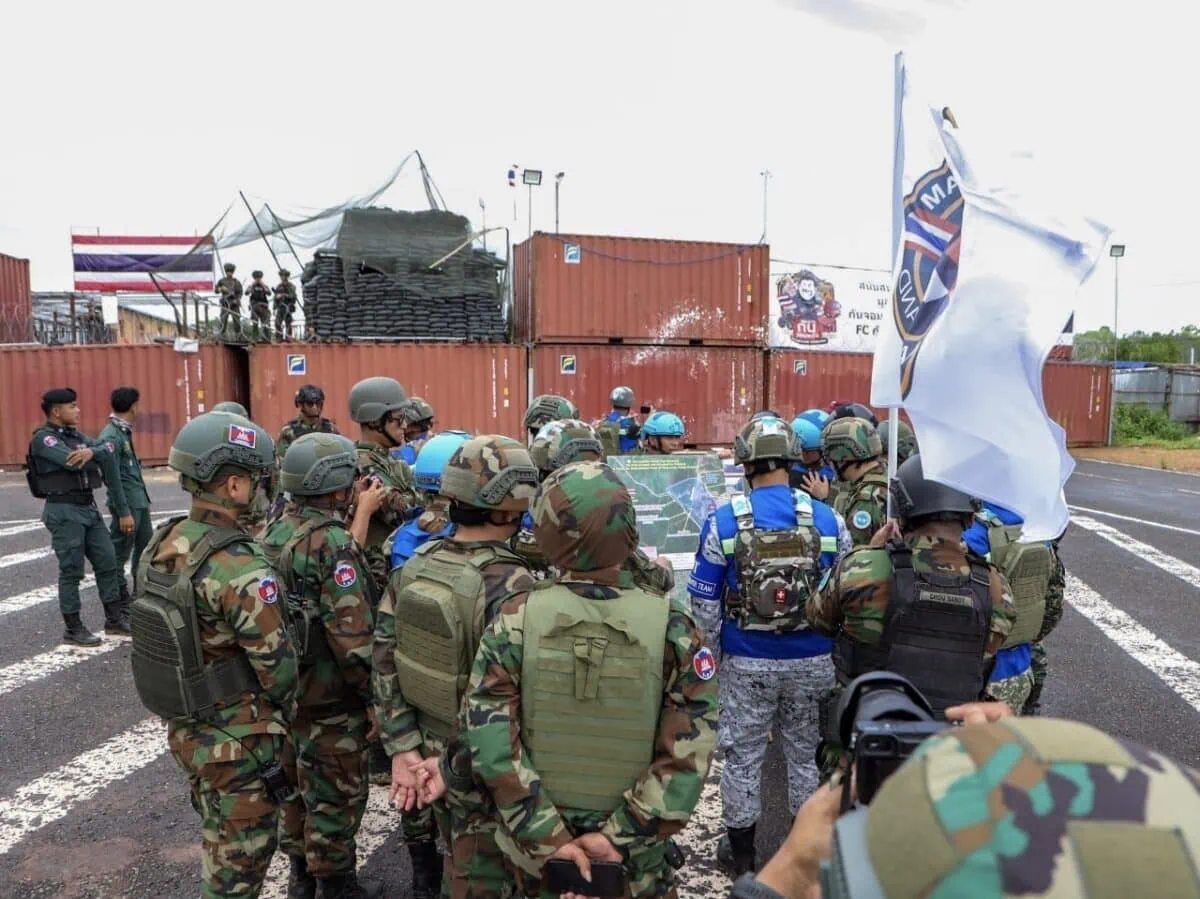
The Cambodian Ministry of Foreign Affairs and International Cooperation noted on August 10 that Thai forces had constructed fortifications near the Thma Da International Border Checkpoint, describing the activity as an encroachment on Cambodian territory.
The ministry said the affected areas are “situated entirely within Cambodian sovereign territory” as defined and delimited by the 1:200,000 maps produced pursuant to the 1904 convention and 1907 treaty.
It characterised Thailand’s continued activities as attempts to consolidate an “unlawful occupation” and said they violated Thailand’s obligations under existing bilateral treaties and agreements governing the land boundary.
Cambodia urged Thailand to cease the activities immediately and reiterated that it would not accept “any boundary line or territorial claim unilaterally asserted by Thailand”, stressing its longstanding position that international borders “must not be changed by force”.
Hotel dispute exposes larger territorial question
The latest Thai response followed reports that the Chinese owner of Heng Fang Hotel escorted officials from the Chinese embassy in Cambodia to inspect the affected area and called for the return of his property.
Prapas cautioned against interpreting the presence of Chinese diplomats as Beijing’s endorsement of the investor’s territorial claims.
“Investors have the right to make claims, but no one has the right to turn an allegation into fact, and no one can change a border through social-media posts,” he was quoted as saying by The Nation.
The investor’s allegations, however, are not new.
In February, Heng Fang, the owner of the eponymous hotel, publicly alleged that Thai soldiers had surrounded his hotel with barbed wire and removed valuable property after he and his staff fled the fighting in December 2025.
Fang said he evacuated after hearing artillery fire near the hotel on December 9. When he attempted to return later, he said he saw Thai soldiers removing valuable items from his business.
When he entered the property after the December 27 ceasefire, Fang claimed computers, televisions, refrigerators, motorcycles, washing machines and valuables kept in a safe had disappeared.
He described what he witnessed as “robbery”, according to a video shared by Cambodian media. Thailand rejected allegations that its forces invaded or looted the property.
‘Troop Deployment Line’ versus international boundary
Prapas said Thailand’s forces had not advanced since the December 27, 2025 ceasefire and were maintaining positions in accordance with what Thai authorities call the “Troop Deployment Line”.
“The position of the Thai military is equally clear. We have not advanced. We are maintaining our deployment in accordance with the agreement,” he told Thai media.
Thailand argues that maintaining control along the deployment line should not be interpreted as invasion or occupation and says disagreements over troop locations should be addressed through agreed bilateral mechanisms.
However, the December 27 Joint Statement that accompanied the ceasefire makes a crucial distinction between the temporary location of troops and the international boundary.
While Point 2 requires both countries to “maintain current troop deployments without further movement”, Point 3 expressly states that all arrangements under the Joint Statement are “without prejudice to the border demarcation and international boundary between the two countries”.
Point 4 under Section I, “De-escalation Measures”, of the Joint Statement of the 3rd Special General Border Committee (GBC), commits both sides to allowing civilians affected by the border conflict to return home.
“Both sides agree to allow civilians residing in the affected border areas to return at the earliest, without obstruction and in safety and dignity, to their homes and normal livelihoods in areas within their own side,” it states.
The text therefore freezes military movements as a de-escalation measure; it does not state that the positions occupied by troops on December 27 constitute a newly recognised international border.
The statement also calls for the Joint Boundary Commission to resume survey and demarcation work in accordance with existing agreements.
Notably, the expression “Troop Deployment Line”, now repeatedly invoked by Thai authorities, does not appear in the published text of the Joint Statement. The agreement refers instead to maintaining “current troop deployments” without further movement.
Thailand’s own media reporting at the time reflected that wording. On December 27, it reported Thai Defence Minister Gen Natthaphon Narkphanit as saying both countries were required to maintain existing troop levels with “no movement, no reinforcements and no renewed attacks or provocations”.
This distinction is central to Cambodia’s case: freezing troops where they stood for the purpose of stopping fighting did not transfer sovereignty over the land beneath those troops.
Cambodia says Thma Da occupation predates latest dispute
Cambodia has repeatedly protested the Thai presence in Thma Da.
On June 17, Thai forces raised Thai national flags inside Cambodian territory around the Thma Da International Border Checkpoint, according to a June 19 protest from the Cambodian foreign ministry.
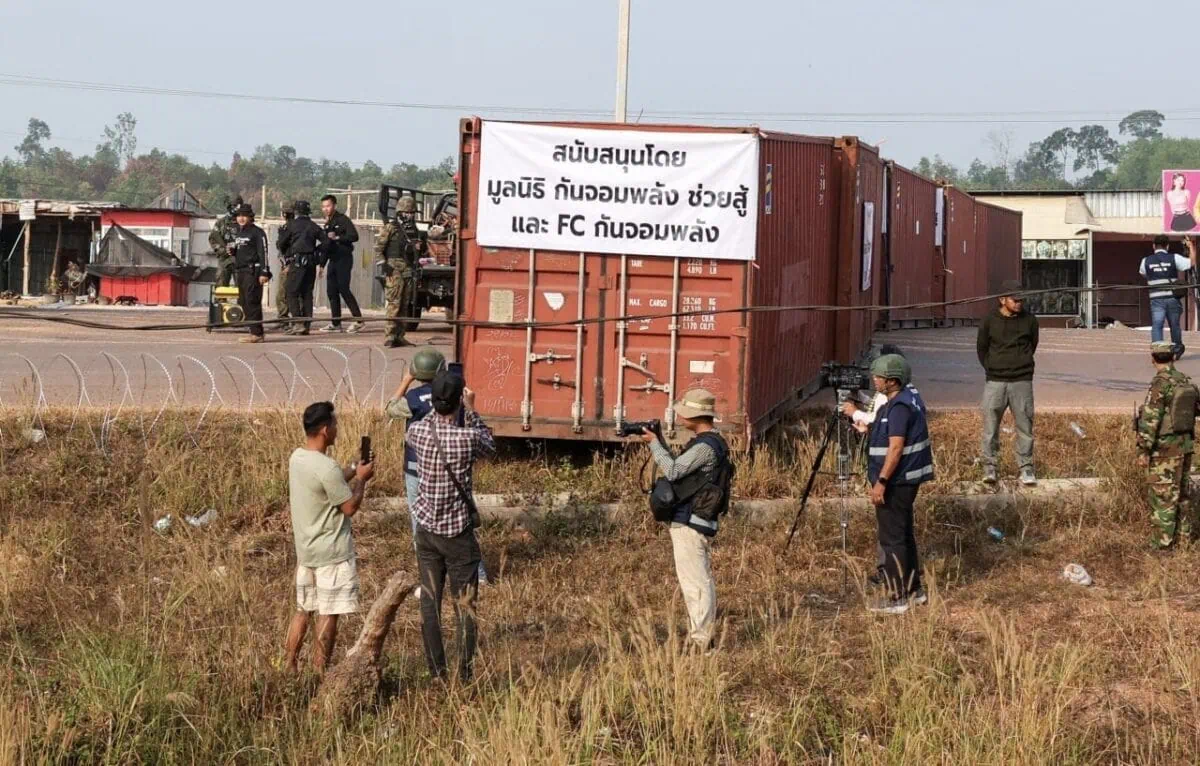
By July, Cambodian authorities said Thai forces had placed shipping containers and razor wire barricades in the Thma Da area of Sangkum Thmei village and raised the Thai flag.
Pursat provincial authorities said shipping containers and razor wire barricades had been in place Checkpoint 56 since early January, occupying approximately 70 hectares of Cambodian territory, including civilian homes, farmland and commercial property.
Cambodian journalists who visited Thma Da on July 9 documented the shipping container and razor wire barricades.
Cambodia described the actions as attempts to create a fait accompli – changing realities on the ground and then using those realities to support a territorial claim – and said it would “never recognise any unilateral alteration of the border through the use of force”.
The government’s concerns stretch back to the immediate aftermath of the December fighting.
On January 3, foreign ministry acting spokesman Chann Rotana said Thai armed forces had “forcibly” entered and placed under their effective control multiple areas that Cambodia considers unequivocally Cambodian territory in Banteay Meanchey, Pursat, Preah Vihear and Oddar Meanchey provinces.
Among the areas he specifically identified was the Thma Da International Border Checkpoint in Pursat province.
He said Cambodia had lodged its “strongest protest” yet over Thailand’s continued presence and military operations, while repeating that Phnom Penh would seek a peaceful resolution under international law and would not accept borders being changed through force.
Neth Pheaktra: Military presence remains illegal
Minister of Information Neth Pheaktra has also challenged Thailand’s description of the post-ceasefire situation, saying the continuing inability of Cambodian civilians to return home illustrates the consequences of Thai military control.
On August 6, Pheaktra noted that more than 20,000 Cambodians remained unable to return home more than seven months after the December ceasefire, despite the Joint Statement’s commitment to facilitate the safe and dignified return of civilians.
According to the minister, Thai forces maintain an “illegal presence” on Cambodian territory following armed attacks against Cambodia’s sovereignty and territorial integrity.
He rejected Thailand’s reliance on a unilateral 1:50,000 map, saying it had no legal standing against the boundaries Cambodia says are established by the 1904 convention, 1907 treaty and 1:200,000 maps.
A day later, Pheaktra said physical evidence of the fighting could not be erased by statements denying what had occurred.
He pointed to bomb craters from air strikes involving F-16 and Gripen aircraft, remnants of cluster munitions, damage to the Preah Vihear and Ta Krabei temples, destroyed civilian homes and civilian deaths and injuries.
The minister’s argument was that such physical evidence “speaks louder” than denials over what took place on Cambodian territory.
Ceasefire did not determine sovereignty
The December 27 agreement itself provides an important legal and diplomatic distinction in the competing narratives.
Thailand is entitled under the ceasefire to maintain the military deployment that existed when the agreement took effect, pending resolution through agreed mechanisms.
But the same agreement explicitly says those arrangements are without prejudice to the international boundary.
That means the ceasefire’s freeze on troop movements cannot, by itself, settle sovereignty over Thma Da or transform a military deployment line into an international border.
Cambodia maintains that the relevant boundary must instead be determined according to the existing treaties, maps and bilateral demarcation framework.
The latest dispute over the Heng Fang Hotel provides a concrete test of the two competing positions.
Thailand says coordinates, documents and evidence – rather than videos and public accusations – must establish ownership and jurisdiction.
Cambodia says the same documentary process already rests on the 1904 and 1907 instruments and the 1:200,000 maps, while insisting that the December ceasefire cannot legitimise territory obtained or held through military force.
For Fang, meanwhile, the argument is less abstract. His claim concerns a hotel he says he owned and operated in Cambodia before the fighting, property he can no longer access because Thai forces now control the area.
For Cambodia, the implications are broader still: accepting the military positions created during the conflict as a new territorial reality would contradict its position that the ceasefire froze armed forces to stop further fighting – not to redraw the Cambodia-Thailand international boundary.
-Phnom Penh Post-