ASEAN’s Economic Crossroads in 2026
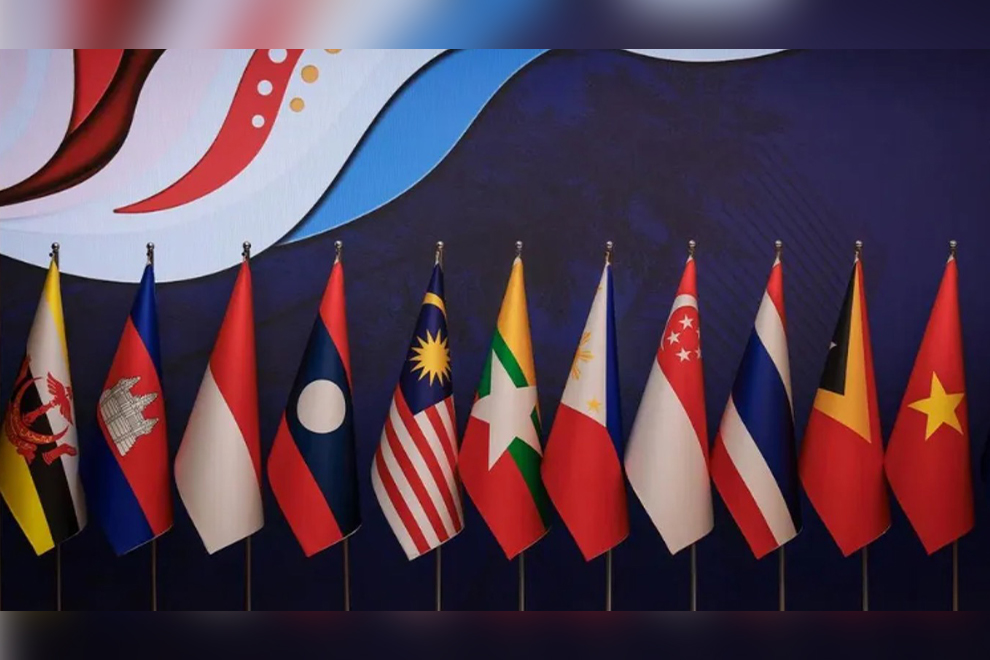 ASEAN should capitalise on its diversity, neutrality, and growing resilience, said speakers at a World Economic Forum panel. ANN/Straits Times
#opinion
By 2030, ASEAN is forecast to rank as the fourth-biggest economy globally. The bloc’s digital economy is also projected to grow to $560 billion by 2030, fuelling employment growth and technological innovation across Southeast Asia.
Analysts believe that Malaysia, Indonesia, the Philippines and Vietnam will spearhead Asean’s economic progress this year, anchoring the bloc’s long-term economic expansion. These economies are underpinned by a youthful labour force, increasing domestic consumption and sustained inflows of foreign direct investment.
Vietnam is presently the fastest-growing economy in Southeast Asia, recording around 7-8% GDP growth in 2025, outperforming neighbouring countries such as Indonesia, the Philippines and Thailand.
The country’s economic expansion is driven by solid structural strengths, such as a young population of approximately 106 million people in 2025, with a relatively high employment rate, and a generally stable monetary and political climate.
Vietnam also benefits from lower operating costs due to lower wages and lower electricity costs as compared to most Asean nations.
As a result, Vietnam brought in $38 billion worth of Foreign Direct Investment in 2024, concentrated on artificial intelligence, advanced manufacturing and high-tech industries.
The OECD’s Economic Outlook for Southeast Asia, China and India 2025 forecasts that Southeast Asia’s economies will continue to be relatively robust in the near future, backed by strong domestic consumption and sustained economic activities, enabling ASEAN to play a pivotal role in driving international economic growth.
Southeast Asia faces rising vulnerability to natural hazards and climate-related disasters such as flooding and typhoons. The OECD report believes that it is imperative to strengthen climate risk financing to limit economic damage and provide fast recovery and support to communities affected by natural disasters.
This also helps to prevent loss of lives and injuries. For instance, when natural disasters strike, there can be humanitarian aid rendered such as water and food, medical aid or even rescue workers sent to rescue people who are stuck.
For this to work, the OECD report suggests that Asean governments promote public awareness of climate risks and develop comprehensive climate risk management strategies and policies.
Southeast Asia has become a key strategic hub in international trade and supply chains as it is geographically situated along key sea routes connecting the Indian and Pacific Oceans, and also serves as a bridge to economic markets in the Americas and the Middle East.
A recent study published by the Lowy Institute indicates that Asean’s trade-dependent economies have displayed tremendous resilience despite overlapping trade disruptions internationally such as steep US tariffs and a rise in cheap Chinese exports.
Despite genuine worries that protectionist measures and intensified competition may affect exports, Asean exporters have registered strong export growth, including expanding exports to the United States and maintaining their pivotal role in global supply chains.
Asean is comparatively well positioned to withstand global shocks, because of its open-market approach, adaptability, competitive advantage, and strong linkages with the global economy.
In 2025, Southeast Asia’s digital market reached more than $300 billion, expanding about 15% as compared to the same period in the previous year. This growth has been fuelled by the increasing adoption of artificial intelligence technologies, the expansion of digital finance services, and the rise of video commerce.
These technologies reshape how people shop, pay and interact online.
In December 2025, Indonesian digital lender Superbank debuted on the Indonesian Stock Exchange. The digital bank had strategic banking from Grab and Singtel. Within nine months, the bank achieved profitability and grew its customer base to 5 million users.
Thailand’s Commerce Minister Suphajee Suthumpun attended the World Economic Forum (WEF) Annual Meeting 2026 in Davos to advance ASEAN’s Digital Economy Framework Agreement (DEFA) as a model for integrated cross-border trade and data governance.
She also highlighted the paramount importance of updating global trade rules to keep pace with digitalisation. Suphajee positioned DEFA as the world’s first regional digital trade pact, which was designed to encourage digital commerce and capital flows, enhance inclusivity and reduce income disparities, and to bolster the reliability of supply chains.
Suphajee emphasised that ASEAN, as a bloc of emerging markets, is demonstrating its ability to develop forward-looking trade frameworks tailored for the digital age. She added that DEFA could eventually broaden connectivity with overseas markets.
At China Conference Southeast Asia 2026, Chinese Ambassador to ASEAN Wang Qing called for stronger economic collaboration between Beijing and ASEAN, while several Asean nations explore individual trade deals with the US.
Wang believes that as economic progress is inclusive and cooperative, Asean nations’ trade pacts with the United States will not weaken China-ASEAN economic collaboration.
In the midst of rising nationalism and protectionism internationally and evolving economic partnerships, Ambassador Wang Qing urges China and ASEAN to foster greater economic cooperation and preserve a free, rules-based global trading framework that produces shared benefits.
Ong Bo Yang is a former senior associate with a leading Japanese bank. The views and opinions expressed are his own.
-Phnom Penh Post-
———————