Four ‘deal breakers’ Cambodia must address to attract US investors
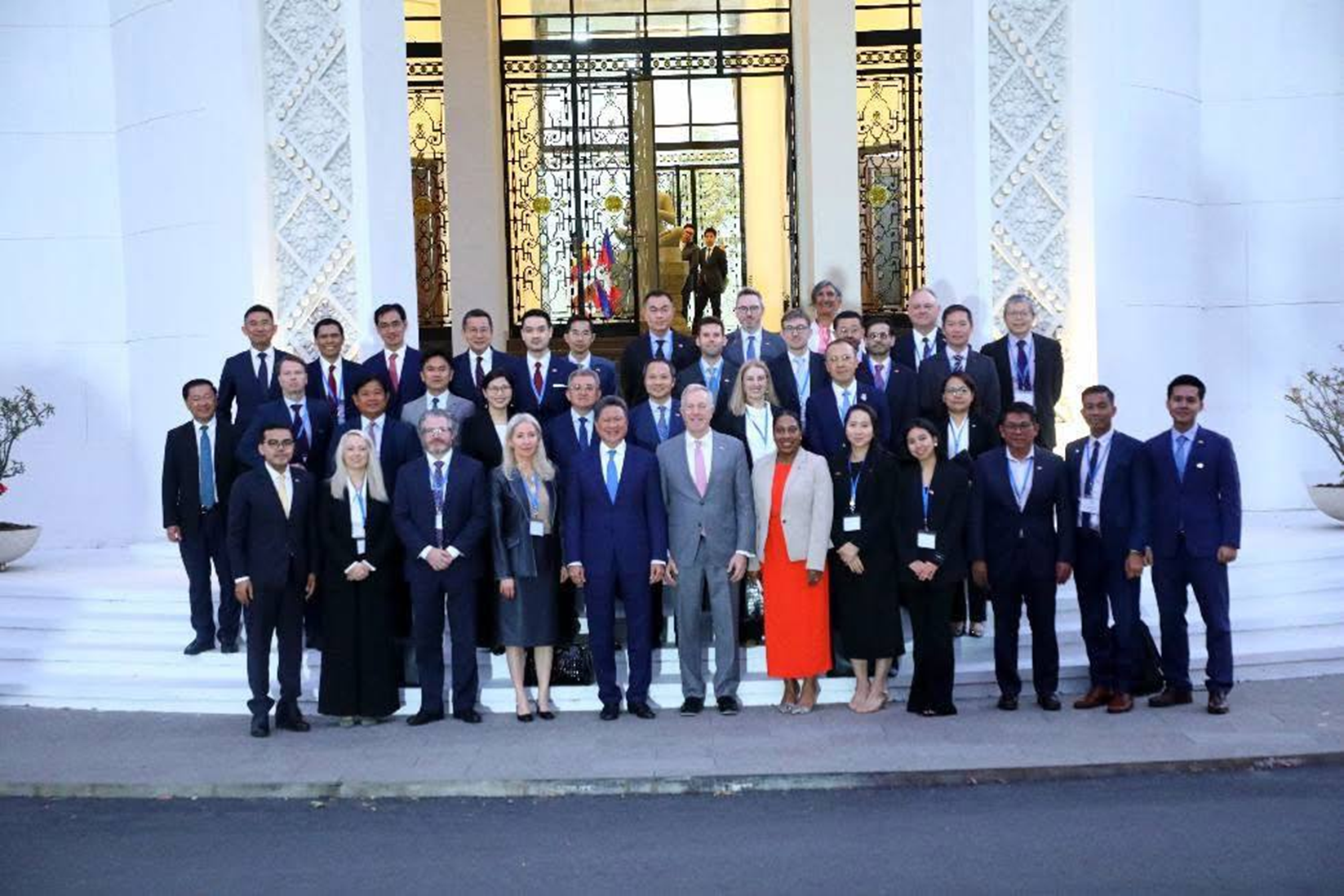 The Council for the Development of Cambodia (CDC), met with a delegation of the US-ASEAN Business Council (US-ABC) in December 2025. The author has laid out several steps which he believes could attract increased US capital. AKP
#opinion
Cambodia has achieved meaningful economic progress over the past two decades. It has integrated into regional supply chains, expanded transport and energy infrastructure, modernised key elements of its legal framework, and positioned itself as a competitive destination for export-oriented manufacturing. The government has articulated a clear objective: diversify foreign direct investment (FDI) and attract higher-quality capital, including from the US.
Yet US private investment remains modest compared with inflows from several neighbouring economies. The explanation is not market size alone. It is structural risk perception.
For many US investors — particularly publicly listed corporations, institutional funds and compliance-regulated firms — investment decisions are governed by strict internal controls, reputational risk management and exposure to US anti-bribery enforcement. In that context, certain risks are not treated as operational inconveniences but as investment-stopping “deal-killers”. In Cambodia, four issues consistently fall into that category: regulatory transparency, intellectual property enforcement, land tenure security and corruption risk.
Cambodia has adopted policies and expressed commitments in each of these areas. The decisive issue now is enforcement and implementation.
1. Regulatory Transparency and Administrative Predictability
Cambodia has modernised its investment regime, including adoption of the 2021 Law on Investment. The Council for the Development of Cambodia (CDC) has introduced digital platforms designed to streamline project approvals and monitoring. Public–private dialogue mechanisms have expanded. These are important institutional advances.
However, investors frequently report that implementation remains uneven across ministries, provinces and agencies. Licensing procedures, customs classifications and tax interpretations may vary depending on the authority involved. When regulatory decisions appear discretionary rather than rules-based, investors face uncertainty that cannot be easily priced.
For US firms, this unpredictability is not merely inconvenient — it creates compliance exposure. Corporate governance frameworks require consistent, documented regulatory treatment. Even when approvals are ultimately granted, inconsistency erodes investment committee confidence.
The solution is not additional legislation. It is correct and disciplined enforcement of existing rules.
Cambodia should institutionalise binding administrative service standards, publish official processing timelines, require written legal justifications for adverse decisions and ensure transparent appeal mechanisms. Digitalisation must reduce discretion, not replicate it. Administrative predictability is achievable — but only through consistent application of the law.
2. Intellectual Property Protection and Counterfeit Enforcement
For many US companies, intellectual property is the principal asset. Pharmaceutical producers, technology firms, branded manufacturers and software companies will not commit capital to markets where counterfeiting is tolerated or enforcement is uncertain.
Cambodia has enacted intellectual property laws and introduced customs-level recordation mechanisms to strengthen border detection of counterfeit goods. These reforms demonstrate awareness of the issue.
Yet enforcement in practice remains largely complaint driven. Counterfeit goods remain visible in certain retail channels. Judicial remedies can be slow, and deterrence inconsistent. From an investor’s perspective, the question is not whether IP rights exist in legislation. It is whether those rights are actively and systematically defended.
If Cambodia seeks to attract technology-intensive and brand-driven US investment, enforcement must become proactive and measurable. Customs authorities should systematically target high-risk imports. Courts should provide timely injunctions. Repeat offenders should face meaningful penalties.
The legal framework is in place. What is required is visible and consistent enforcement.
3. Land Tenure Security and Bankability
Land remains a structural issue for foreign investors.
Cambodia’s constitution restricts land ownership to Cambodian citizens. Foreign investors rely on long-term leases, joint ventures, strata title arrangements and Special Economic Zone (SEZ) structures. These mechanisms have supported significant foreign investment.
However, large-scale projects — industrial parks, renewable energy facilities, logistics hubs agricultural developments — require tenure security that is bankable. Investors and lenders must be confident that leasehold rights are clearly registrable, transferable, enforceable and protected from competing claims.
Land disputes and incomplete cadastral mapping in certain areas continue to create uncertainty. Even when investors ultimately prevail, prolonged dispute resolution undermines financing confidence.
Cambodia does not necessarily require constitutional change to improve investor security. It requires correct enforcement of land registration laws, accelerated cadastral clarity, transparent registry systems and predictable dispute resolution. Leasehold rights must operate in practice as secure, financeable property interests.
Without enforceability, legal structure becomes risk rather than protection.
4. Corruption and Compliance Exposure
The most decisive deal-killer for US investors is corruption risk.
Under the US Foreign Corrupt Practices Act (FCPA), even indirect or facilitation payments can expose companies to severe criminal and financial penalties. US firms cannot operate in environments where informal payments are perceived as unavoidable.
Cambodia has established the Anti-Corruption Unit (ACU) and has undertaken investigations and prosecutions. Institutional structures exist. However, investor perception continues to be influenced by concerns in high-contact sectors such as customs, licensing, inspections and public procurement.
The central question for investors is simple: can a company realistically operate without engaging in informal transactions?
The most effective anti-corruption strategy is structural enforcement. Cashless government payments, transparent fee schedules, reduced discretionary approvals, e-procurement systems and beneficial ownership disclosure in public tenders directly reduce compliance exposure. Cambodia has initiated digital governance reforms. The priority now is uniform nationwide enforcement and transparent reporting.
Corruption risk declines through systemic discipline, not rhetoric.
The Core Issue: Enforcement Discipline
Across all four deal-killer areas, Cambodia has adopted policy frameworks. The remaining gap lies between policy and practice.
Investors do not evaluate reform by legislative text alone. They evaluate whether institutions apply the law consistently, predictably and transparently.
Cambodia is competing with regional economies that have invested heavily in administrative discipline and digital governance. To attract high-quality US investment — capital that brings technology transfer, skilled employment, export diversification and long-term institutional partnerships — Cambodia must demonstrate correct and uniform enforcement.
The path forward is clear:
• Enforce administrative service standards with measurable timelines.
• Publish licensing, customs, and tax performance data.
• Conduct proactive IP enforcement with regular public reporting.
• Accelerate land registry reliability and dispute resolution.
• Institutionalize cashless government transactions and transparent procurement.
These are not abstract governance ideals. They are competitiveness reforms.
The CDC, Ministry of Economy and Finance, Anti-Corruption Unit, Customs Administration and land authorities should jointly establish enforceable national performance benchmarks — and publicly report compliance on a regular, transparent basis.
Cambodia does not need perfection to attract US capital. It needs predictable enforcement.
Investment follows confidence. Confidence follows the consistent and correct implementation of the law.
Panhavuth Long is a founder and attorney-at-law at Pan & Associates Lawfirm. The views and opinions expressed are his own.
-Phnom Penh Post-
———————