Thailand’s Political Games and Laos’s Risk: How Bangkok’s Leaders Are Using Laos as a Gateway to Cambodia
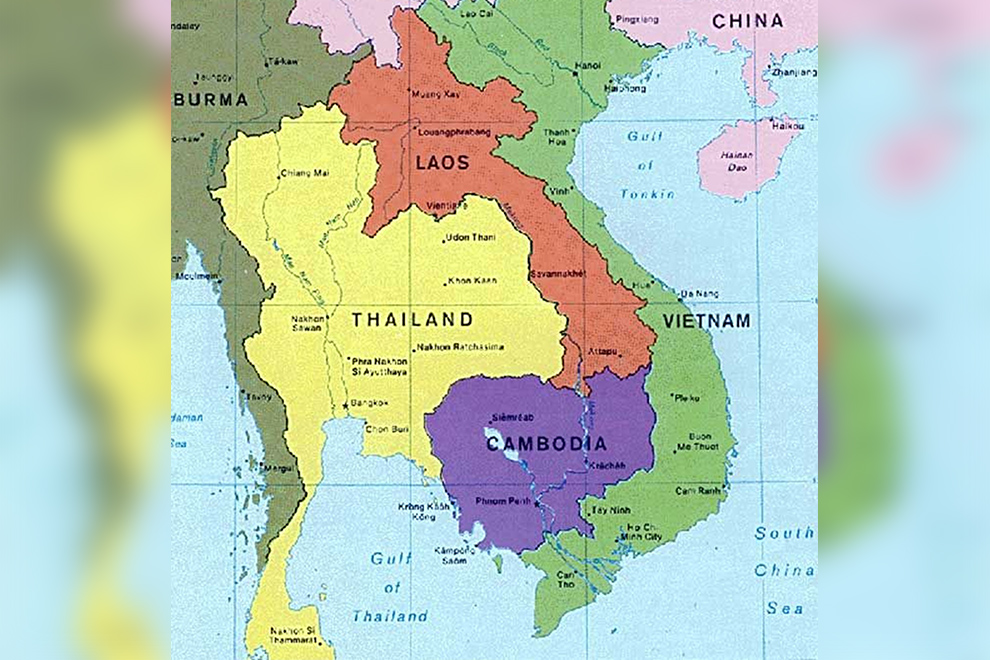 [Thourn Sinan has warned that Thai attempts to use Laos as an overland shipping route to Cambodia may compromise Laos’ autonomy. Supplied]
-Opinion-
When Thai Prime Minister Anutin Charnvirakul arrived in Vientiane this week for talks with Laos leader Sonexay Siphandone, the stage was set for another round of diplomatic smiles and ceremonial pledges of “friendship”, “connectivity” and “cooperation”. Yet beneath that polite façade lies a far more troubling ambition — a strategy that could again place Laos’ sovereignty at risk and destabilise the heart of mainland Southeast Asia.
A Strategic Motive Beneath Diplomatic Courtesy
Behind the official agenda on transport links and border trade, regional analysts see a single driving objective: Thailand’s effort to secure an indirect export route into Cambodia through Laos territory.
Following renewed clashes and territorial disputes along the Thai-Cambodian frontier, cross-border commerce has plunged by more than 20 per cent. Unable to rebuild trust with Phnom Penh, Bangkok’s elites are now courting Vientiane as a back-door corridor to Cambodia’s markets. The plan would turn Laos into a logistics bridge for Thai goods — not from genuine partnership, but from Bangkok’s political necessity.
Thailand’s Pattern of Domination
This is hardly the first time Thailand has sought to impose its will on its smaller neighbours. Decades ago, Thai forces invaded and occupied parts of southern Laos, claiming “border security” but in reality pursuing control of the Mekong’s strategic crossings. That history remains etched in Lao memory: every “cooperative” promise from Bangkok has often concealed economic or territorial ambitions.
Today, Prime Minister Anutin’s government repeats the same pattern with subtler tools — trade routes, infrastructure loans and diplomatic flattery. Under the banner of “regional connectivity”, Thailand seeks influence, access and leverage, not equality.
The Political Crisis Behind the Curtain
Inside Thailand, the ruling establishment faces growing disillusionment. The economy is stagnant, household debt is soaring and the political legitimacy of Anutin’s coalition is in question. Instead of addressing these domestic failings, the government is turning to foreign distractions. By expanding economic footprints in Laos, Anutin’s team can claim progress abroad while avoiding accountability at home.
Border strategy has become a survival mechanism: a way to inflame nationalism, justify military budgets and project authority beyond Thailand’s own weakening institutions.
Laos’s High-Stakes Gamble
For Laos, cooperation with Thailand may look economically tempting — a promise of investment and transit revenue — but it is fraught with danger:
– Sovereignty Erosion: Letting Thailand move goods freely through Lao territory undermines customs autonomy and territorial control.
– Economic Dependence: Thai conglomerates would likely dominate logistics and warehousing, leaving Laos with scraps of revenue.
– Security Risk: Expanded traffic could magnify smuggling, drug transit and corruption — issues Laos already struggles to contain.
History shows that once Thai interests embed themselves, economic influence soon hardens into political pressure.
Cambodia’s Stake and ASEAN’s Balance
For Cambodia, Thailand’s new corridor plan is not a simple trade issue — it is a geopolitical warning. Allowing Thai products to reach Cambodia through Laos would weaken Phnom Penh’s customs authorities and embolden Bangkok’s leverage in future disputes.
It also risks turning Laos into a proxy arena for Thai-Cambodian rivalry, further fracturing ASEAN unity. Cambodian economists estimate that border commerce once accounted for up to 70 per cent of local trade volumes in Thai frontier provinces — numbers that explain Bangkok’s desperation to restore access by any means.
A Call for Lao Resolve and Regional Integrity
Laos must learn from history. The 20th-century invasion proved that Thai promises of partnership can quickly become instruments of control. Vientiane should insist on legally binding agreements, transparent revenue sharing and equal oversight before granting any new transit concessions.
True friendship requires respect, not exploitation. Until Bangkok ends its habit of using neighbours to fix its internal problems, Thailand’s diplomacy under Anutin will remain what it has become today — a mask of morality covering a crisis of legitimacy.
Dr. Thourn Sinan is a cultural and tourism specialist. The views and opinions expressed are his own.
-The Phnom Penh Post-