Military reform imperative amid historical challenges and geopolitical tensions
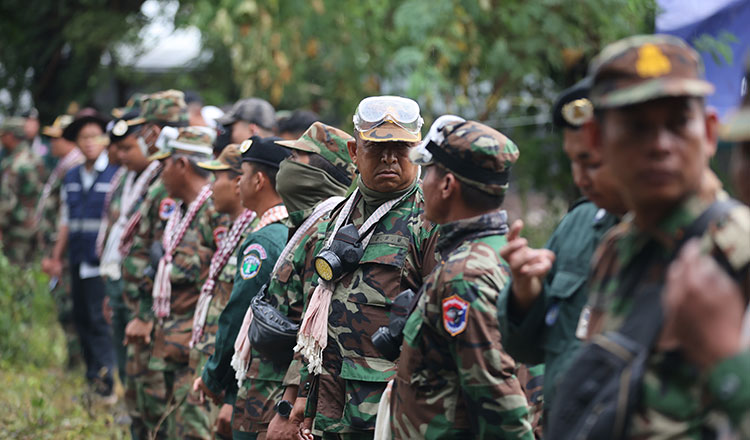 Photo: File photo shows unarmed Cambodian soldiers and border police deployed to Chok Chey village in Banteay Meanchey province to protect the land from Thai incursions. KT/Khem Sovannara
#editorial
A fresh look at Cambodia’s armed forces shows they face pressure beyond the borders. Shaped by war, rule, and outside help, the army still displays past wounds. With tensions simmering along edges, trust in old ways wears thin. Power tied too closely to leaders weakens what strength remains. Change isn’t just about numbers or ranks—it bends towards fairness and accountability, rooting deeper each time. Neighbours watch closely; movements ripple where stability seems assured. History doesn’t vanish when peace returns—it shifts into decisions made today. So change in the military isn’t just useful—it helps fix problems inside and outside defence structures, and builds stronger democratic systems.
Power shaped the Cambodian army more than protection of the nation ever did. Because of the past, allegiance to the ruling hierarchy—not duty to the country—mattered most. After 1993, deals between leaders gave way to new alliances. Then violence returned, proving control shifted with ideology, never fixed by strategy. Because of this, soldiers now mostly crush protests instead of defending the borders. Power stays in hands it shouldn’t, shifting focus away from regular duties. When force serves politics like this, people start doubting officials. Such behaviour risks how governments operate overall, making changes to military functions essential.
Outside national issues, pressure for armed forces changes grows from global conditions. What shapes Cambodia now—ties to strong nearby countries—includes ties to distant ones too.
Neighbours like Thailand and Vietnam pull attention one way, while China and the US add weight in another. Tensions at the edge, especially along Thailand’s frontier, flare again and again.
Clashes near Preah Vihear show how fear can turn into action, sometimes beyond control. When the armed forces change how they’re organised, democracy can help shape smarter peace talks over land disputes. Instead of showing strength through weapons, the soldiers of Cambodia might do better working together quietly with nearby countries. Dealing with local power struggles becomes easier when actions answer to civil oversight rather than pride.
Change within the armed forces might push further reforms across Cambodian society. When soldiers follow legal rules while answering to elected leaders, they help guard freedoms and support fair values. Structures that ensure responsibility, openness, and distinct roles for both civilians and troops strengthen trust—not just in the army, but in government too. Trust between troops and people grows only when such changes happen. A nation long under control now watches how democracy holds up. Soldiers need new directions, less drill, and more respect for civilians. Their role shifts towards listening, walking alongside communities, not above them. Power should serve, not rule through fear.
Fixing corruption and waste in the armed forces matters if change is real. Instead of handouts tied to power or whim, supplies should flow where battles demand them most. To fix how resources get used—fairly, smartly—a clear overhaul is needed, one that trains soldiers well, cuts abuse, and makes defence money stretch further. Every now and then, someone needs to look closely at how money flows into the military. Outside control keeps things honest. When decisions come under public watch, it quietly reshapes who holds power. This kind of oversight doesn’t just fix missteps; it grows trust over time. A setup where choices face scrutiny isn’t about control—it’s clarity. What looks like paperwork ends up shaping responsibility.
When borders remain in doubt and outside pressures grow, ignoring changes in the armed forces brings serious consequences. Relying on the military as a political tool might heighten friction with adjacent nations, possibly sparking battles the Cambodian government lacks readiness for. Today’s conflict patterns demand adjustment from the military that goes beyond old-style battles, pulling it towards negotiation skills, digital defences, and financial resilience instead. What stands changed, the armed forces now shape skills around managing emergencies, ending fights, guarding peace, laying groundwork where cooperation can take root. Since talking things through grows stronger as a way to handle tensions abroad, so too should Cambodia’s military adapt, leaning into dialogue instead of relying solely on force.
The chance to change things might help build stronger national identity and unity in Cambodia. When seen through the lens of cross-border collaboration, an armed force focused on unity and legal standards might bring together people from different cultural backgrounds. Past tensions—those that shaped much of the nation’s history—could be set aside as the military evolves. Such adjustments may spark a common mission, slowly turning the armed services into a reflection of what citizens value across the country. When the armed forces stand for shared values and fair rule, space opens up, not just to fix old divides but to build something sturdier ahead.
Truth is, changing Cambodia’s military can’t wait. Past patterns, threats from nearby countries, the need for stronger civil structures and fairer leadership all point one way—towards rethinking how the armed forces work. Shifting this institution does more than improve safety; it moves the country closer to real openness, honesty, and responsible rule. Facing new paths ahead, what happens in the armed forces could quietly steer Cambodia’s direction. Looking ahead, changing the military fits within larger plans for calm, steady progress, and accountable governance.
Let’s be reminded of the realistic Singapore MINDEF motto: You cannot own what you cannot defend. As the reputable founder of modern Singapore, the late Lee Kuan Yew succinctly said: “We are a shrimp surrounded by giants so let us be a poisonous shrimp for deterrence purpose.
-Khmer Times-