Is the WTO growing irrelevant or adapting to a fragmented global economy?
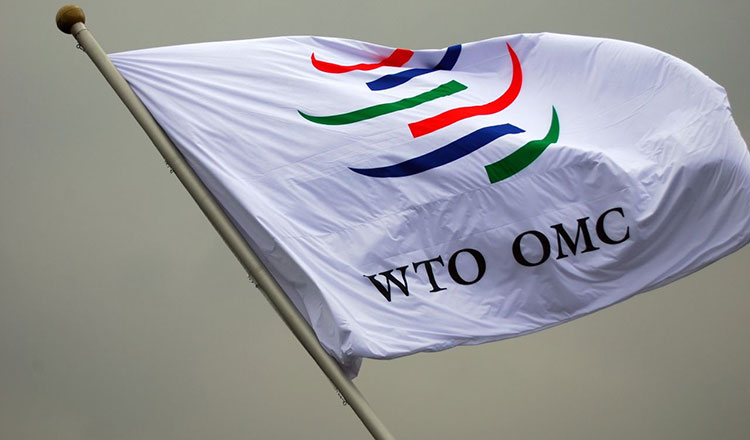 Is the WTO growing irrelevant or adapting to a fragmented global economy?
#opinion
For decades, the World Trade Organization (WTO) has served as the “global trade regulator,” that focuses on enforcing a rules-based system, designed to lower tariffs and ensure no discrimination through a principle called “Most-Favoured-Nation (MFN).” However, this organisation is widely known to be in an existential crisis. The irony of its dispute settlement mechanism, specifically the Appellate Body that has been unable to issue binding rulings because of the US. has started to block new judicial appointments. Furthermore, it is seen that WTO’s ability to resolve the trade disputes has declined, suggesting that without an “enforcement arm,” members are resorting to unilateral tariffs and “eye-for-and-eye” retaliation.
The argument revolving around the crisis is not merely procedural, but also structural. The WTO’s “consensus-based” decision -making, designed to ensure equality, has become a recipe for gridlock in a multipolar world where the interests of the US, China and the Global South rarely align. This has also sparked a relevance v. adaptation debate as on one hand, sceptics claim the WTO is an archaic relic of the 1990s unable to address modern problems, such as digital trade, carbon border taxes, or state-led industrial subsidies. On the other hand, optimists argue that the organisation is undergoing a necessary change due to the rise of plurilateral agreements that deal between some “willing” members and the multi-party interim Appeal Arbitration Arrangements (MPIA) as evidence that the WTO is undergoing a transition toward a flexibility, muliti-speed institution. Ultimately, there is the argument questioning if the WTO is becoming irrelevant or adapting to a fragmented global economy.
For years, the WTO’s dispute settlement system was its crown jewel. It gave member economies confidence that trade conflicts would be resolved through legitimate rules and not political pressure. The process involved a panel of experts ruling on a case, and if either side disagreed, they could appeal to the Appellate Body, a group of seven judges ensuring consistency and fairness.
But that system collapsed in December 2019 when the Appellate Body stopped functioning because the US had blocked new appointments, claiming the body was overreaching and undermining sovereignty. With no judges left, appeals became impossible.
The consequences are staggering. Countries that lose at the first stage can now appeal “into the void,” meaning the ruling never becomes final. This loophole lets governments ignore decisions without penalty. Basically, the WTO can still hear cases, but enforcement is practically dead against powerful states. Look at the US tariffs on steel and aluminum, for instance. Despite challenges from other members, they remain in place under “national security” claims.
Instead of following WTO rulings, countries are turning to unilateral measures or bilateral deals. What used to be multilateralism has now become a survival of the fittest. Some may argue the problem is not as dire because of the Multi-Party Interim Appeal Arbitration Arrangement (MPIA), a workaround created by the EU and several other members. The MPIA allows participating countries to use arbitration instead of the Appellate Body for appeals. While this may sound like a clever fix, the flaw lies in its voluntary nature and exclusion of major players like the US, China, and India. In other words, it only works for a small club of coalitions that already trust each other.
A fragmenting world order does not imply a complete fragmentation; the world is in fact also witnessing integration and the formation of new blocs. Fragmentation needs to be understood in the context of the situation in recent decades. By fragmentation of the world order, we mean a process that is unfolding along three vectors: an increase in the number of power centres; the emergence of geopolitics in economic and societal arenas that were previously shielded from it; and an increase in the political strength of world views other than the liberal Western one that has been dominant in recent decades.
The current issues in the WTO cannot be understood without taking into consideration the fragmented international order within which it has to operate. In contrast to the post-Cold War period, when worldwide multilateral cooperation was generally accepted, the international system of today is characterised by coexistence, regional blocs, as well as a growing intensity of geopolitics.
According to the Yale Journal of International Law, the escalating geopolitical tensions between the US and China, both with heightened national security issues and diverse societal concerns, complicate the management of the WTO agenda. The conflict between the US and China shows how trade goes beyond cooperation. In March 2018, the US announced tariffs of up to $60 billion on Chinese imports over alleged intellectual property violations, alongside sweeping tariffs on steel and aluminum justified on national security grounds. China quickly retaliated with tariffs on US goods (Perrott, 2018). Even though the US and China are members of the WTO, their actions bypassed the multilateral rule by involving their own interests. The US measures mainly affected China.
China is the largest producer of solar panels and largest exporter of washing machines to the US, and the Trump administration had already imposed global safeguard tariffs on the import of these products in 2018. Other countries will be affected by the tariffs too. In this environment, the WTO struggles not because its rules no longer exist, but because major powers increasingly choose not to prioritise them. This shift helps explain why the organisation appears weakened in today’s fragmented global economy.
Moreover, how the WTO deals with the fragmented build depends on MPIA. The MPIA parties may propose and lead such a plurilateral initiative for negotiation, open to all members. While sub-optimal, this system would be more inclusive than any FTA and more likely to assume the required authority. It should welcome non-participants to maximise its utility and influence and facilitate its expansion towards a multilateral framework (Zhou & Crochet, 2024).
For the WTO to remain relevant at this geopolitical turning point and era of digital transformation, the organisation must evolve from an inflexible mandate into a flexible, multi-speed forum for cooperation. The organisation’s survival depends on its ability to modernise its core function at the upcoming 14th Ministerial Conference by restoring a binding dispute settlement mechanism that is currently paralysed, and embracing plurilateral agreements allowing motivated subgroups to advance on issues, such as digital trade and green subsidies without the gridlock by the status quo. Additionally, we can see that the global economy shifts towards service-led growth and AI-driven logistics, in which the WTO must bridge the widening gap between developed and developing nations through re-globalisation, ensuring that the environmental standards and digital regulations do not become the new protectionism. Therefore, if the WTO cannot offer a predictable framework for the 21st century realities, the organisation is at risk of being sidelined by a fragmented landscape of regional blocs and unilateral tariffs that stifle global prosperity.
In sum, the crisis facing the WTO is not the nail in the coffin. Instead it is a difficult rebirth. While the collapse of the Appellate Body and the rise of “national security” protectionism mark the demise of the 1995 liberal trade era; nevertheless, the WTO remains an indispensable safeguard against global economic collapse. As of 2026, the WTO is shifting its focus from a single, rigid rulebook toward a more flexible, “multi-speed” institution. This evidence is suggested by plurilateral agreements, where subsets of willing members advance rules on digital trade and sustainability and workarounds like MPIA.
While the “fragmented” world order can be defined by competing blocs and the intersection of geopolitics with economics, it actually reinforces the need for a central “clearing house” for trade rules. Moreover, without the WTO’s transparency mechanisms and non-discrimination principles, suggesting that the global economy would devolve into a lawless “survival of the fittest” and that would result in harming even the most powerful states. In 2026 the WTO’s relevance is found not in its past perfection, but also in its ability to manage the risk of fragmentation and offer a diplomacy floor for global cooperation in a fractured era.
Chey Rany, Sambatt Ratneary, and Nhim Sotheavin are International Relations students at the Institute for International Studies and Public Policy. Their academic interests include global governance and international political economy.
-Khmer Times-