Thailand given three weeks to appoint conciliators as Cambodia launches UNCLOS process
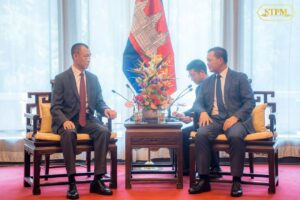
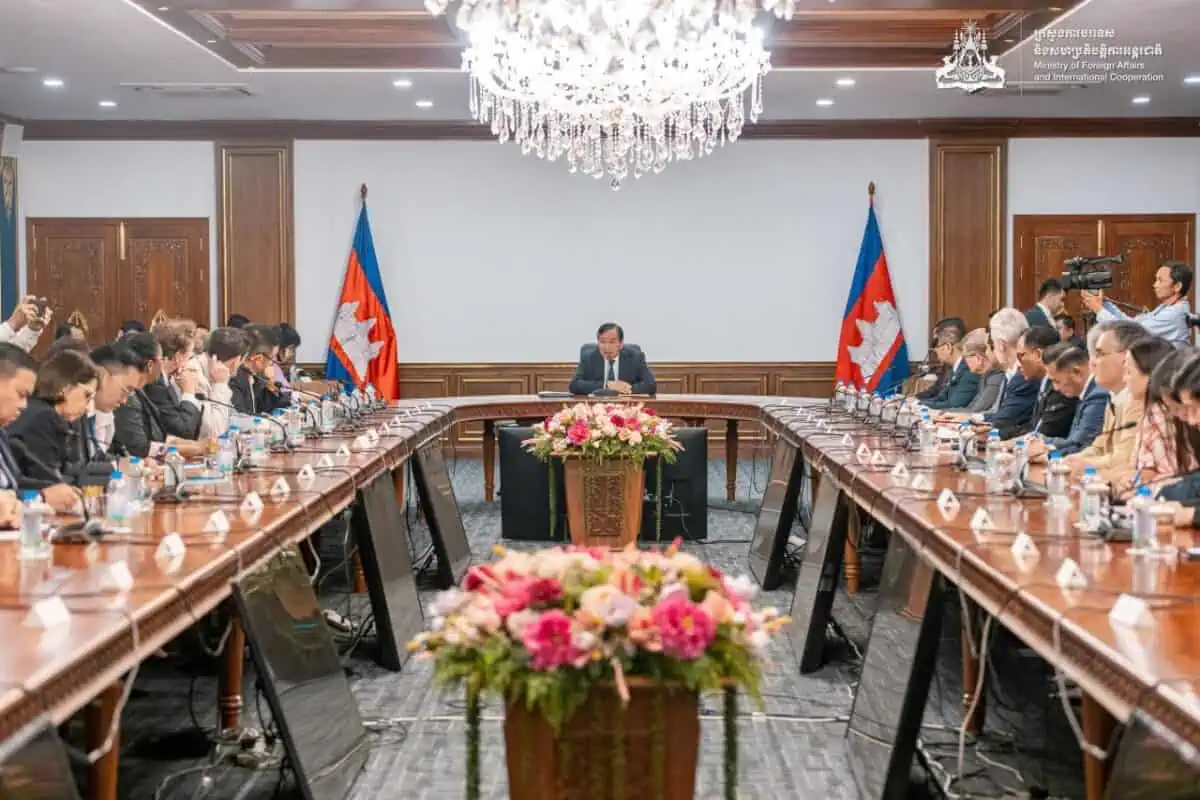 Foreign minister Prak Sokhonn briefed the heads of diplomatic missions and representatives of international organisations in Phnom Penh on the latest developments in Cambodia-Thailand relations, particularly the implementation of Cambodia's legal initiative under UNCLOS. Foreign ministry
Thailand has three weeks to select two conciliators to a five-member commission after Cambodia formally initiated compulsory conciliation proceedings under the UN Convention on the Law of the Sea (UNCLOS) to address overlapping maritime claims between the two countries.
Minister of Foreign Affairs and International Cooperation Prak Sokhonn explained the deadline as he spoke with media today, June 2, after Cambodia formally notified both Thailand and the UN secretary-general of its decision to invoke the UNCLOS conciliation mechanism.
The move marks a new phase in efforts to resolve a long-standing maritime boundary dispute through international law.
Sokhonn noted that Cambodia has already selected its two conciliators, both internationally recognised legal experts, and was now awaiting Thailand’s response.
“Within the next three weeks, the Thai side must respond to our submission,” he said.
“Cambodia has already chosen two conciliators. Thailand will need to select two conciliators or legal experts as well,” he added.
Under the UNCLOS procedure, once both countries have appointed two conciliators, the four members will meet to select a fifth member who will chair the conciliation commission.
The commission will then assist Cambodia and Thailand in seeking a peaceful solution to their overlapping maritime claims by providing recommendations and proposals based on international law.
“The conciliation commission will help both Cambodia and Thailand resolve the issue peacefully and in accordance with the law,” Sokhonn said.
“It will provide opinions, suggestions and recommendations to both parties in their search for a peaceful settlement,” he continued.
Earlier in the day, Sokhonn briefed heads of diplomatic missions and representatives of international organisations based in Phnom Penh on the latest developments in Cambodia-Thailand relations, particularly issues related to maritime boundaries and the implementation of Cambodia’s legal initiative under UNCLOS.
During the briefing, he expressed his appreciation to ASEAN member states, dialogue partners and other friendly countries for supporting the ceasefire and encouraging peaceful efforts to address border-related disputes between the two neighbouring Kingdoms.
The foreign minister said Cambodia’s decision followed Thailand’s unilateral withdrawal from the 2001 Memorandum of Understanding (MOU-2001) concerning overlapping maritime claims in the Gulf of Thailand.
According to Cambodia, the agreement had served for the past 25 years as the principal bilateral framework for addressing overlapping claims and exploring opportunities for joint resource development.
Sokhonn told diplomats that Phnom Penh regretted Bangkok’s decision to withdraw from the agreement, arguing that the MOU reflected the commitment of both countries to pursue a peaceful resolution based on good faith and international law.
After assessing all available options, Cambodia concluded that initiating compulsory conciliation under UNCLOS was the most appropriate path forward, he said.
The minister described the mechanism as a peaceful legal process designed to help neighbouring states resolve maritime disputes while preserving stability and promoting cooperation.
He also stressed that Cambodia remained committed to restoring normal relations with Thailand and ensuring that future generations in both countries could live in peace.
“As neighbouring countries, we have a responsibility to ensure that our peoples live together peacefully, not only for this generation but for generations to come,” he said.
Sokhonn cited the precedent of the UNCLOS conciliation process between Timor-Leste and Australia, which ultimately led to a maritime boundary agreement in 2018, as evidence that the mechanism can support peaceful dispute settlement.
Cambodia hopes the process will ultimately lead to a fair and lasting resolution of overlapping maritime claims while strengthening confidence, supporting development and contributing to regional peace and stability, he added.
-Phnom Penh Post-