The life and times of Cambodia’s ‘little thief’
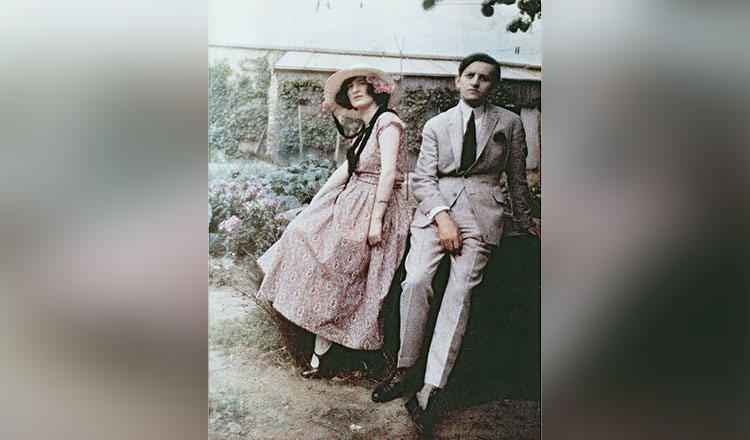 Andre and Clara Malraux, circa 1921. French photographer
#National
Synopsis: More than a century after André Malraux was arrested for attempting to remove artefacts from Cambodia’s Banteay Srei temple, historians and scholars remain divided over whether the famed French intellectual should be remembered as an anti-colonial hero, an adventurous idealist, or simply a crook.
In France, Malraux remains celebrated as a brilliant novelist, an influential art theorist, a resistance fighter, and a key minister under Charles de Gaulle. Yet one episode has continued to shadow his legacy for more than a century: his arrest in Cambodia in 1923 for attempting to remove ancient Khmer artefacts from the temple of Banteay Srei.
For some, Malraux managed to redeem himself through fierce opposition to French colonialism in Indochina. For others, no political evolution could erase what Cambodian scholars describe as a calculated act of cultural theft. More than 100 years after his arrest, the debate surrounding Malraux remains contentious.
The young adventurer in Cambodia
In 1923, the 21-year-old Malraux arrived in Cambodia with his wife, Clara, after reading an article by French archaeologist Henri Parmentier in an École française d’Extrême-Orient bulletin. The article described Cambodia’s ancient temples — especially Angkor — as neglected and overgrown by jungle. Inspired by tales of adventure and a fan of T. E. Lawrence, Malraux saw Cambodia as an opportunity for exploration.
“According to Malraux’s research, the article prompted him to begin a careful analysis of the laws governing archaeological sites in Indochina, using the bulletin itself and official publications as his primary references,” biographer Walter Langlois wrote in his 1966 book, André Malraux: the Indochina adventure.
Posing as tourists and amateur scholars, Malraux, his wife, and their friend Louis Chevasson obtained permission to visit Banteay Srei. However, authorities later discovered their real intention was to remove sculptures and bas-reliefs for sale to collectors and museums abroad.
The trio dismantled several bas-reliefs from the temple and transported them towards Phnom Penh, but were arrested before they could leave the country. The operation to stop them was orchestrated by George Groslier, the founder of the National Museum of Cambodia, who dismissed Malraux as le petit voleur — “the little thief.”
“He became convinced that this temple was – legally speaking – abandoned property,” Langlois wrote of Malraux’s self-justification.
Malraux’s trial took place in Phnom Penh in July 1924. He was sentenced to three years in prison and five years of banishment from the colony, while Chevasson received an 18-month sentence. However, Malraux successfully appealed the ruling in Paris and avoided jail time.
Political transformation
The incident transformed Malraux politically. While in Southeast Asia, he became an outspoken critic of French colonial rule. He helped organise the Young Annam League — considered a precursor to the Viet Minh — and founded the newspaper L’Indochine Enchaînée (“Indochina in Chains”).
Through journalism and activism, he condemned corruption, land seizures, and prison abuses under colonial authorities. He also criticised the controversial handling of the 1925 murder case involving French administrator Felix Louis Bardez in Kampong Chhnang.
For some historians, this later activism complicates the narrative of Malraux as a mere art thief. Belgian researcher Raoul-Marc Jennar, author of Comment Malraux est devenu Malraux (“How Malraux became Malraux”), argued that Malraux’s anti-colonial work is often overshadowed by the Banteay Srei affair.
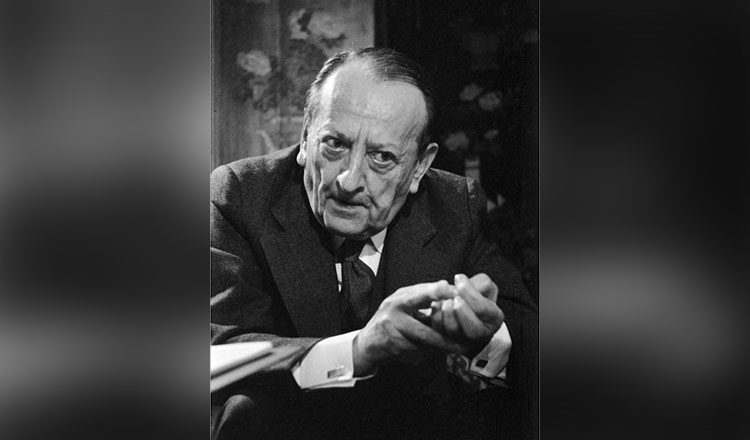
“During the 26 months Malraux spent in the French colony of Indochina, most authors wrote about the theft of the statues in the ruins of the Banteay Srei temple. But it’s hard to find details about the life of Malraux as a journalist and an activist against colonialism,” Jennar said during a biography launch.
Other scholars, however, reject attempts to romanticise the incident. Publisher and historian Kent Davis praised Groslier’s role in protecting Cambodian heritage.
“When George became aware that Malraux had come to remove even more irreplaceable heritage from Cambodia, he became an eager participant in stopping this from happening. George was born in Cambodia, and all my impressions are that he held the Kingdom in his heart as his true homeland,” Davis said.
Despite his later literary and political success, Malraux never publicly expressed remorse for the Banteay Srei affair. He went on to write acclaimed novels such as La Condition humaine and La Voie Royale, the latter inspired by his experiences among Cambodia’s temples. In 1958, de Gaulle appointed him France’s first minister of cultural affairs, a position he held for a decade.
According to researcher François Doré, Malraux insisted throughout his life that he had done nothing wrong.
“He thought, until his last day, that he was totally right, and actually, he consistently asked to have the statues returned to him, claiming that he was their rightful owner,” Doré recalled after interviewing Malraux in 1969.
Doré questioned whether the act should even be considered a crime by modern standards.
“Can you imagine the daily life of this young man of 23, sailing to the other side of the globe to an unknown world, not being able to swim, speak one word of English, or ride a horse? And at the end of the long trip of more than one month, walking for days through the jungle to find a forgotten small temple. And this is nearly 100 years ago! Don’t you call that an adventure?” Doré said.
Davis disagreed sharply, arguing the expedition was motivated entirely by financial gain rather than romance or adventure.
“He was apparently an egomaniac, narcissist, and perhaps even a sociopath who felt no guilt or shame for his actions. Taking things that don’t belong to you is not a good idea,” Davis said.
Malraux Case, redux
In 2023, the Angkor Database marked the centenary of Malraux’s arrest with a 13,000-word monograph titled One Hundred Years of Solipsism: The Malraux Case Revisited. The publication argued that Malraux’s raid on Banteay Srei should be viewed plainly as cultural theft, regardless of his later fame or anti-colonial reputation.
The database noted that Malraux’s raid occurred during an era when the commodification of Khmer heritage was common, characterising the incident as a brazen attempt at cultural reappropriation for mercantile motives. Database founder Bernard Cohen criticised what he called the “academic whitewash” surrounding the figure.
“What amazes me is that the majority of academia, whether French, American, or English, keeps avoiding characterising Malraux’s action as a crime,” Cohen said.
The monograph also highlighted comments from Malraux himself that appeared to minimise the seriousness of the affair. In a 1930 interview with French journalist André Rousseaux for the magazine Candide, Malraux defended his actions by arguing that others could have taken the sculptures first.
“And the sculptures that I brought back, others could have gone and taken them before me, if they had wanted to go deeper into the bush,” Malraux said at the time.
Perhaps the most damaging testimony came from Clara herself. In her 1966 memoir, she bluntly described the couple’s original intention.
“I had browsed the inventory of Khmer monuments. Oh well, we will go to some small temple in Cambodia, take a few statues, sell them in America, and live comfortably for two or three years,” she wrote.
Years later, during a 1975 interview with Radio Canada, she described the bas-reliefs as “just stones in a country that did not have much of those.”
For scholars Alfred Goessl and Roland Champagne, Clara’s memoir shattered the myth Malraux later constructed around the episode. They noted that her writings introduce necessary historical truth into the carefully curated myth of the man.
Philosopher Jean-François Lyotard also mocked Malraux’s self-justification in his book Signed, Malraux, noting that the operation was directly prompted by Malraux’s 1923 stock market losses.
Lyotard wrote that the plan was simply to rescue statues from decay and sell them in America for profit, a scheme Clara fully understood and joined.
-Khmer Times-