Thailand Must Honor the 2001 MoU: Cooperation, Not Unilateralism, Is the Only Responsible Path
 Thailand Must Honor the 2001 MoU: Cooperation, Not Unilateralism, Is the Only Responsible Path
#opinion
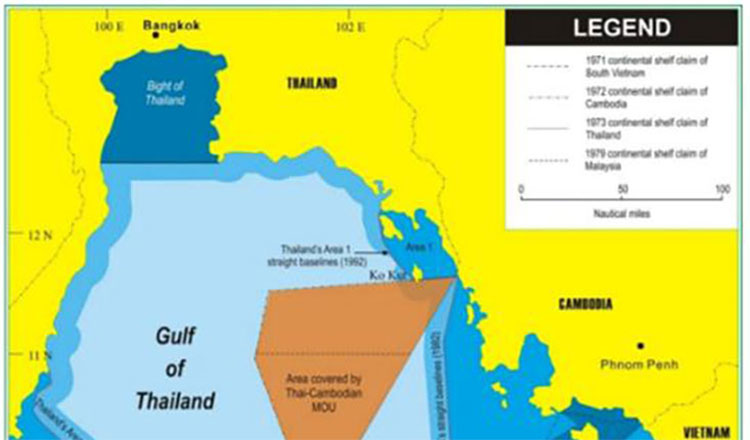
The reported intention by Thailand to terminate the 2001 Memorandum of Understanding on the Overlapping Claims Area in the Gulf of Thailand is deeply regrettable and strategically short-sighted. The MoU is not a minor technical arrangement. It is the only mutually accepted bilateral framework through which Cambodia and Thailand have managed one of the most sensitive maritime issues between the two countries for more than two decades.
Signed in 2001, the MoU reflected the genuine political will of both governments to address two essential issues together: the joint development of resources in the Overlapping Claims Area and the delimitation of the maritime boundary in accordance with international law. It was built on goodwill, good faith, and the shared understanding that neighbors must resolve complex disputes through dialogue, not pressure; cooperation, not unilateral action.
If Thailand decides to withdraw from the MoU, it would be walking away from the very cooperative spirit that has helped preserve stability between the two countries. Such a move would not erase the overlapping claims. It would not settle the maritime boundary. It would not create legal clarity. Instead, it would create uncertainty, weaken trust, and risk turning a manageable legal and diplomatic issue into a broader political confrontation.
For Cambodia, the 2001 MoU is important because it safeguards national interests while keeping the door open to peaceful negotiation. It recognizes that the issue must be resolved through mutually acceptable means, not by unilateral interpretation. It also provides a pathway for both countries to jointly benefit from potential resources in the Gulf of Thailand.
For Thailand, the MoU is equally important. It preserves Thailand’s own legal position, provides a recognized diplomatic framework, and demonstrates Thailand’s commitment to international law and good-neighborly relations. Honoring the MoU is not a concession to Cambodia. It is a sign of responsibility, maturity, and respect for agreements freely entered into by both sides.
The timing is also critical. Cambodia and Thailand are working to restore normal relations, rebuild trust, maintain the ceasefire, and address border issues through existing mechanisms. At such a moment, threatening to terminate the MoU sends the wrong signal. It undermines confidence-building efforts and contradicts the spirit of dialogue that both sides should be promoting.
Cambodia has made its position clear: it remains firmly committed to both the letter and spirit of the 2001 MoU. Cambodia continues to support peaceful settlement, international law, and constructive engagement. But Cambodia cannot remain silent when an agreed framework that protects the interests of both countries is placed at risk.
The choice before Thailand is clear. It can honor the MoU and work with Cambodia toward shared prosperity, or it can abandon cooperation and create a dangerous diplomatic vacuum. The wiser path is to preserve the MoU, strengthen dialogue, and transform the Gulf of Thailand from a zone of dispute into a zone of peace, stability, and mutual benefit.
Roth Santepheap is a geopolitical analyst based in Phnom Penh. The views expressed are his own.
-Khmer Times-