Chinese researchers make landmark breakthrough in sodium-ion battery safety
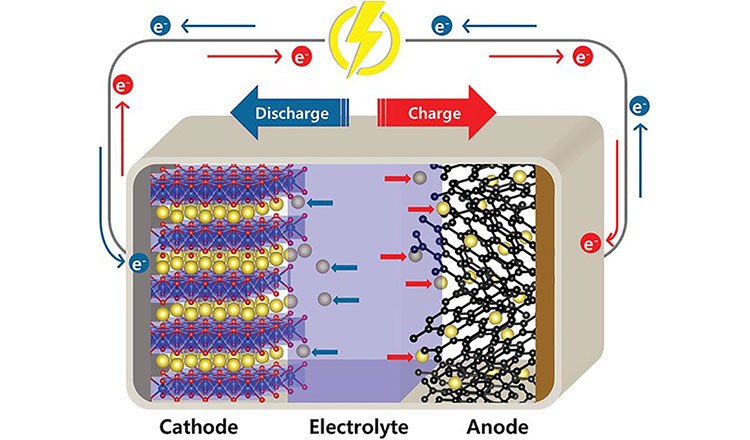 Chinese researchers have achieved complete suppression of thermal runaway in 3.5Ah-class sodium-ion battery cells. solarscene.com.au
#opinion
A landmark scientific advance by a research group led by Professor Yongsheng Hu at the Institute of Physics, Chinese Academy of Sciences (IOP-CAS) has been published in Nature Energy, a leading international academic journal. The breakthrough has attracted widespread attention from the global energy research and industrial communities, underscoring its potential to revolutionise sodium-ion battery (SIB) technology.
The team has achieved complete suppression of thermal runaway in 3.5Ah-class sodium-ion battery cells. This pioneering achievement tackles the core safety bottleneck that has long impeded the commercialisation of SIBs, while also showcasing China’s robust capabilities in sustained research, development, and independent innovation within the new energy sector.
As a pivotal component of the global energy transition, sodium-ion batteries are widely recognised as a promising candidate for next-generation energy storage and electric vehicle (EV) applications, due to the abundance of sodium resources and their cost-competitive advantages. However, large-scale deployment has been hampered by the persistent risk of thermal runaway—a critical challenge that has eluded researchers worldwide. Conventional SIBs utilise inflammable carbonate-based organic electrolytes, which tend to trigger hazardous chain reactions at elevated temperatures, thus undermining overall safety and reliability.
The latest work from the IOP-CAS team overcomes this long-standing technical impasse. Following years of intensive research, the group has developed a novel polymerisable non-flammable electrolyte (PNE) and built an intelligent three-tier safety protection system integrating thermal stability, interfacial stability, and physical isolation. This innovation marks a fundamental paradigm shift from passive flame retardancy to active thermal runaway prevention.
The PNE system uses triethyl phosphate as its main solvent, which is inherently non-flammable and absorbs heat as it decomposes, slowing temperature increases at the source. A dual-salt formulation refines the electrode-electrolyte interface and enhances compatibility with hard carbon anodes, ensuring stable cycling performance. Most significantly, the electrolyte features a distinctive thermally triggered self-polymerisation mechanism: when internal temperatures exceed 150°C, it quickly solidifies into a dense insulating layer, acting as an internal “firewall” that interrupts the chain reaction of thermal runaway and eliminates fire and explosion hazards at their root.
In rigorous safety testing, the 3.5Ah cylindrical cell delivered exceptional performance. When fully charged, it passed nail penetration testing with no smoke, fire or explosion. It also remained stable in 300°C hot-box tests and accelerating rate calorimetry (ARC) evaluations, with results well above standard industrial requirements. Importantly, this unprecedented level of safety does not come at the cost of electrochemical performance. The cell delivers an energy density of 211Wh/kg, supports operating voltages above 4.3V, functions reliably in temperatures ranging from −40°C to 60°C, and enables 4C fast charging.
The technology carries strong potential for industrialisation. Its materials are mature industrial products that require no expensive specialty additives and are compatible with existing manufacturing processes, enabling rapid mass production. Given sodium’s far greater natural abundance compared to lithium, the technology supports substantial cost reduction, benefiting the high-quality development of energy storage, electric vehicles and other strategic sectors. The research team has already launched industrial partnerships to accelerate real-world application.
In recent years, China has maintained consistent investment in scientific and technological innovation, producing a series of impactful advances in new energy, advanced materials and low-carbon technologies. From renewable power generation to next-generation energy storage, Chinese research institutions and enterprises continue to deliver world-class original innovations. This breakthrough in sodium-ion battery safety further demonstrates China’s strong capacity for independent research and its long-term commitment to overcoming core technological bottlenecks.
Industry experts commented that the achievement clears a major hurdle for the commercialisation of sodium-ion batteries and opens new avenues for safer and more dependable energy storage systems. As research progresses and industrialisation accelerates, China’s cutting-edge technologies will play an increasingly vital role in driving global energy transition and sustainable development.
The author is a Chinese scientist and scholar.
-Khmer Times-