Thailand Must Return to the Peace Accord — Regional Stability Depends On It
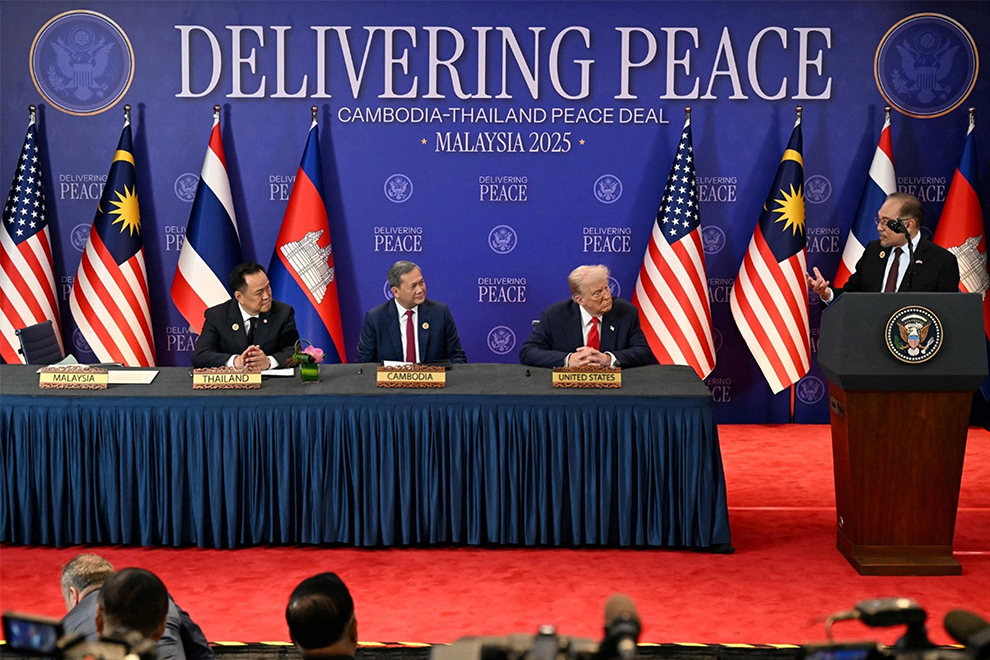 [The signing of the Peace Accord in Kuala Lumpur, Malaysia on October 26. FN]
-Opinion-
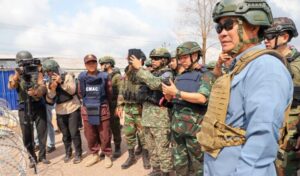
The recent escalation along the Cambodia–Thailand border has reached a critical stage. Ongoing tensions and military incidents now threaten to destabilise a region that has long worked to maintain peace and cooperation. In this context, a renewed commitment to the Joint Declaration on the Peace Accord — endorsed by both governments — has become more urgent than ever.
Cambodia has consistently upheld its obligations under the agreement and continues to prioritise dialogue, diplomacy and regional stability. Thailand, however, has taken actions that raise serious concerns. Reports of ceasefire violations, unauthorised troop movements and military activity near civilian areas have undermined confidence in the mechanisms designed to prevent such confrontations. These incidents are not merely tactical missteps; they risk eroding the broader peace architecture that ASEAN has spent decades building.
Cambodia’s stance remains straightforward and anchored in international norms: Respect the agreement, respect sovereignty and resolve disputes peacefully.
Thailand’s departure from the spirit and letter of the Peace Accord places unnecessary strain on bilateral relations and introduces dangerous uncertainty into the region. The longer the agreement is disregarded, the harder it becomes to maintain stability along one of Southeast Asia’s most sensitive borders.
This is why international engagement is now essential.
The US — particularly President Donald Trump, who has emphasised ending avoidable conflicts and reducing global instability — has an opportunity to play a constructive role. His administration previously demonstrated an ability to intervene decisively in high-stakes negotiations. A renewed US commitment to facilitating dialogue could encourage all parties to return to the peace framework and uphold their prior commitments.
This is not about choosing sides. It is about reinforcing a rules-based order and preserving the integrity of an agreement designed to prevent precisely the kind of escalation we are witnessing today. Allowing repeated ceasefire breaches to go unchecked risks normalizing behaviour that no country in the region can afford.
The international community should encourage several immediate steps: 1. An immediate halt to all military actions inconsistent with the Peace Accord. 2. A clear and public recommitment by Thailand to the Joint Declaration. 3.Deployment of independent observers to verify compliance and protect civilians. 4.Urgent diplomatic mediation, with US involvement welcomed. 5. A collective response to any future violations, ensuring accountability.
Cambodia does not seek confrontation and has consistently acted with restraint, even under pressure. But restraint must not be interpreted as indifference. Stability cannot be sustained when one party bears the burden of compliance while the other disregards established agreements.
The path to peace remains open. Thailand can reaffirm its commitments, return to constructive dialogue and restore confidence in a process built for the benefit of both nations. Alternatively, continued escalation will only deepen regional concern and invite greater international scrutiny.
Southeast Asia’s peace and prosperity depend on responsible choices. It is time for Thailand to return fully to the Peace Accord — and for the international community to support a resolution that ensures lasting stability along the Cambodia–Thailand border.
Roth Santepheap is a geopolitical analyst based in Phnom Penh. The views and opinions expressed are his own.
-The Phnom Penh Post-