Speaking Their Language: Why Cambodia Needs a Thai-Language Strategic Communications Hub
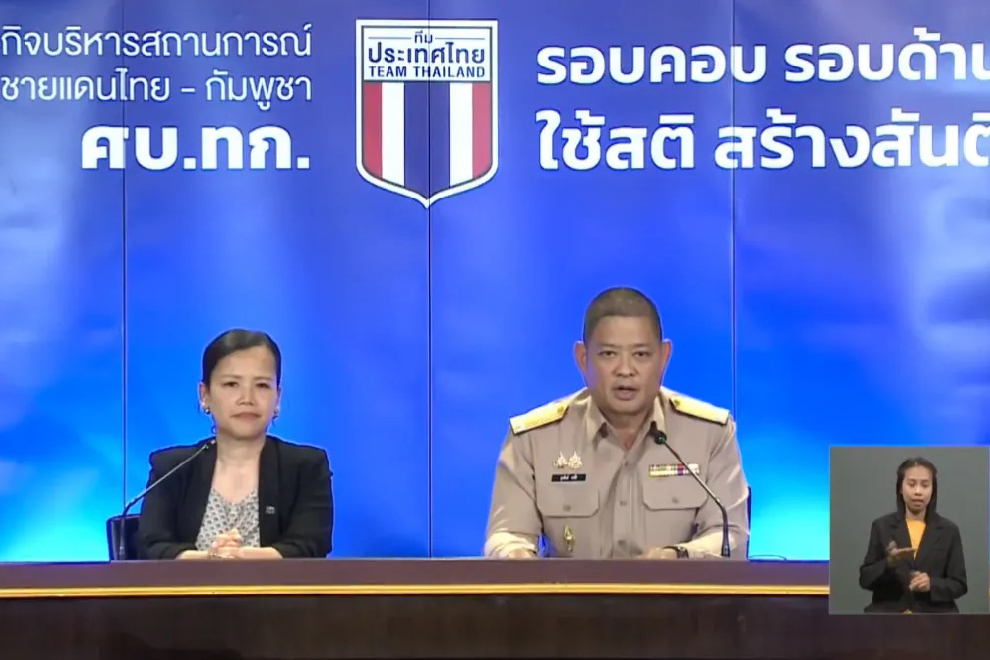 Thai spokesperson of the Ad Hoc Centre for the Thailand–Cambodia Border Situation. PR Thai
#Opinion
In an era where digital nationalism can spark real-world friction, regional stability relies heavily on who controls the narrative. Recently, rhetoric from across the border — often amplified by military elements aiming to mobilise domestic support — has threatened to blur the historical and legal realities of Cambodia’s borders and cultural heritage. To counter this, Cambodia must modernise its public diplomacy.
Relying solely on traditional, formal government statements is no longer enough.
Cambodia needs a dedicated, rapid-response press and strategic communications room, staffed by native-level Thai speakers, to directly engage the Thai public and neutralize misinformation before it takes root.
The problem we face is largely one of asymmetry. When nationalist propaganda or bad faith claims regarding overlapping cultural histories or border disputes circulate within Thailand, they do so in a closed linguistic loop. The Thai public rarely hears Cambodia’s perspective in a language, tone and medium they easily understand. As a result, skewed narratives gain legitimacy simply because they go effectively unchallenged in the Thai domestic sphere.
A specialised communications hub would fundamentally change this dynamic. By utilising fluent Thai speakers, Cambodia could bypass translation bottlenecks and media spin, speaking directly to the Thai populace. This is not about launching an information war; it is about establishing an architecture of truth.
This hub would serve three critical functions:
Rapid De-escalation: Border tensions are frequently inflamed by rumours or out-of-context videos on social media. A rapid reaction team could immediately publish verifiable facts, official legal documents and accurate on-the-ground updates in Thai, neutralising misunderstandings before they escalate into public outrage.
Cultural Clarification: Shared regional history is complex, but it should not be weaponised. Native speakers can articulate the nuances of Cambodian cultural heritage, firmly correcting bad-faith appropriations while fostering a more educational, respectful dialogue.
Direct Diplomatic Engagement:
Communicating in the language of your neighbour shows confidence and sophistication. It demonstrates that Cambodia is not retreating defensively, but is ready to engage transparently and assertively on the regional stage.
Establishing this kind of cross-lingual strategic hub is a standard practice among nations navigating complex geopolitical neighbourhoods. It requires an investment in highly skilled personnel and digital monitoring tools, but the cost of inaction is far greater. Allowing unchecked propaganda to define our borders and our culture in the minds of our neighbours is a risk we cannot afford.
It is time for Cambodia to take control of its own story. By speaking directly to the Thai public in their own language, we can ensure that truth, rather than nationalist ambition, dictates the future of our bilateral relations.
Panhavuth Long is founder and attorney-at-law of Pan & Associates Law Firm. The views and opinions expressed are his own.
-Phnom Penh Post-