Cambodia’s Message to the World: Peace, Partnership, and Responsible Engagement
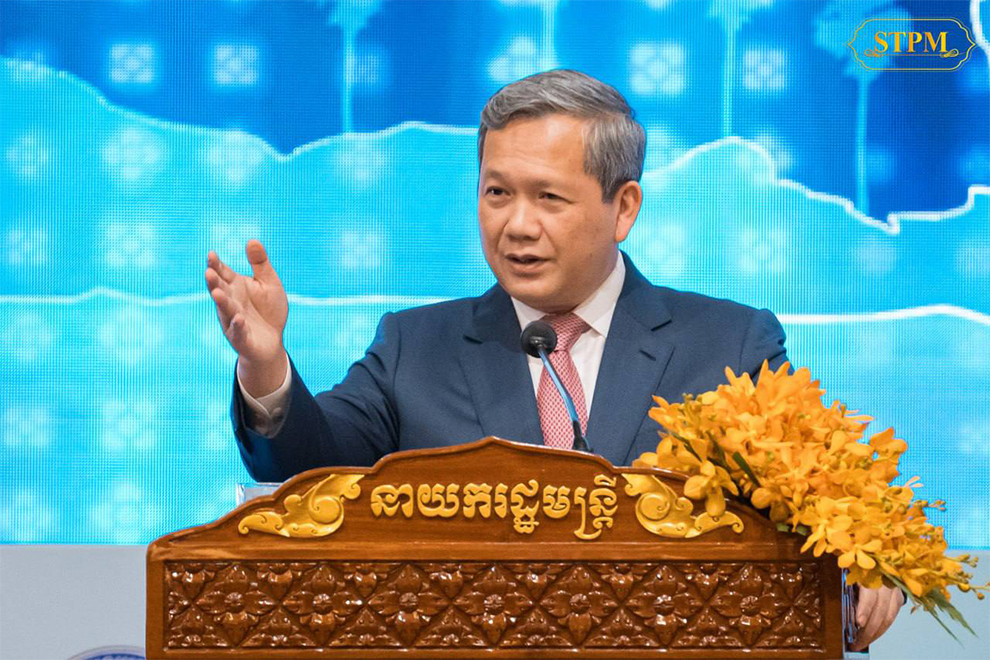 Prime Minister Hun Manet addresses the closing ceremony of the National Authority for Combating Drugs (NACD) annual meeting on March 6. STPM
#Opinion
Prime Minister Hun Manet’s message welcoming visitors from all nations — while emphasising respect for Cambodia’s laws, culture and national reputation — should be understood not merely as a diplomatic gesture, but as a statement of principle regarding how Cambodia intends to engage with the international community. From a legal and governance perspective, the message reflects a broader proposition: that openness to global engagement must ultimately be anchored in the rule of law, national sovereignty and responsible conduct.
As Southeast Asia emerges as one of the most consequential economic regions of the twenty-first century, Cambodia is increasingly defining its role within a rapidly evolving regional and global order.
Over the past two decades, Cambodia has pursued a development strategy grounded in economic openness and regional integration. Tourism, export-oriented manufacturing, agriculture and foreign investment have collectively contributed to one of the most sustained periods of economic growth in the country’s modern history. Cambodia’s increasing participation in regional trade networks and its integration into global supply chains have helped elevate its economic profile within ASEAN and beyond.
Yet the benefits of globalisation are inseparable from the governance challenges it presents. The rapid expansion of digital connectivity, financial mobility and cross-border commerce has created new opportunities for legitimate economic exchange, but it has also facilitated the proliferation of transnational criminal activity. Online fraud, illicit financial schemes and organised cybercrime have become pressing concerns across many jurisdictions, particularly in rapidly developing economies where regulatory frameworks must continually adapt to technological change.
Addressing these challenges increasingly requires coordinated legal responses among states, reflecting the growing recognition within international governance frameworks that transnational crime cannot be effectively managed by any single jurisdiction alone. Cambodia, like many countries in the region, faces the task of ensuring that economic openness is not exploited by actors seeking to take advantage of regulatory gaps or weak enforcement mechanisms.
These developments underscore a central reality of the contemporary global economy: national reputation and regulatory credibility have become critical strategic assets.
Countries perceived as jurisdictions vulnerable to illicit activity risk undermining investor confidence, damaging tourism industries and weakening their standing in international economic networks. Conversely, jurisdictions that demonstrate credible legal enforcement and institutional integrity are more likely to attract long-term, responsible investment and sustainable tourism.
In this context, Prime Minister Hun Manet’s emphasis on rejecting scams and illegal activity carries important legal and policy implications. It signals Cambodia’s intention to ensure that economic openness is accompanied by credible regulatory oversight and adherence to legal standards.
Translating this principle into practice, however, will require sustained regulatory enforcement, stronger institutional capacity and continued cooperation with regional and international partners who are confronting similar transnational challenges.
Equally important is the principle of sovereignty embedded within the prime minister’s message. Welcoming international visitors and investment does not diminish a state’s authority to regulate activities within its territory. On the contrary, the legitimacy of international engagement depends upon the recognition that all economic and social activities conducted within a country must operate within its legal and institutional framework.
As widely recognised in international legal practice, effective cross-border engagement ultimately depends on mutual respect for the rule of law and the sovereign regulatory authority of states. Respect for Cambodian law and cultural norms is therefore not simply a matter of etiquette; it reflects the foundational principle that international engagement must operate within the sovereign legal order of the host state.
This principle carries particular weight in Cambodia’s historical context. Following decades of conflict in the twentieth century, the country’s development has been closely tied to the preservation of peace, political stability and institutional continuity. These foundations have enabled Cambodia to rebuild its economic institutions, expand infrastructure and gradually strengthen its engagement with regional and global partners.
The transition to Manet’s leadership represents a generational shift within Cambodia’s political system, yet the broader strategic priorities remain consistent: safeguarding stability while advancing economic modernisation and international integration.
Within the broader geopolitical landscape, Cambodia’s position in Southeast Asia continues to grow in importance. ASEAN’s expanding economic weight, combined with shifting global supply chains and intensifying strategic competition among major powers, has placed the region at the centre of global economic realignment. In this environment, the credibility of national institutions and regulatory systems increasingly shapes how countries are perceived within regional economic networks.
For countries such as Cambodia, the policy challenge lies in maintaining openness to international cooperation while simultaneously strengthening institutional resilience and regulatory capacity.
Manet’s message therefore reflects a broader strategic orientation. Cambodia seeks engagement with the world through tourism, investment and international partnership — but such engagement must be conducted responsibly, lawfully and with respect for the country’s institutional frameworks.
Responsible tourism and legitimate investment will remain central to this objective. Visitors who respect Cambodia’s cultural heritage contribute to the sustainability of its tourism sector, while law-abiding businesses support job creation, technology transfer and infrastructure development. These forms of engagement reinforce economic growth while strengthening social stability and institutional credibility.
Ultimately, Manet’s message should be understood as both a reassurance and a reminder. Cambodia remains committed to welcoming visitors, investors and partners from across the world, reflecting its long-standing policy of openness and international cooperation. At the same time, that openness carries clear expectations: engagement with Cambodia must respect the country’s legal framework, cultural heritage and institutional integrity.
Cambodia’s future as a trusted destination for tourism, investment and international partnership will depend not only on openness, but on the credibility of the legal and institutional frameworks that govern such engagement.
Ensuring that Cambodia’s economic openness remains anchored in the rule of law, respect for sovereignty and responsible international conduct will ultimately determine how the country’s development trajectory is perceived in the years ahead.
Panhavuth Long is founder and attorney-at-law at Pan & Associates Law Firm. The views and opinions expressed are his own.
-Phnom Penh Post-
———————