Cambodia’s strategic tariff position under Trump’s reset trade policy and comparative ASEAN standing
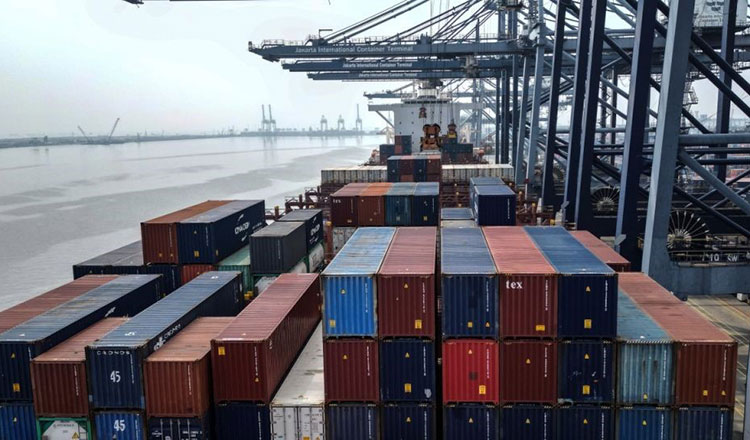 Cambodia’s US tariff position will be largely determined by its actions over the next 12-24 months. AFP
#editorial
I. Executive summary
The US Supreme Court decision invalidating Trump’s additional tariffs has returned Cambodia to Most Favoured Nation (MFN) tariff levels. However, President Trump has already announced replacement tariff mechanisms, meaning Cambodia’s tariff relief is likely temporary.
Cambodia’s future tariff exposure will depend less on legal technicalities and more on its geopolitical, economic, and strategic ranking within ASEAN from the Trump administration’s transactional perspective.
When fully assessed alongside all ASEAN countries—including treaty allies Singapore, Thailand, and the Philippines, and strategic partner Vietnam—Cambodia occupies a middle-tier but not adverse position.
Core strategic conclusion:
Cambodia is unlikely to receive lower tariff rates than top-tier US treaty allies, but also unlikely to be aggressively targeted if it maintains cooperative positioning. Cambodia’s most realistic outcome is moderate, ASEAN-average tariff treatment with potential selective advantages.
II. Legal and tariff status following Supreme Court ruling
Following the Supreme Court decision:
The additional 19% tariff imposed under emergency powers has been invalidated.
Cambodian exports have reverted to normal MFN tariff rates.
These MFN rates vary by sector, typically between: 0% and 20%, with garments averaging 15–18%.
However, Trump has already initiated new tariff authority using alternative legal frameworks, meaning new tariffs will likely be reintroduced within six to 18 months.
Cambodia’s current favourable tariff status should therefore be viewed as a temporary reprieve.
III. Trump administration decision framework: How countries are actually evaluated
Trump’s tariff policy is driven primarily by transactional criteria rather than formal diplomatic alliances alone.
Five primary decision factors determine tariff treatment:
– Trade balance with the United States
– Strategic geopolitical value
– Political cooperation with US economic policy
– Role in supply chain diversification
– Perception of economic threat to US industry
Under this framework, countries are informally grouped into operational tiers.
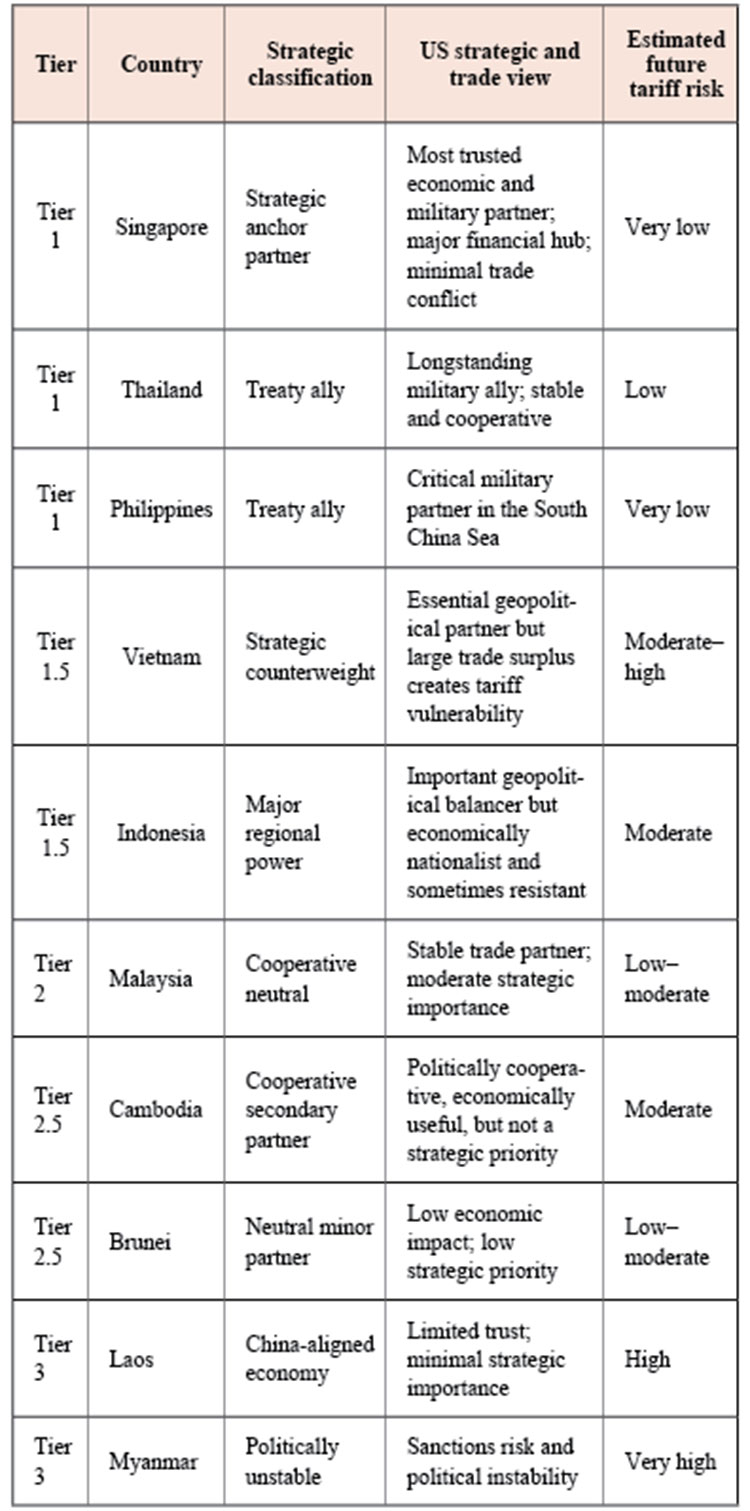
IV. Consolidated ASEAN strategic and tariff risk hierarchy full assessment including Singapore, Philippines, Indonesia, Thailand, Vietnam, Malaysia and Cambodia
The table below reflects the most realistic internal strategic ranking from the Trump administration’s perspective, combining geopolitical alliance status, economic importance, and tariff vulnerability.
V. Cambodia’s precise position: Realistic Trump administration view
Advantages
1. Cambodia is not perceived as a major economic threat
Cambodia’s export volume is relatively small compared to Vietnam or China.
This reduces the likelihood of aggressive tariff targeting.
2. Cambodia demonstrated early political cooperation
Cambodia was among the first countries to engage constructively with Trump’s reciprocal tariff policy in October 2025.
This created political goodwill.
Trump’s decision-making historically favours cooperative countries.
3. Cambodia supports the US supply chain diversification strategy
Cambodia provides an alternative manufacturing base outside China.
This increases Cambodia’s strategic usefulness.
Structural limitations
1. Cambodia lacks formal alliance status
Unlike Thailand and the Philippines, Cambodia does not have treaty alliance protections.
2. Cambodia is not strategically critical like Vietnam
Vietnam plays a central role in US geopolitical balancing against China.
This gives Vietnam structural advantages.
3. Cambodia runs a large trade surplus with the United States
This creates vulnerability under Trump’s trade imbalance-focused approach.
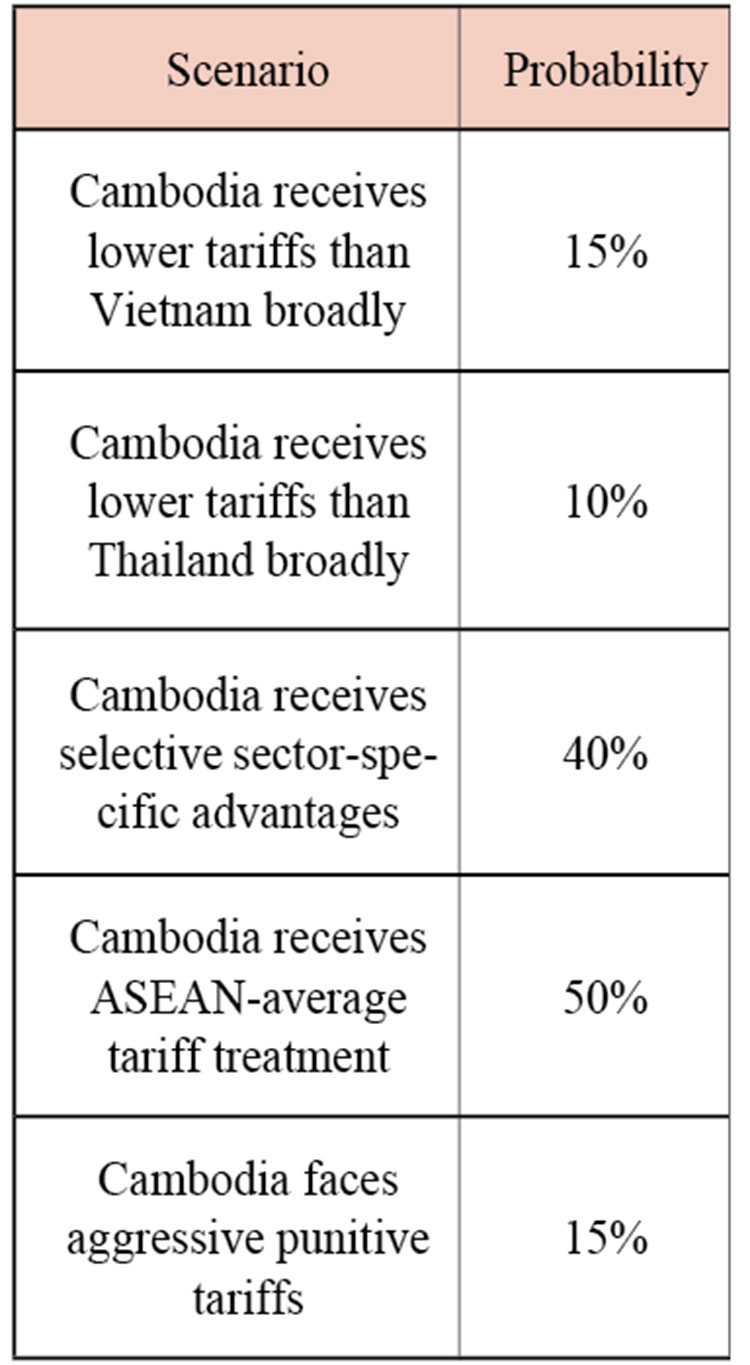
VI. Probability Assessment: future tariff treatment of Cambodia relative to ASEAN
Based on combined geopolitical and economic analysis, the most likely outcomes are:
Cambodia receives tariff treatment broadly similar to Malaysia and Indonesia, slightly higher risk than treaty allies but lower risk than primary trade targets.
VII. Critical comparative insight: Vietnam’s strategic advantage does not guarantee lower tariffs
Vietnam illustrates Trump’s transactional logic clearly.
Despite strategic importance, Vietnam faces tariff risk due to:
• Large trade surplus
• Rapid export expansion
• Perception as a manufacturing competitor
This demonstrates that an alliance or strategic partnership alone does not guarantee tariff exemption.
Economic balance remains a decisive factor.
VIII. Strategic outlook for Cambodia (2026–2030)
Cambodia’s most realistic tariff future:
Not a full exemption
Not aggressive targeting
But inclusion within the general ASEAN tariff framework
Cambodia’s greatest structural advantage lies not in preferential tariffs, but in:
• Competitive labour cost
• Political neutrality
• Supply chain diversification value
IX. Policy implications for Cambodia
Cambodia’s future tariff positioning will be heavily influenced by its actions over the next 12–24 months.
Three key factors will determine Cambodia’s outcome:
Factor 1: Maintaining a cooperative bilateral trade relationship
Continued diplomatic and trade engagement reduces tariff risk.
Factor 2: Preventing tariff circumvention perception
This is the single most important defensive priority.
If Cambodia is perceived as an indirect export platform for China, tariff risk rises sharply.
Factor 3: Increasing strategic economic value
Attracting diversified global investment improves Cambodia’s positioning.
X. Final strategic conclusion
Cambodia is unlikely to receive preferential tariff treatment superior to that of treaty allies such as Singapore, Thailand, or the Philippines, and is unlikely to outperform Vietnam structurally.
However, Cambodia is also unlikely to be aggressively targeted if it maintains cooperative trade relations and strengthens its role as a trusted supply chain partner.
Cambodia’s realistic position is a mid-tier partner with moderate tariff risk but a meaningful opportunity for export growth.
XI. Single most important policy takeaway
Cambodia’s tariff future will be determined less by formal alliances and more by its ability to remain economically useful, politically cooperative, and strategically non-threatening within Trump’s transactional trade system.
-Khmer Times-
—————-
PHOTO: