Dialogue Over Isolation Amid ASEAN’s Broader Challenges
 Dialogue Over Isolation Amid ASEAN’s Broader Challenges
#opinion
As ASEAN navigates the complex aftermath of Myanmar’s controversial elections, the regional bloc’s response has been cautious and divided. While the grouping as a whole has refrained from endorsing the polls, it has not outright rejected them, leaving room for potential recognition of the new administration in the future.
Cambodia, drawing from its own turbulent history, advocates for continued engagement with Myanmar’s leadership through diplomacy and dialogue, rather than isolation.
Cambodia’s position is rooted in empathy and pragmatism. Our nation endured a devastating civil war from 1979 to 1989, ultimately finding resolution with support from the UN and allies like Japan and the US. This experience informs our understanding of Myanmar’s deep-seated issues. In 2022, during Cambodia’s ASEAN chairmanship, the former prime minister Hun Sen travelled to Myanmar to meet directly with junta leaders, emphasising that face-to-face discussions are essential for grasping problems and forging solutions. Cambodia remains committed to sharing its experiences and providing diplomatic support to Myanmar.
The ASEAN Five-Point Consensus on Myanmar is commendable in principle, but it may sometimes be overly idealistic and mismatched to the ground realities.
Instead, ASEAN should create more opportunities for Myanmar to engage in talks. In a world right now where few nations in ASEAN countries prioritise rule-based order and democracy, many focus instead on military might and territorial ambitions — such as Thailand’s historical incursions into Cambodian territory, driven by economic and military superiority. Notably, no ASEAN member, nor any country globally, has withdrawn its embassy from Myanmar, signalling quiet, ongoing cooperation with the current regime.
During recent ministerial discussions on Myanmar, the atmosphere underscored the value of direct dialogue. Cambodia recognizes the unfairness in global expectations: we demand perfection from developing nations while overlooking flaws in powerful ones. ASEAN’s diverse political systems and mindsets require closed-door conversations with Myanmar’s leaders to build mutual understanding.
Posing a rhetorical question: Will any ASEAN country declare war on Myanmar or shutter its embassy? The answer is no. Thailand, for instance, maintains robust trade ties with Myanmar, while others push for restoration without unified action.
This lack of consensus on Myanmar weakens ASEAN overall, particularly as the Philippines assumes the chairmanship. The bloc has historically struggled with internal disputes, failing to adjudicate fairly in cases like Thailand’s invasion of Cambodia, where it ignored internationally recognised maps from the UN and the International Court of Justice (ICJ).
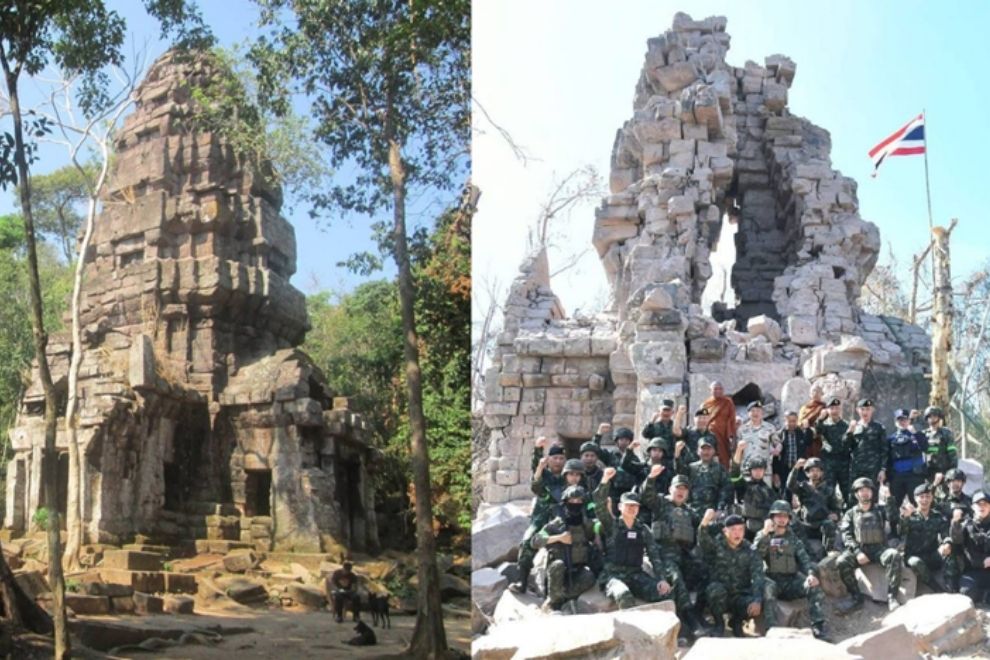
ASEAN often prioritises economic discussions and informal chats over justice and fairness, rendering it ineffective on thorny issues. If ASEAN cannot resolve a bilateral conflict like the Thai-Cambodian border dispute — where Thailand still occupies many Cambodian sites after their recent invasion of Cambodia — how can it address Myanmar’s internal crisis?
Looking ahead, the Myanmar disagreement is unlikely to overshadow other regional priorities, such as tariff wars, the South China Sea tensions, Russia-related matters or climate change impacts. Regrettably, ASEAN’s weakness extends to these areas too. Members focus on national interests over collective ones, enabling only superficial progress on issues like intra-ASEAN visa-free travel or economic cooperation. True resolution on geopolitically charged topics remains elusive.
Cambodia, meanwhile, grapples with its ongoing bilateral tensions with Thailand, fuelled by Thai political rhetoric, educational narratives that distort history and threats from parties vowing to “destroy” Cambodia. This conflict ranks as a significant concern — perhaps second only to the South China Sea under Philippine leadership, given Manila’s direct disputes with China. Yet, Myanmar demands attention, and Cambodia will continue emphasising diplomatic engagement.
Members supportive of re-engaging Myanmar’s military or emerging government — such as Thailand, Cambodia and Laos — could influence the broader group over time. With the new Myanmar administration set to be in place by April 1, the regime appears poised to endure and strengthen, bolstered by allies like Thailand, China and Russia. ASEAN should extend more invitations for Myanmar’s participation in meetings, acknowledging the bloc’s varied political landscapes. Ultimately, peace through dialogue and diplomacy offers the best path forward, fostering understanding in an imperfect world.
If ASEAN has repeatedly failed to condemn Thailand’s aggression and occupation of Cambodian territory — despite clear violations of international law, the UN Charter and binding rulings from the International Court of Justice (ICJ) — and if the bloc cannot even clearly state who is right and who is wrong in such a blatant interstate conflict, then what possible justification remains for continuing to block Myanmar from full participation in ASEAN meetings?
If ASEAN cannot uphold fairness and justice in a case involving UN-recognized maps, ICJ judgments, and clear aggression between members, its credibility on Myanmar — or any other issue — crumbles. The so-called “ASEAN way” of consensus and non-interference appears less a guiding principle and more a convenient shield for inaction when national interests diverge.
True regional unity requires consistent application of rules: either enforce international law and Charter principles across the board or admit that ASEAN prioritises economic cooperation and “coffee talk” over justice, fairness and sovereignty protection.
Until ASEAN demonstrates the political will to address its own members’ violations impartially — starting with unequivocal support for Cambodia’s territorial integrity based on established international law — its continued exclusion of Myanmar rings hollow. What standard is being applied, if not one of selective blindness? Cambodia, drawing from its own history of conflict resolution through UN-backed diplomacy, calls for genuine dialogue and equity. ASEAN must decide whether it stands for principled regionalism or merely the preservation of the status quo at any cost.
Dr. Seun Sam is a policy analyst at the Royal Academy of Cambodia. The views and opinions expressed are his own.
-Phnom Penh Post-
———————