No Border Claim Justifies Violence Against Civilians or the Destruction of History
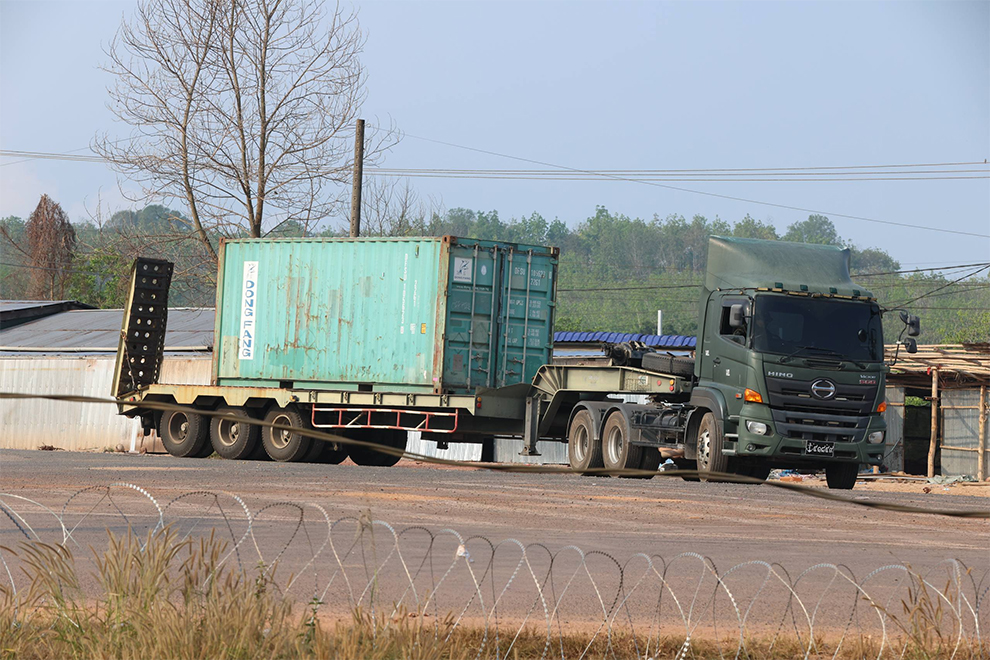 The Thai military transported shipping containers to Thma Da in Pursat province on February 7. The containers were used as barriers, to block roads. AKP
#opinion
Territorial disputes test the character of nations. They reveal whether governments choose law over force, restraint over nationalism and humanity over intimidation. Along the Thai–Cambodian border, that test continues — and the consequences are felt most sharply by civilians and by history itself.
Cambodia is not a disputed entity. It is a sovereign state, a member of the UN, and its borders are internationally recognised. These borders are grounded in historical treaties and have been reaffirmed by binding rulings of the International Court of Justice (ICJ), particularly regarding the Preah Vihear Temple and its surrounding area. International law is unequivocal: borders cannot be altered by military pressure.
Yet repeated episodes of tension and armed confrontation along the border suggest a dangerous willingness to treat force as a negotiating tool. When troops move, artillery fires and civilians flee their homes, the issue ceases to be abstract or historical. It becomes immediate, human and unlawful.
Unarmed civilians are not participants in territorial disputes. International humanitarian law is explicit: civilians must be protected at all times. Any military action that endangers non-combatants, displaces families or damages civilian infrastructure is not merely unfortunate — it is a serious violation of fundamental legal and moral principles. These are not Western standards or political preferences; they are universal rules accepted by the international community.
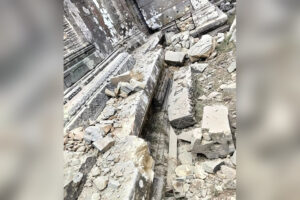
The threat to Cambodia’s ancient temples adds an even graver dimension. These sites — Preah Vihear and others — are not symbols to be claimed or contested by modern states. They are remnants of human civilisation, protected under UNESCO and the Hague Convention. To damage, militarise or endanger them is to harm not only Cambodia, but humanity’s shared heritage. Once destroyed, history cannot be rebuilt.
Some may argue that such incidents are accidents of conflict or misunderstandings along a tense frontier. International law does not accept that excuse lightly. The principles of distinction, proportionality and military necessity exist precisely to prevent “accidents” from becoming patterns. When violations recur, responsibility inevitably moves upward — to commanders, decision-makers and political leaders.
This does not mean guilt can be declared by headlines or slogans. Legal responsibility must be determined by evidence and proper judicial processes. But the absence of a verdict does not erase the seriousness of the conduct, nor does it absolve leaders of their duty to prevent harm.
Nationalism may rally crowds, but it does not protect civilians. Power may move borders on a map for a moment, but it cannot erase international law. And no claim — historic, strategic or political — justifies killing unarmed people or risking the destruction of irreplaceable heritage.
Thailand and Cambodia share deep cultural and historical ties. These ties should compel restraint, not rivalry. Leadership is measured not by how aggressively a state asserts itself, but by how faithfully it upholds law when restraint is hardest.
The international community should remain clear-eyed and consistent: disputes must be resolved through dialogue and law, not force. Civilians must be protected without exception. Cultural heritage must be treated as inviolable.
History is watching. So are the people who live along the border. And they deserve peace governed by law, not fear shaped by power.
Tesh Chanthorn is a Cambodian who longs for peace, The views and opinions expressed are his own.
-Phnom Penh Post-
———————