Japan’s enduring support for and lasting impact on Cambodia’s state building
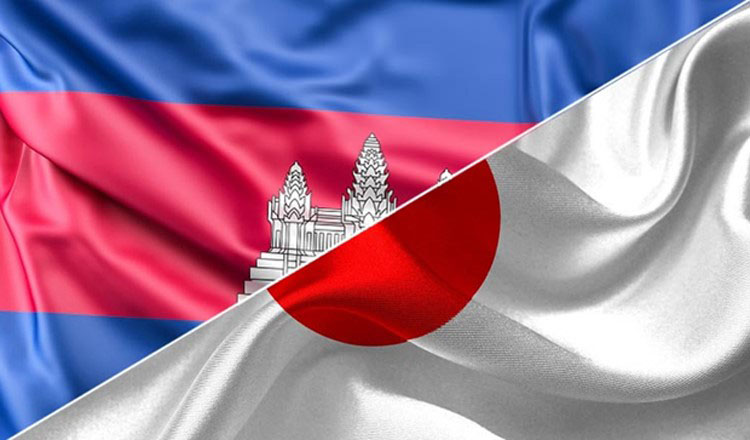 Japan’s enduring support for and lasting impact on Cambodia’s state building
-Kin Phea, PhD-
Over the past three decades, Japan has been one of Cambodia’s most steadfast and trusted partners, playing a vital role in the Kingdom’s reconstruction, modernisation, and state-building efforts.
Japan’s long-term commitment to Cambodia has not only provided tangible economic and technical benefits but has also strengthened national capacity, institutional development, and human resources. This partnership—built upon mutual respect, shared development goals, and cooperation through multilateral platforms—continues to shape Cambodia’s advancement toward peace, stability, and prosperity.
Japan’s engagement with Cambodia began in earnest with the United Nations Transitional Authority in Cambodia (UNTAC) from 1992 to 1993, during which Japan made a major contribution to restoring peace and supporting the country’s first democratic elections. Following the end of Cambodia’s civil war, Japan fully resumed its official development assistance (ODA) in 1991 and has since played a significant role in the Kingdom’s reconstruction and development.
According to the Japan’s Economic Cooperation with Cambodia report (March 2025) by the Ministry of Foreign Affairs of Japan, Tokyo has provided approximately $2.29 billion in yen loans, $1.76 billion in grant aid, and $730 million in technical cooperation since 2019. This makes Japan the second-largest bilateral donor to Cambodia, after China.
Japan’s ODA focuses on three priority areas under its “Country Development Cooperation Policy for Cambodia” revised in April 2024: industrial transformation and economic growth, sustainable and equitable development, and the creation of a safe and secure society. Through these pillars, Japan’s assistance targets both physical infrastructure and institutional capacity—two fundamental pillars of Cambodia’s state-building process.
For infrastructure development, Japan’s contributions are monumental and enduring. Flagship projects such as the Kizuna Bridge (constructed in 1996–2000) in Kampong Cham and Tsubasa Bridge (2011–2015) across the Mekong River in Neak Loeung have transformed Cambodia’s connectivity. These bridges, featured on Cambodian banknotes, symbolise the depth of bilateral friendship and Japan’s commitment to improving Cambodia’s logistical network.
According to a Khmer Times report published in October 2023, Japan provided more than US$700 million to upgrade National Road No. 5, a key highway linking Phnom Penh with the Thai border. This infrastructure development has helped reduce transport costs, promote trade, and facilitate regional integration across the Mekong subregion.
Equally transformative has been Japan’s investment in human capital. According to the Project for Human Resource Development Scholarship (JDS) programme’s website, more than 580 Cambodian officials and professionals have pursued graduate studies in Japan. Many of these scholars now serve in key positions across government ministries, academia, and the private sector.
The programme exemplifies Japan’s philosophy of capacity building—training individuals to manage and sustain their own institutions, thereby enhancing the efficiency and transparency of Cambodia’s governance system.
Japan’s technical cooperation extends to public administration, legal reform, and local governance, contributing to the development of a more accountable and competent bureaucracy. Through these initiatives, Japan continues to strengthen Cambodia’s institutional capacity, ensuring that state institutions are equipped with skilled personnel capable of promoting good governance and sustainable national development.
In addition to infrastructure and human resource development, Japan’s peacebuilding and humanitarian assistance has been instrumental. Cambodia, one of the world’s most landmine-affected countries, has benefited from Japan’s consistent funding and technical aid to the Cambodian Mine Action Centre (CMAC). According to Ly Thuch, Senior Minister and First Vice-President of the Cambodian Mine Action & Victim Assistance Authority (CMAA), as reported by EAC News in June 2023, Cambodia has received over $200 million in demining assistance from Japan since 1994.
According to a Xinhua report in early 2025, Japan pledged about $11 million to support mine clearance and rural development in Cambodia, including $8.3 million to enhance CMAC’s South-South Cooperation training and US$2.1 million for a new training and outreach complex. These efforts have reclaimed farmland, restored livelihoods, and strengthened rural security—demonstrating how Japan’s humanitarian aid underpins Cambodia’s state-building and sustainable development.
On the economic front, Japan has become a key driver of Cambodia’s industrial growth and trade diversification. Bilateral trade between the two nations has grown steadily, rising from $1.4 billion in 2017 to $2.2 billion in 2024, with Japan emerging as one of Cambodia’s major trading partners, according to a Khmer Times report published earlier this year. These trade flows—focused on garments, footwear, agricultural products, and machinery—provide stable employment and help expand Cambodia’s export base.
Japanese investment in Cambodia has also expanded significantly. The Ministry of Foreign Affairs of Japan reported that as of October 2024, 417 Japanese companies were operating in Cambodia, marking a substantial increase in investment confidence. Many of these firms are located in the Phnom Penh Special Economic Zone (PPSEZ), which Japan helped to establish and continues to support through both public and private channels.
The PPSEZ has created thousands of jobs, improved industrial management standards, and transferred advanced technologies to Cambodian workers and enterprises. In addition, Japan has been promoting small and medium-sized enterprise (SME) development, digital transformation, and clean energy initiatives, reflecting a holistic approach to economic cooperation that aligns with Cambodia’s Industrial Development Policy (2023–2030).
Speaking at the celebration of the 65th birthday of the Emperor of Japan, Deputy Prime Minister Vongsey Vissoth, Minister in charge of the Council of Ministers, highlighted that Japanese investment in industry, agriculture, and digital sectors has significantly contributed to Cambodia’s economic growth, as quoted by Khmer Times in February. Such investments have created thousands of jobs, enhanced skills, and facilitated technology transfer. Prominent Japanese companies such as Minebea, Aeon, and Toyota continue to thrive in Cambodia and are expanding their operations.
Beyond large-scale projects, Japan’s cooperation extends to social and environmental sustainability. Under its 2024 policy, Japan assists in urban development, environmental protection, disaster risk reduction, and public health. These initiatives improve living standards and reduce disparities. Japan’s expertise in climate change adaptation and sustainable agriculture also helps Cambodia build resilience against environmental challenges.
The cumulative impact of Japan’s multi-dimensional cooperation is profound. The infrastructure connects communities and markets; the scholarships and training programs build capable human capital; the mine clearance and humanitarian projects safeguard lives and restore dignity; and the growing trade and investment partnership generates employment and long-term prosperity.
These elements form the fabric of a modern Cambodia that is increasingly capable, confident, and connected.
As Cambodia advances toward its vision of becoming an upper-middle-income country by 2030, Japan’s role remains indispensable. The enduring friendship, elevated to a Comprehensive Strategic Partnership in 2023, serves as a model of mutual trust. Japan’s contributions are embedded in the bridges that carry goods, the demined fields that sustain livelihoods, the ministries led by JDS alumni, and the enterprises where Cambodian workers gain new skills. These are the living symbols of a partnership that has not only rebuilt Cambodia but continues to build its future.
The author is Director-General of the International Relations Institute of Cambodia, Royal Academy of Cambodia. The views expressed here are the author’s own.
-Khmer Times-
——————
#CambodiaWantsPeace
#JusticeForCambodia
#Cambodianeedpeace
#TruthFromCambodia
#ThaiLawOnCambodianSovereignty
#ទាហានថៃបានអនុវត្តច្បាប់ថៃនៅលើទឹកដីខ្មែរ