Editorial 90 – The Mind Needs a Living World
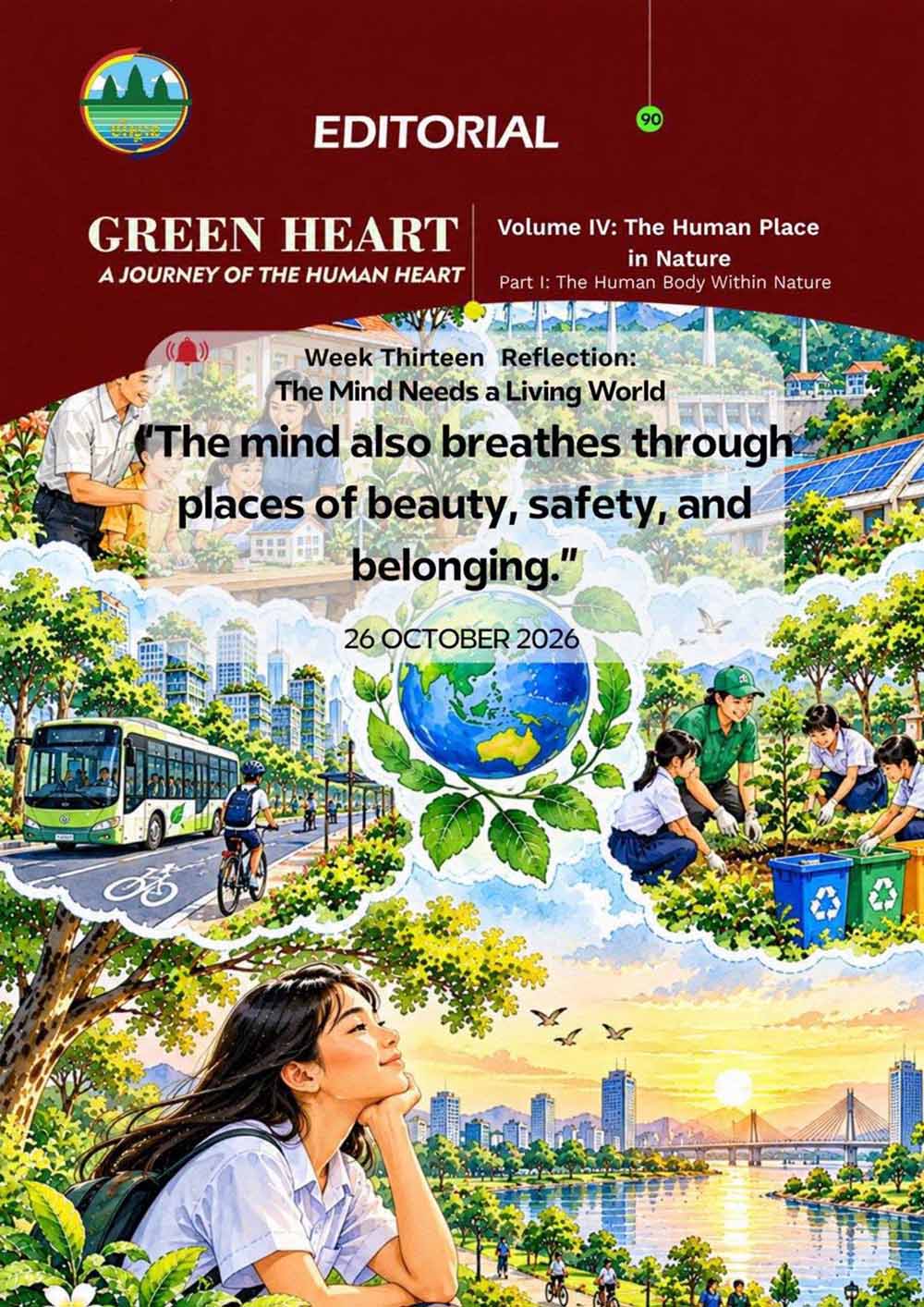 Editorial 90 – The Mind Needs a Living World
Opening Thought
“The mind also breathes through places of beauty, safety, and belonging.”
Editorial
Environmental health includes the mind. Noise, heat, crowding, disaster, pollution, displacement, and fear can create stress. Safe green and blue spaces may support relaxation, attention, movement, social connection, and recovery.
Research often finds associations between contact with nature and aspects of mental well-being, but effects vary. A park may feel peaceful to one person and unsafe to another. Accessibility, maintenance, culture, disability, weather, and personal experience matter.
Nature is not a replacement for professional mental-health care. Depression, anxiety, trauma, and other conditions deserve qualified support. Telling someone simply to “go outside” can minimize real suffering.
Yet daily contact with living things can become one supportive practice. Watching leaves move, caring for a plant, walking in shade, listening to birds, gardening, or sitting near water may help some people feel present and connected.
Environmental loss can also cause grief. A beloved tree removed, a river polluted, a farm lost to drought, or a community displaced by disaster may affect identity and memory. This grief is real and should be met with listening, not dismissal.
Climate change can create anxiety about the future, especially among young people. Honest education should include solutions, shared responsibility, and achievable action. Fear without agency can overwhelm; hope without truth can feel empty.
Community projects may strengthen mental well-being through service and friendship. A garden, cleanup, tree-care group, or nature club offers both environmental benefit and human connection when participation is safe and voluntary.
Silence also needs balance. Natural places are not truly silent, and people who live or work there have rights. Protecting peace should not mean excluding communities or treating their lives as disturbance.
Notice how one place affects your mind. Do your shoulders relax? Does attention sharpen? Do you feel unsafe or welcome? The relationship between mind and place begins with honest experience.
The living world cannot remove every sorrow. It can remind us that we belong to a story larger than the moment and that growth can continue after difficult seasons.
Access should be intentional. A school garden, shaded courtyard, window view, indoor plant, or photograph of a familiar landscape may offer connection where parks are distant. Small opportunities do not replace broader green-space justice, but they can make care available now.
The person using the space should help decide what feels restorative, welcoming, and safe.
Buddhist Reflection
Mindfulness returns attention to present experience without denying pain. Nature can support this practice, while compassion reminds us to seek human help when suffering is too heavy to carry alone.
Today’s Reflection
Which safe place helps my mind feel calm, attentive, or connected?
Today’s Action
Spend ten mindful minutes in a safe natural or green place. Record what you sensed and how your mind responded.
Today’s Pledge
Today I will care for my mind, respect the minds of others, and protect places that support well-being.
« When we protect nature, we protect all beings—including ourselves.»