Beyond Rebranding: Let the Evidence Speak for Khmer Heritage
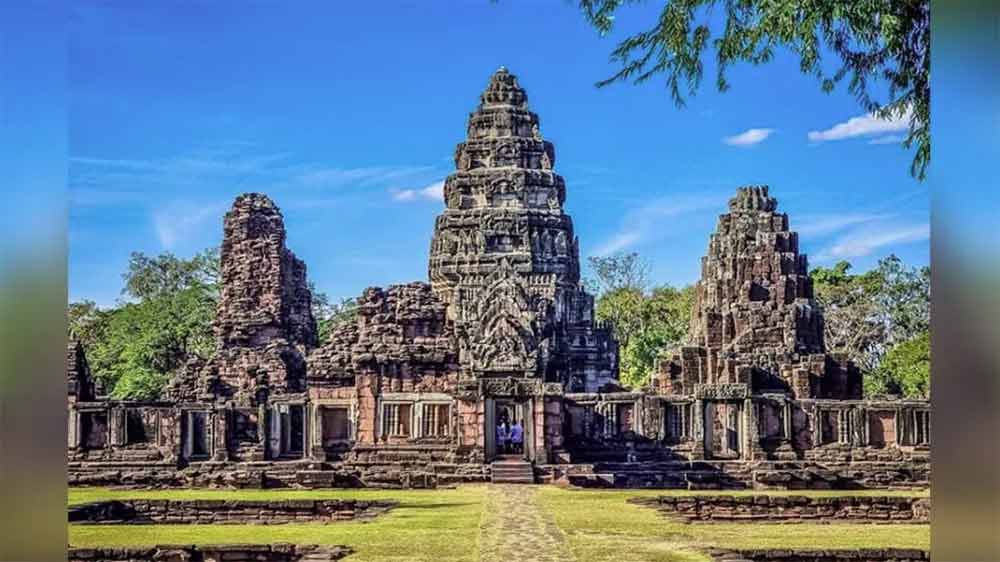 ប្រាសាទភិម៉ាយ នៅខេត្តនគររាជសីមា ប្រទេសថៃ។
The Khmer-style Phimai temple is in Thailand’s Nakhon Ratchasima province. Social media
ប្រាសាទភិម៉ាយ នៅខេត្តនគររាជសីមា ប្រទេសថៃ។
The Khmer-style Phimai temple is in Thailand’s Nakhon Ratchasima province. Social media
#Opinion
History does not begin with modern borders, yet that elementary fact is routinely forgotten when ancient Southeast Asian heritage is filtered through contemporary nationalism. Over recent years, regional observers have grown increasingly concerned with what can be described as “Thailandisation” — not as an attack on Thai citizens or an attempt to claim that all regional culture was exclusively Khmer, but as an analytical critique.
In practice, Thailandisation refers to a state-endorsed and commercial tendency to retroactively re-encode mainland Southeast Asia’s shared, multi-layered heritage as exclusively and inherently Siamese, while systematically obscuring the foundational Khmer, Mon and Indic lineages that shaped it.
Mainland Southeast Asian history was never a single-nation narrative. For centuries, diverse peoples and polities across the Chao Phraya and Mekong basins interacted through commerce, migration, warfare, intermarriage, and the continuous exchange of philosophical and artistic traditions.
Long before modern demarcations existed, Mon kingdoms like Dvaravati introduced early Theravada traditions, while the Khmer Empire developed an expansive administrative, religious and architectural civilisation that influenced vast expanses of the mainland. Later Tai-speaking polities, notably the Ayutthaya Kingdom, synthesised these traditions — adopting Khmer court customs, Brahminical rites and royal vocabulary (rachasap) — while developing their own distinct literature, law and social models. Cultural exchange was dynamic and multi-directional.
The problem, therefore, is not that traditions evolved or crossed borders. The problem arises when modern promotional apparatuses project contemporary nation-state borders backward in time, flattening centuries of cultural synthesis into an exclusive national monopoly.
Nowhere is this tension clearer than in the material record. Stone monuments, epigraphic registers and archaeology do not adjust themselves to fit modern geopolitical claims. Temples across the Khorat Plateau, such as Phimai and Phanom Rung, were constructed as integral components of the Angkorian royal road system, housing Old Khmer and Sanskrit inscriptions that explicitly document Angkorian statecraft and patronages.
Recognising that these monuments and their associated artistic canons were born of the Khmer civilisational sphere does not compromise modern Thailand’s sovereignty over the land on which they stand. Modern territorial jurisdiction is defined by 20th-century treaties, international conventions and bilateral demarcations; cultural antiquity is governed by epigraphy and material culture. Conflating the two erodes the credibility of public history.
The linguistic and performative record reveals similar deliberate omissions. A significant portion of higher-register administrative, religious and ceremonial Thai vocabulary derives directly from Old and Middle Khmer.
Likewise, traditional court dances, textiles and ritual iconography carry lineages documented across Angkorian bas-reliefs centuries prior to the consolidation of modern national identities. To acknowledge this does not diminish Thailand’s cultural achievements; rather, it highlights the sophisticated cross-cultural synthesis that made Siamese civilisation possible. Cultural borrowing and adaptation are natural pillars of human civilisation; retroactive erasure of the source, however, is historical revisionism.
As tourism campaigns, digital algorithms and soft-power initiatives increasingly define global perceptions of heritage, the imperative for scholarly rigor becomes urgent. Modern marketing should not be permitted to supplant peer-reviewed archaeology and linguistics. Shared heritage does not mean interchangeable origins, nor does it justify severing ancient artistic forms from the cultures that created them.
The defence of Khmer heritage does not require exaggerated claims, nor does it require animosity toward neighbouring states.
It demands only fidelity to verifiable evidence: stone inscriptions, archaeological strata, historical manuscripts, comparative linguistics, and verified international archives. The past cannot be rewritten by marketing slogans or social-media campaigns. It belongs to empirical evidence — and to neighbours courageous enough to honour history as it was actually lived.
Tesh Chanthorn is a Cambodian citizen who longs for peace. The views and opinions expressed are his own.
-Phnom Penh Post-
———————