Cambodia urges border action, defends maritime conciliation after Thai PM’s UN criticism
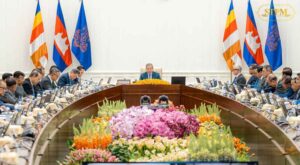
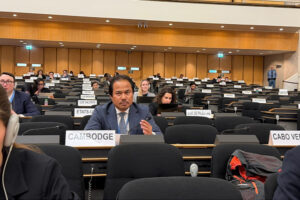
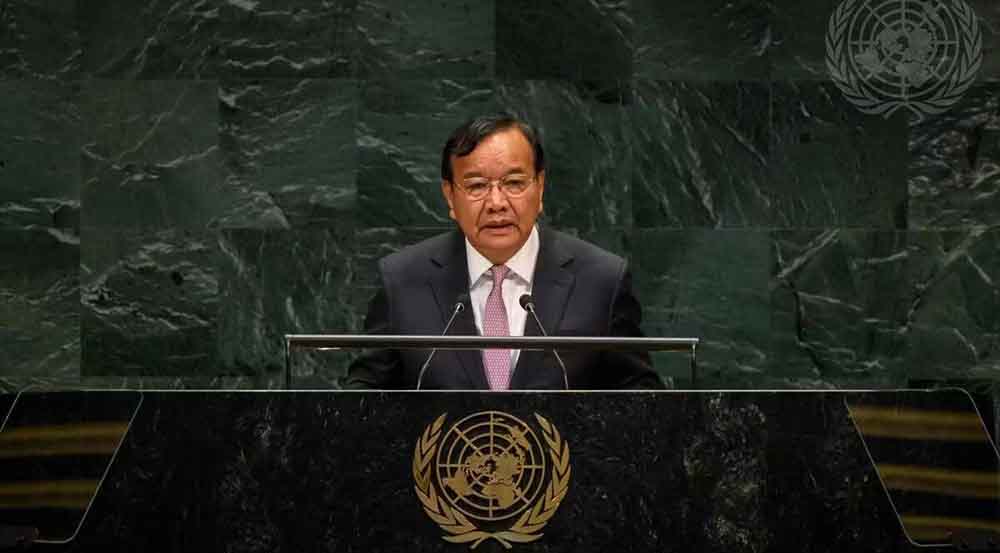 Sokhonn Prak, Deputy Prime Minister, Minister for Foreign Affairs and International Cooperation of Cambodia, addresses the general debate of the General Assembly’s eighty-first session.
#National
Cambodia has urged Thailand to implement existing border agreements, resume joint demarcation work and allow more than 20,000 displaced Cambodian civilians to return home, while defending its decision to seek international conciliation over the countries’ maritime dispute.
In an address to the UN General Assembly on September 26, Prak Sokhonn, Cambodian Minister of Foreign Affairs and International Cooperation, warned that the recent conflict had seriously eroded trust between the neighbours and left lasting damage, including to cultural heritage sites, as well as a lingering threat from unexploded ordnance.
“Rebuilding trust is therefore not merely desirable; it is essential to the future of our bilateral relations and to our shared interest in lasting peace and good-neighbourly relations,” he said.
His remarks came a day after Thai Prime Minister Anutin Charnvirakul told the assembly that Cambodia had not given bilateral dialogue “a genuine chance” and had instead initiated compulsory conciliation proceedings under the UN Convention on the Law of the Sea, or UNCLOS.
Sokhonn did not name Anutin or explicitly address his speech.
He said Cambodia’s approach to the border dispute remained grounded in peaceful settlement and called for full implementation of the Kuala Lumpur Joint Declaration, the Fuxian Consensus and, in particular, the joint statement of December 27, 2025.
Under that statement, he said, both countries committed to renounce the threat or use of force, respect international boundaries, reduce tensions and work towards normal relations.
Sokhonn said the prompt resumption of survey and demarcation by the Joint Boundary Commission would help address outstanding claims and establish a mutually recognised boundary in accordance with international law and existing agreements.
He also called for the return of more than 20,000 Cambodian civilians who, he said, remained unable to go home because of continued military occupation and obstruction.
Activities in territory Cambodia considers occupied that could create or consolidate a fait accompli should cease, he added.
On the separate maritime dispute, Sokhonn said Thailand’s decision in May to terminate the 2001 memorandum of understanding had removed the only existing bilateral legal framework specifically established to address it.
Cambodia had therefore initiated compulsory conciliation under UNCLOS, he said.
He described the first meeting of the conciliation commission in Singapore earlier this month as an opportunity to bridge differences and rebuild trust.
Anutin, in his September 25 address, said Thailand was participating in the UNCLOS proceedings in good faith, but also called for concrete cooperation on border security, online scams and demining.
“Thailand has never sought conflict,” Anutin said, adding that peace required both countries to work together in earnest.
Sokhonn likewise identified online scams as a major concern, calling their suppression one of Cambodia’s highest national priorities.
He noted that criminal networks operated across borders and required stronger international cooperation, pointing to a conference Cambodia hosted this week with international partners.
The two leaders’ addresses set out different accounts of how trust broke down and how it should be restored.
Cambodia has called for renewed land-border demarcation and compliance with ceasefire commitments, while pursuing maritime dispute conciliation through the UNCLOS process.
Thailand has questioned Cambodia’s choice of that process and pressed for bilateral cooperation on security along the shared border.
-Phnom Penh Post-