What Is the Price of Destroying Humanity’s Heritage?
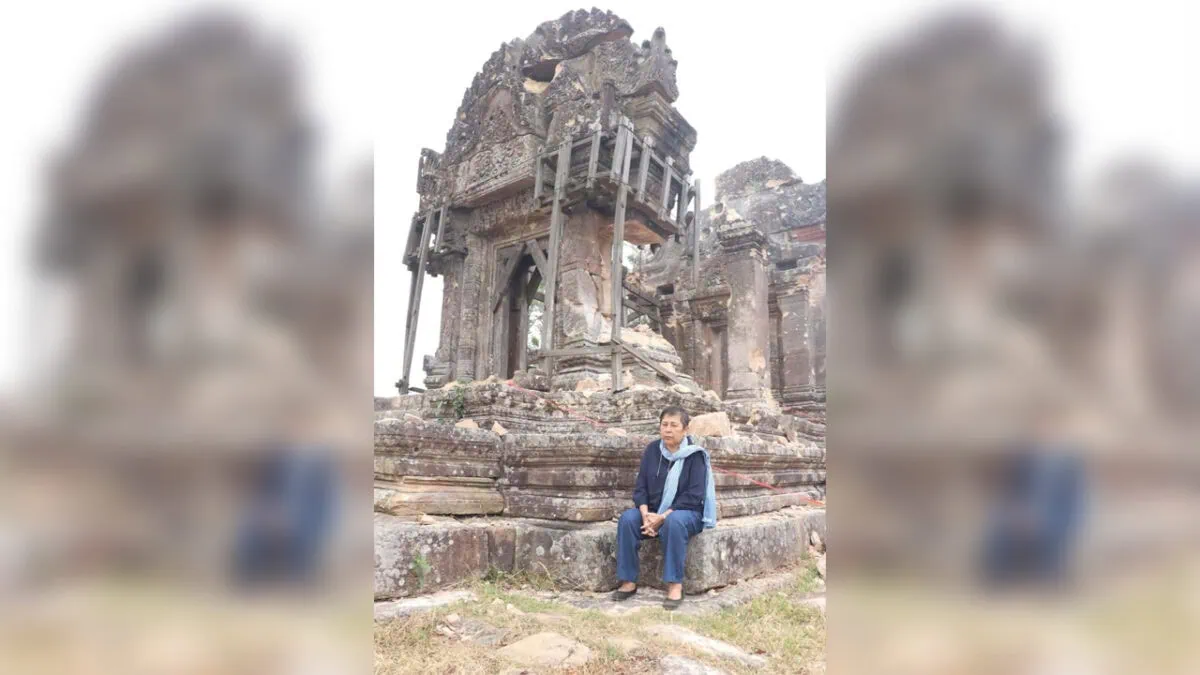 Culture minister Phoeurng Sackona personally inspected the extensive damage suffered by the much-loved World Heritage Site. Supplied
#Opinion
As a Cambodian, I believe that the destruction of cultural heritage is not merely a loss to one nation — it is a loss to all humanity. Ancient temples are more than stone structures. They are living records of human civilisation, symbols of identity and priceless treasures that connect past, present and future generations.
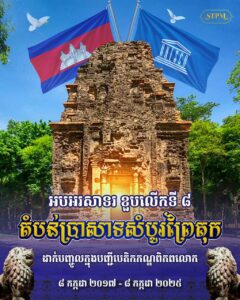
Reports, official statements and widely circulated from the Cambodia–Thailand border conflict have deeply concerned me. The confirmed deployment of Royal Thai Air Force fighter jets — specifically Gripen and F-16 aircraft — alongside the heavy use of artillery, bombs and shells, has escalated the situation dramatically. These bombardments have raised serious questions about the reported damage to Preah Vihear Temple, a UNESCO World Heritage Site, as well as the ancient temple complexes of Ta Mone Thom and Ta Krabey.
Whether viewed from a Cambodian lens or from the perspective of humanity, these sites represent an irreplaceable cultural legacy. If they have been damaged during armed conflict, the consequences extend far beyond the borders of any single country.
This leads me to ask a simple but important question: What is the price of destroying humanity’s shared heritage?
According to international law, UNESCO World Heritage Sites are not merely national treasures; they are part of the cultural heritage of all humanity. The 1972 UNESCO World Heritage Convention, particularly Article 6(3), provides that State Parties undertake not to take any deliberate measures that may damage the cultural and natural heritage situated within the territory of other State Parties.
The 1954 Hague Convention for the Protection of Cultural Property in the Event of Armed Conflict further requires parties to respect and protect cultural property during armed conflict and to refrain from acts of hostility against such property except in the limited circumstances recognized by international law.
In addition, the generally accepted rules of international law on State Responsibility provide that a state found internationally responsible for an internationally wrongful act must make full reparation for the injury caused. Such reparations may include restitution, financial compensation, rehabilitation and other appropriate remedies.
In my opinion, these legal principles should not remain words on paper. They should be applied consistently and without double standards.
Any country that is found, through an independent and impartial international process, to have unlawfully damaged or destroyed a UNESCO World Heritage Site should bear full legal responsibility under international law. Responsibility should not end with expressions of regret or diplomatic statements. It should include accountability, full restoration where possible, financial compensation where appropriate and long-term support for the preservation of the damaged heritage.
Money may rebuild damaged walls, but it cannot restore centuries of history, culture, faith and identity that have been lost forever. Some losses simply cannot be measured in financial terms.
This is why I respectfully ask UNESCO and the international community: Should UNESCO immediately dispatch an independent mission to assess the reported damage?
Should the UN support an impartial international investigation to establish the facts?
Should international experts determine the full cost of restoration and recommend appropriate reparations if international responsibility is established?
These are questions that deserve serious answers.
The world’s cultural heritage belongs to all humanity, not only to the countries in which it is located. Therefore, protecting it is a shared responsibility, and destroying it should carry meaningful legal consequences.
My hope is that the international community will demonstrate that international law applies equally to every nation, regardless of its size, political influence or military power. Justice should never depend on double standards.
The destruction of a World Heritage Site is not only an injury to one country. It is an injury to the history of humanity itself.
If international law truly exists to protect humanity’s common heritage, then it must be enforced fairly, consistently and without exception.
Future generations deserve to inherit these treasures, rather than read about what once existed.
Tesh Chanthorn is a Cambodian citizen who longs for peace. The views and opinions expressed are his own.
-Phnom Penh Post-
———————