Cambodia calls for UN Security Council reforms
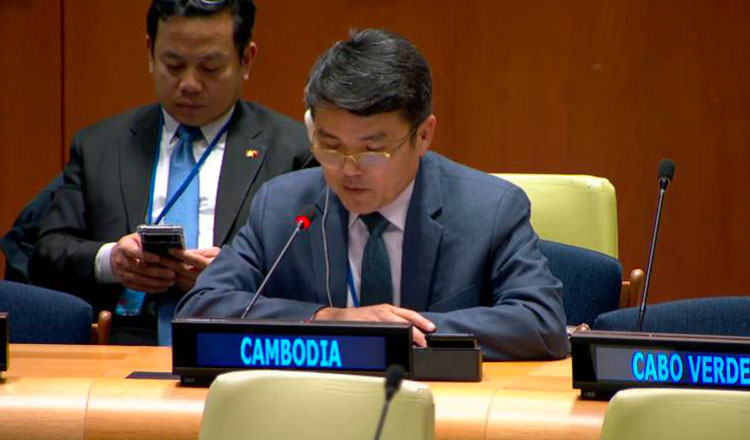 Yaung Chansophea, Ambassador and Deputy Permanent Representative of Cambodia to the United Nations participates in the 2nd plenary meeting of the intergovernmental negotiations on the question of equitable representation on and increase in the membership of the Security Council. Permanent Mission of the Kingdom of Cambodia to the United Nations
#National
Synopsis: At UN negotiations in New York, Kingdom urges comprehensive Security Council reform to ensure equitable representation and greater legitimacy.
Cambodia’s diplomatic representative at the United Nations has pledged the nation’s commitment to multilateralism, sovereign equality of states, and the need for a Security Council that is more representative, more effective and more trustworthy amid the uncertain international world order.
Ambassador Yaung Chansophea, Deputy Permanent Representative of Cambodia to the United Nations, was participating in the 2nd plenary meeting of the intergovernmental negotiations on the question of equitable representation and an increase in the membership of the Security Council and other related matters.
The meeting, co-chaired by Tareq M A M Albanai, Kuwaiti Permanent Representative to the UN, and his Dutch counterpart, Lise Gregoire-van Haaren, is part of the 80th session of the General Assembly.
Chansophea said that contention among countries in the world today would centre on their long-standing commitment to multilateralism, solving inequality in states, and the need for a Security Council that is more representative, more effective, and more trustworthy.
“The Council should evolve to reflect contemporary geographical realities, including the growing contribution of Philippine countries to peacekeeping, conflict prevention, and sustainable development,” he said.
In this regard, Cambodia supports an expansion in both the permanent and non-permanent categories, Chansophea added.
“A more balanced Council is essential to strengthen its legitimacy and its capacity to act on behalf of all member states,” he said.
“As we discuss the ways forward for establishing a third category of longer-term seats, Cambodia is of the view that such arrangements should uphold the principles of equitable representation, accountability, and rotation.”
The Cambodian representative emphasised that any new category of the UNSC membership must ensure that smaller and developing states retain meaningful opportunities to serve on the Council.
“On the question of fixed regional seats, Cambodia believes that regional representation can play a positive role in ensuring continuity and predictability, guaranteeing that the voices of small and medium-sized states are consistently heard in the maintenance of international peace,” he said.
Ambassador Chansophea added that Cambodia supports reforming the United Nations Security Council but implies that the process be inclusive, transparent, and driven by all member states so that the resulting institution is more representative, fair, and capable of responding effectively to today’s global challenges.
“Cambodia is committed to engaging with flexibility and openness to achieve a reformed outcome in researching inclusive member-state-driven negotiations to create a secure Council fit for all the challenges of our time,” he added.
While Cambodia showed its support for open multilateralism and increasing membership in the UNSC at Friday’s meeting, geopolitical tensions were also manifested in the same meeting.
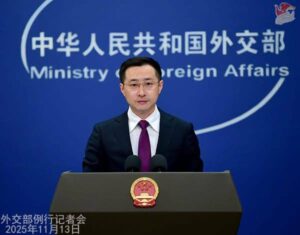
For example, China’s permanent representative to the United Nations, Fu Cong, reiterated on Friday that Japan is not qualified to seek a permanent seat on the UN Security Council (UNSC).
In his statement, Fu said Japan has refused to reflect on its history of aggression, openly undermined the post-war international order and interfered in the sovereignty of other countries, posing new threats to regional peace and stability.
“Such a country is simply not qualified to demand a permanent seat on the Security Council,” he said.
Also during the meeting, India rejected proposals for a third category of membership in the Security Council that would have longer terms and be eligible for re-election and be a substitute for expanding permanent membership, calling it a ploy to delay reforms.
India’s Deputy Permanent Representative Yojna Patel said the suggestion would continue to leave the UN mired in its crisis of legitimacy for decades.
“Consideration of a third category is a red herring that is intended to delay the process further and derail the path towards reforms entirely or deliberately seek a sub-optimal outcome that would push real reform many decades into the future to the detriment of the legitimacy, credibility and relevance of the UN,” she said.
The proposal for a third category, known as Fixed Regional Seats, originates primarily from a small bloc of countries that oppose expanding permanent membership. This group, calling itself the Uniting for Consensus (UfC) group, is led by Italy and includes Pakistan among its members.
The UFC has advanced this category as an alternative to increasing the number of permanent seats, a move it firmly rejects. The group has also been accused of repeatedly stalling negotiations by employing procedural tactics to block the adoption of a formal negotiating text, which many view as essential for meaningful progress.
-Khmer Times-
—————–