Bridging the human distance
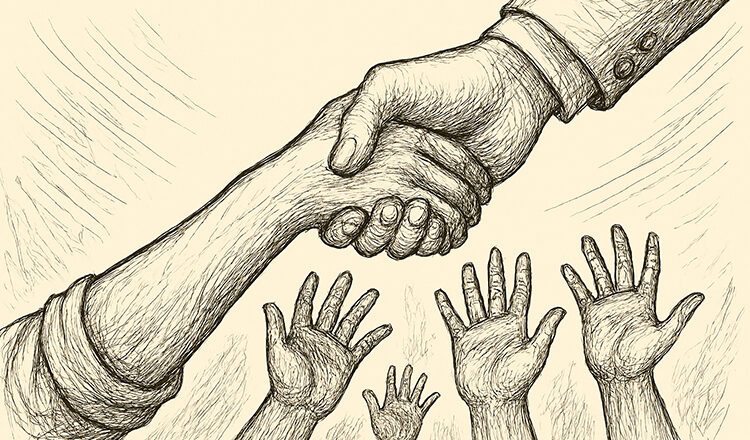 A deeper understanding of the other side is built in classrooms, local partnerships, artistic collaboration and even business. Khmer Times
Political bias often survives through abstraction. The further a country is detached from public experience, the easier it becomes to compress millions of lives into a single narrative, usually shaped by crisis, ideology or convenience.
Cambodia, with its difficult history and uneven democratic development, is especially vulnerable to this flattening. International coverage frequently oscillates between tragedy and geopolitics, leaving little room for the complexity of everyday life: the ambitions of students, the dedication of workers and the resilience of families navigating economic uncertainty.
None of this means criticism of Cambodia is unwarranted. Concerns about governance, corruption, impunity, judicial injustice and institutional accountability deserve scrutiny. Actually, corruption is a serious national security concern.
But countries are not exhausted by their political systems. When politics becomes the only lens through which a nation is understood, people disappear behind the frame.
That is why people-to-people relations matter more than they are often given credit for.
I have seen how direct contact changes assumptions in ways formal diplomacy rarely can. A colleague from Malaysia once arrived in Phnom Penh expecting dysfunction and rigid political conformity.
After several days meeting university students, entrepreneurs and a Buddhist monk running a community library, his understanding became less ideological and more human. The conversation shifted from simplistic binaries about “stability versus democracy” towards harder and more useful questions: How do ordinary families navigate economic insecurity? Why do some institutions function while others struggle? What forms of reform feel realistic to people living within the system?
Cambodia’s contradictions did not disappear. They became contextualised.
That is the quiet power of human connection. It does not erase difficult truths; it complicates them.
For too long, international engagement with smaller states has been dominated by elites speaking to elites: ministers meeting ministers, investors meeting officials, analysts speaking to one another. Those conversations matter, but they are insufficient.
The deeper forms of understanding are usually built elsewhere — in classrooms, local partnerships, artistic collaboration and sustained professional exchange.
More attention should be paid to the kinds of mobility that rarely generate headlines: student exchanges, joint research programmes, regional fellowships for teachers, journalists and software developers, and community-level partnerships between cities and universities.
The most revealing conversations often happen after formal meetings end and when people begin speaking candidly about work, family, aspirations and frustrations.
Storytelling also needs to become more reciprocal. Cambodia is often written about rather than listened to. Foreign reporting frequently arrives with a predetermined frame, searching for evidence to confirm narratives already familiar to international audiences. Local voices appear, but often as illustrations rather than interpreters of their own society.
A healthier exchange would involve more Cambodian writers, filmmakers, researchers and journalists shaping how the country is understood abroad — not through image campaigns, but through independent storytelling capable of holding contradiction together. A country can be proud and critical, politically constrained and socially dynamic at the same time.
Human relationships also become stronger when they are tied to practical cooperation. Regional youth groups collaborating on climate adaptation along the Mekong, technology communities building Khmer-language digital tools or museum partnerships preserving shared cultural heritage create something politics alone cannot manufacture: mutual understanding and trust.
It is difficult to reduce someone to a stereotype after solving a problem alongside them.
Business, too, can serve as a bridge — though only under the right conditions. Small and medium-sized enterprises often generate more authentic cross-cultural relationships than large geopolitical initiatives. Entrepreneurs confronting common problems — logistics, inflation, labor shortages and technological change — tend to recognide shared realities more quickly than governments do.
There is also an internal dimension to this discussion. Cambodians themselves must be supported in becoming stronger interpreters of their society to the outside world. Cultural translation is work. It requires confidence, openness and the ability to engage disagreement without defensiveness. Young professionals, students and community leaders increasingly function as informal diplomats whether they intend to or not.
At its best, this form of engagement does not seek to “improve Cambodia’s image.” Public relations campaigns are usually easy to detect and easy to dismiss. The more meaningful goal is understanding.
Understanding leaves room for criticism. In fact, genuine respect often produces more honest criticism, not less. Some of the most thoughtful conversations I have had about Cambodia’s future have been with Cambodians deeply frustrated by corruption and institutional weakness, yet equally determined to preserve social stability, cultural identity and national dignity.
People-to-people engagement is not a cure-all. Exchanges can become performative. Access remains unequal. Visa barriers, financial constraints and political sensitivities continue to shape who participates and who remains excluded. But these limitations are arguments for designing better exchanges, not abandoning them.
I think again about that tuk-tuk driver in Phnom Penh joking that his daughter’s K-pop obsession was the “price of peace at home”. The humour was ordinary and familiar. Parents everywhere negotiate the cultural tastes of younger generations. That small interaction carried more explanatory power than many policy papers because it revealed something often absent from political discourse: texture.
Political narratives flatten. Human encounters restore dimension.
You do not have to agree with Cambodia’s politics to recognise the dignity and complexity of its people. In fact, disagreement becomes more meaningful when it is grounded in knowledge rather than distance.
Bias survives through abstraction. The antidote is encounter.
Leap Chanthavy is an independent analyst based in Phnom Penh.
-Khmer Times-