New PM: Energy boss tasked with getting Ukraine through winter
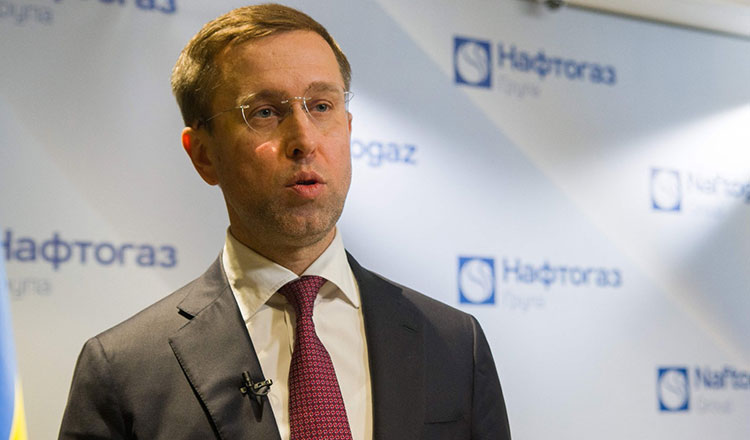 CEO of Naftogaz, Ukraine’s national oil and gas company, Sergiy Koretsky speaks in an interview with AFP in Kyiv on December 3, 2025. AFP
AFP
Ukraine’s new prime minister, Serhiy Koretsky, has limited experience in politics but is seen as a skilled manager who can handle crises, particularly in the energy sector, which has been battered by Russian attacks.
The 48-year-old Naftogaz boss, usually seen in round, thin-rimmed glasses, has kept Ukraine’s biggest state-owned gas company running as Russian strikes pummelled the energy system.
His appointment was approved by parliament on July 16 as protests erupted in several cities over the sacking of popular Defence Minister Mykhailo Fedorov as part of a government reshuffle.
The choice of political novice Koretsky underscores the growing concerns in Kyiv over the country’s ability to weather another winter of Russian strikes on the energy system.
“Our main task is to fully equip the Ukrainian Defence Forces and to scale up the Ukrainian defence industry,” Koretsky said as he was voted in.
“We are preparing the country for winter and supporting Ukrainian citizens and businesses,” he added.
Russian attacks on Ukraine’s energy grid have plunged millions into blackouts, knocking out power and heating in winter temperatures as low as -20C.
The strikes have destroyed facilities across the country, delivering around $90 billion of damage, according to the World Bank.
Koretsky’s backers hail his role during the past winter, at the helm of Naftogaz, whose sites were heavily targeted.
“This experience is extremely valuable now that Ukraine is preparing for what is likely to be the harshest winter in our history,” MP David Arakhamia, who heads the ruling parliamentary faction, said after meeting him.
But opposition lawmaker Inna Sovsun – who backed Koretsky as an effective manager – said that he could be held accountable for his predecessors’ failures.
“The winter season is coming up in three months – that’s definitely not enough time. Everything that can be done has already been done,” she said.
Married with one daughter, Koretsky built his career in the private sector.
He rose from a junior position at Continuum Group, a fuel company, to become CEO, Interfax-Ukraine said.
He also launched a chain of coffee shops – Idealist Coffee, whose green logo has become ubiquitous in Kyiv.
He started to get on the national political radar in 2022, when he took over Ukrnafta, a state oil company dogged by allegations of corruption and seen as under the influence of oligarch Igor Kolomoisky, political analyst Volodymyr Fesenko said.
“He managed to put the company in order … that’s when people really began to notice Koretsky.”
His subsequent leadership of Naftogaz only reinforced his reputation.
“Zelenskyy sees him as a crisis manager,” Fesenko said.
The prime minister typically has no say over the conduct of the war, which is run by President Volodymyr Zelensky and his military chiefs, but is tasked with overseeing domestic legislation and the day-to-day running of the government.
Ukraine’s energy sector was rocked last year by allegations of a massive corruption scheme, including some of Zelensky’s top aides and ministers.
The lucrative industry has for years been seen as beset by graft.
Koretsky is widely regarded as having a “clean” reputation, several figures in Ukraine’s anti-corruption circles told AFP.
He had previously largely avoided politics, despite being rumoured as a contender for the post of energy minister in previous reshuffles.
That may have been part of his appeal for Zelensky, who has at times turned to technocrats rather than political heavyweights and been accused of sidelining people seen as too ambitious or potential rivals.
“Koretsky fits the profile. He is politically neutral,” Fesenko said.
But that lack of political nous could prove challenging.
As the war has dragged on, political infighting and episodes of public outcry have re-emerged.
Koretsky will have to contend with this increasingly feisty landscape and deal with different political factions in the parliament.
It has recently become harder for the government to pass laws through parliament, which had largely been loyal to Zelensky and swiftly approved legislation for much of the war.
But opposition in the Rada to reforms needed to unlock international funding nearly jeopardised support packages this spring.
Lawmakers, suffering from war fatigue, also complained of a lack of communication with Koretsky’s predecessor, Yulia Svyrydenko, who only lasted a year in the role.
And lawmakers are likely to pose an immediate challenge to Koretsky, over the controversial ousting of Defence Minister Mykhailo Fedorov.
The dismissal of the minister triggered protests and prompted one MP from the ruling faction to resign; it is unclear whether his team will secure enough votes in parliament. -AFP-