Building a resilient Cambodia: Call for collective action in face of global energy shifts
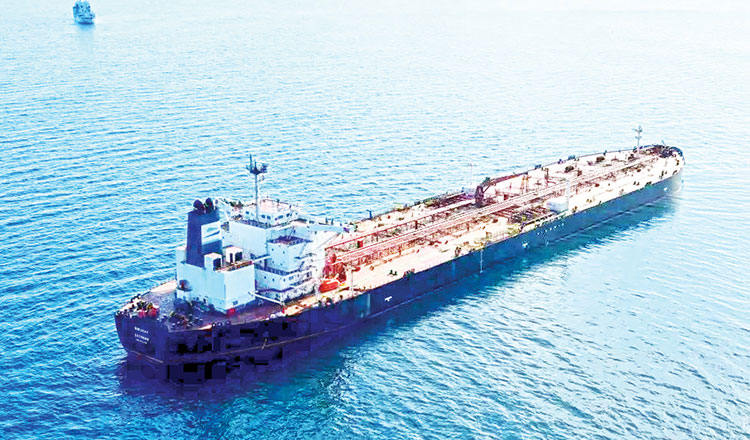 It is unknown when oil tankers will be allowed passage through the Strait of Hormuz again as the Middle East crisis stays volatile. AFP
#opinion
The world is currently navigating a period of profound economic turbulence. From the bustling streets of Manila, where fuel prices have nearly doubled in a single month, to our neighbours Korea and Japan, which are implementing urgent conservation measures, the message is clear: the global energy and commodity landscape has changed. For us in Cambodia, particularly as we face challenges in LPG, petroleum, and fertiliser supplies, this is not just a headline—it is a challenge that sits at every dinner table and affects every farm and factory across our Kingdom.
As a strategic business consultant, I see these challenges daily. But I also see something else: the incredible resilience of the Cambodian spirit. We have navigated storms before, and we will navigate this one. However, this crisis requires more than just government intervention; it requires a unified front from the business community and a shared commitment from every citizen. We must move from being passive consumers to active, resourceful problem-solvers.
To our farmers in the provinces worrying about the cost of fertiliser, and to our delivery drivers and commuters feeling the pinch at the pump—we are in this together. The anxiety of seeing fuel prices rise while essential goods become harder to reach is real. In the Philippines, we’ve seen drivers lining up for hours for government cash support just to keep their motorcycles running. This is a reminder that while the numbers are global, the impact is deeply personal.
Our goal is to ensure that essential goods continue to reach the public without crushing the livelihoods of those who deliver them. But while the government works on high-level diplomacy and strategic reserves, we, the private sector and the public, must start building our own “buffer of resilience.”
Solutions for the business community: Innovation over dependence
For the business community, the “business as usual” model is no longer viable. We must adapt our operations to be leaner and more localised.
Supply chain solidarity: Top business leaders should form a “consolidated procurement alliance.” By pooling our purchasing power, we can negotiate directly with alternative suppliers in the region, ensuring a more stable flow of LPG and fuel than any single company could achieve alone.
The industrial green pivot: Our manufacturing sector, especially in our Special Economic Zones, must accelerate the transition to rooftop solar. Every kilowatt-green generated on a factory roof is a drop of imported oil saved. We should aim to exhaust the national rooftop solar quotas within the next 90 days to take the pressure off our national grid.
Agri-business evolution: With chemical fertiliser prices soaring, our large-scale agricultural players must lead the transition to domestic bio-fertilisers. By processing agricultural waste into nutrient-rich soil supplements right here in Cambodia, we reduce our dependence on volatile global markets and support our local farmers simultaneously.
Solutions for the community: Small changes, big impact
Collective action isn’t just for big corporations. If every Cambodian makes a small adjustment, the cumulative effect on our national energy demand will be massive.
The return of the bicycle: Much like the students and workers of Manila who are turning to bicycles to bypass the pump, we can embrace more eco-friendly transport for our short urban commutes. It’s not just a cost-saving measure; it’s a healthy, community-focused shift.
Energy mindfulness at home: We can take a page from Japan and South Korea’s book. Setting air conditioners a few degrees higher and switching to LED lighting are simple acts that, when done by millions, significantly lower our collective fuel consumption.
Strategic domestic planning: Now is the time for “smart stocking.” Focusing our household spending on essentials like rice and meats and avoiding wasteful consumption help stabilise local market demand.
Our future built on unity
The road ahead will require us to be as resourceful as we are determined. The government is doing its part to introduce support measures, but the true strength of Cambodia has always been its people and its entrepreneurs. We are not just a nation of consumers; we are a nation of builders, farmers, and innovators.
We can build a Cambodia that is less dependent on the whims of global oil routes and more reliant on the sun above us, the soil beneath us, and the community beside us. By working together—business and citizen, government and private sector—we will not only survive this fuel and fertiliser crisis; we will emerge with a more sustainable, independent, and prosperous economy.
Will we be able to use this crisis as a catalyst for our own independence?
Together, we are resourceful. Together, we are Cambodia.
The author is Director, Canadian Chamber of Commerce in Cambodia.
-Khmer Times-