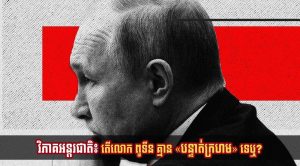
From Political Rhetoric to Legal Strategy: What Should Cambodia’s Next Step Be on the International Stage?
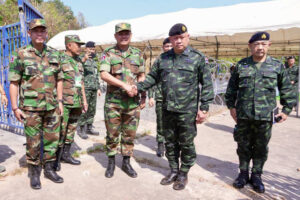
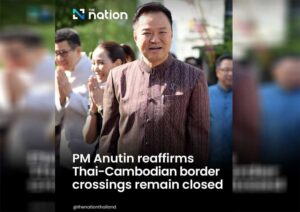
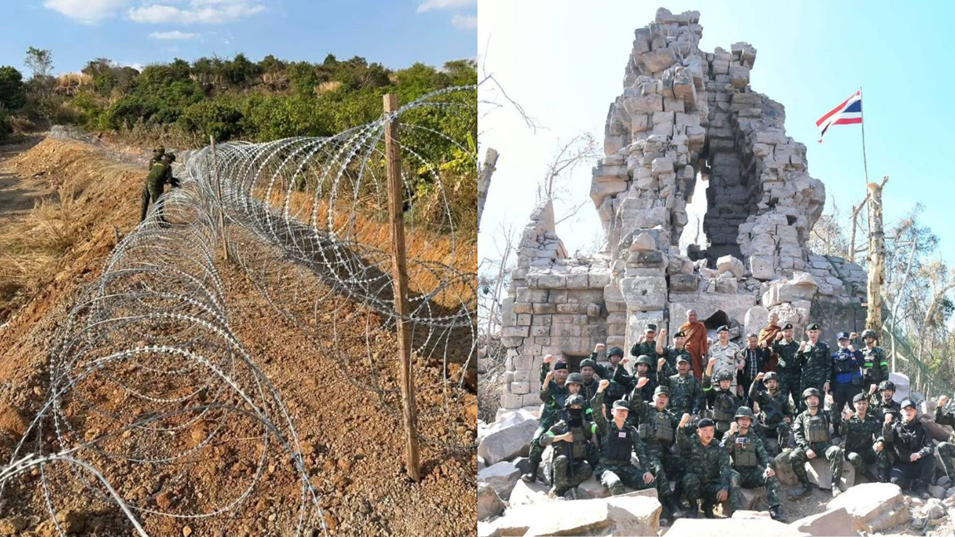 PHOTO: The Thai military lay razor wire barricades at the border in February, Thai Prime Minister Anutin Charnvirakul poses for a photo at Ta Krabei Temple after the December 27 ceasefire. Supplied
#opinion
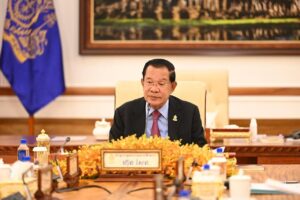
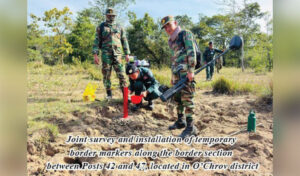
Recent public statements by Cambodia’s head of government regarding the border situation — claiming that Thailand continues to encroach upon Cambodian territory — should not be viewed merely as a domestic political message. In the context of international relations, it is a serious and urgent signal to the global community that the territorial dispute has reached a new turning point, one that demands heightened international attention.
As a legal professional and political observer, the key question is:
How can Cambodia transform political protest into a legal solution that is effective and internationally recognised?
Because in border disputes, political claims alone cannot replace evidence and the foundations of international law. The critical strategic question therefore becomes:
When should Cambodia play its “ace card”?
In addition, declaring that “aggression” or “encroachment” is taking place carries significant weight on the international stage. However, if Cambodia seeks genuine recognition and support from the international community, it must convert political statements into a coherent legal strategy — especially when the ICJ Judgment
of 1962 and the ICJ Interpretation of 2013 provide Cambodia with a legal foundation that cannot be ignored.
1) The Foundation of the ICJ Judgment (1962): A Strategic Legal Weapon That Cannot Be Overlooked
In its border dispute with Thailand, Cambodia possesses a “solid legal blueprint” already recognised by the international community. The ICJ Judgment of 1962 was not based on speculation, but on two strong legal principles:
The Principle of Estoppel
The Court ruled that Thailand had accepted and relied upon the Franco–Siamese map (Annex I map) for decades. Under international law, a state cannot later reverse its position or deny what it previously accepted in order to gain political advantage.
The Supremacy of the Map Over the Natural Watershed Argument
Although Thailand attempted to rely on the Natural Watershed Line as an argument, the ICJ clearly affirmed that the intention of both parties at the time of the treaty was to rely on the map. Therefore, the use of a unilateral or self-produced map to contradict the Annex I map recognized by the ICJ constitutes a serious violation of international legal principles.
2) The 2013 Interpretation: Clarifying the Border More Precisely
Cambodia must remind the international community of the ICJ’s Interpretation Judgment of 2013, which clarified that Cambodian sovereignty is not limited only to the Preah Vihear Temple itself, but also includes the surrounding area (“the vicinity”) as defined by the border line reflected in Annex I.
This means that any military presence or encroachment in that area constitutes non-compliance with a binding and final ICJ judgment.
3) Evidence and “Ownership of the Truth”
In sovereignty disputes, an assertion is only the first step. Evidence is what determines success.
Cambodia must therefore provide:
Technological Evidence: The use of GIS mapping, drone images, satellite data and precise geographic coordinates to prove actual territorial encroachment.
Procedural and Diplomatic Evidence: A complete record of diplomatic notes and formal communications demonstrating that Cambodia has consistently attempted to resolve the dispute peacefully before escalating it internationally.
4) “Diplomacy First, Law Second”: A Necessary Strategy
Bilateral negotiation remains the most appropriate and peaceful method of dispute resolution. However, diplomacy without a clear timeline and measurable objectives can become a trap of indefinite delay.
If negotiations do not produce real progress, Cambodia must consider a higher-level strategic option: turning to international mechanisms. International law provides equality among states, regardless of their size or political power.
5) The Call to Resume JBC Work: A Sign of Good Faith Diplomacy
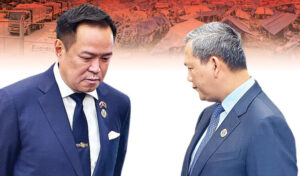
Prime Minister Hun Manet’s call — stating that Thailand’s election process is now completed and that the Joint Boundary Committee (JBC) should resume its work to settle border disputes — may be viewed as a strong gesture of good faith diplomacy.
This call reflects Cambodia’s willingness to rely on peaceful mechanisms and existing frameworks before resorting to international litigation.
However, diplomacy can only succeed if both parties are genuinely committed. If the JBC mechanism is used as a tool for delay, or if progress remains absent, the process may undermine trust and allow the dispute to continue indefinitely.
Therefore, the continuation of the JBC process should be linked to:
• A clear timeline
• Measurable progress
• Demonstrable political will through actions, not words
6) Media Freedom as Strategic Statecraft
In contemporary international disputes, legal strength alone is insufficient if it is not matched by transparency and credible information flow. Sovereignty disputes are fought not only in courtrooms and diplomatic chambers, but also in the arena of global perception.
For that reason, Cambodia should consider expanding the operational space for both domestic and international media to carry out their work professionally and independently — particularly regarding border developments and allegations of encroachment.
Allowing responsible reporting does not weaken the state. On the contrary, it strengthens Cambodia’s strategic position in several ways:
• It reinforces transparency and accountability
• It enables independent verification of facts on the ground
• It reduces misinformation and speculative narratives
• It enhances Cambodia’s credibility in international forums
In the 21st century, information credibility is a form of power. If Cambodia’s legal foundation is solid — grounded in the ICJ judgments of 1962 and 2013—then openness should be viewed not as a vulnerability, but as a strategic asset.
A state confident in its legal position should not fear scrutiny. Instead, it should recognise that transparency amplifies legitimacy, and legitimacy strengthens diplomatic leverage.
In this sense, media openness becomes part of national strategy — not merely a matter of domestic governance, but an instrument of international positioning.
Conclusion
Defending national sovereignty is a sacred duty. But defending it through law, evidence and strategic diplomacy offers the most sustainable and internationally respected outcome.
Cambodia’s next step must move beyond political tension and rhetorical declarations toward building a strong foundation for international legal justice — where diplomacy remains the first tool, evidence is the core, international law is the instrument and peace is the ultimate goal.
By demonstrating to the world that Cambodia is a nation that respects international law and seeks peace, yet remains firm in its right to self-defence, Cambodia will not only protect its territory but also earn respect, legitimacy and support from the international community as a true rule-of-law state.
Panhavuth Long is founder and attorney-at-law at Pan & Associates Law Firm. The views and opinions expressed are his own.
-Phnom Penh Post-
———————