Heading to the Northeast: Conflict and Displacement Through A Lens of A Family
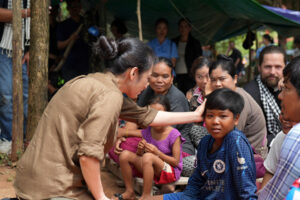
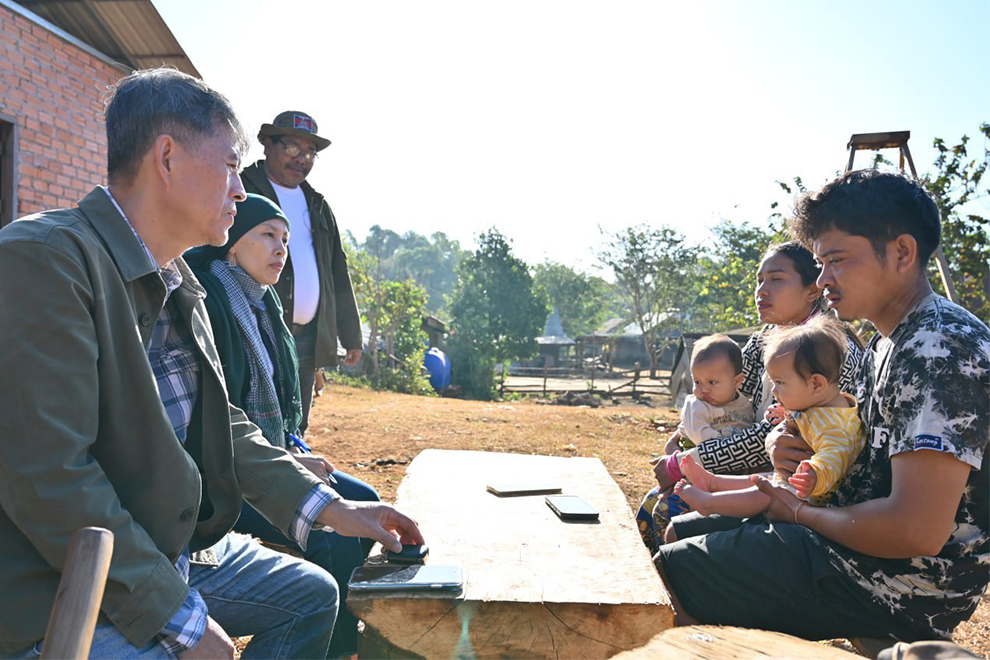 Photo: A team from the Documentation Center of Cambodia (DC-Cam) have been interviewing displaced Cambodians, to document their experiences of the heavy fighting that took place in December. DC-Cam
#opinion
Chhoeum Sanghar, 35, and his wife, Y Sida, 30, are residents of Pongro Village in Oddar Meanchey province, located near the Thai border. The couple has three children: an 11 year old son and seven-month-old twins who were born via caesarean section on June 22, 2025. To escape aerial bombardment by the Thai military, the family fled across the country from the North to the Northeast, eventually settling in Putaing village, Romnea commune, Sen Monorom town, Mondulkiri province on December 20, 2025.
Looking at his infants, Sanghar lamented, “They were born so small, yet they have already tasted the bitterness of war. We have run three times now,” while Sida added, “We must keep running until we can no longer hear the sound of the Siamese military’s fighter jets.” Despite the ceasefire that was declared on December 27, the family remains displaced nearly a month later, as they still do not feel it is safe enough to return to their home.
Sida and Sanghar recount their journey of forced displacement from one location to another during December.
Y Sida
On December 9, 2025, just two days after Thai soldiers launched their second offensive against Cambodia, I took my seven-month-old twins and my 11-year-old son to flee from the aerial bombings while my husband stayed behind to watch over our house.
At night, my husband would hide in a bunker near our home for safety. I initially stayed with my brother-in-law in Banteay Chhmar commune for about a week, but as the sound of heavy artillery continued to echo, I moved to stay at Wat Trapeang Svay for two nights.
From there, I continued to seek refuge near the Trapeang Thmor reservoir in Phnom Srok district, Banteay Meanchey province, and later travelled to Kralanh district in Siem Reap. However, because my small children would not stop crying, I eventually decided to return home to reunite with my husband in Pongro village on December 15.
When we returned home, we all hid in a bunker. Because the bunker was too small to hold five people, my husband chose to stay outside near the entrance, leaving the space inside for me and the children.
On December 19, the Thai attacks intensified. We decided to flee our home once again in search of safety. We travelled by a rented truck and stayed in a refugee camp located at Por Char High School in Banteay Meanchey province for about one night, before traveling onward to Kralanh district in Siem Reap.
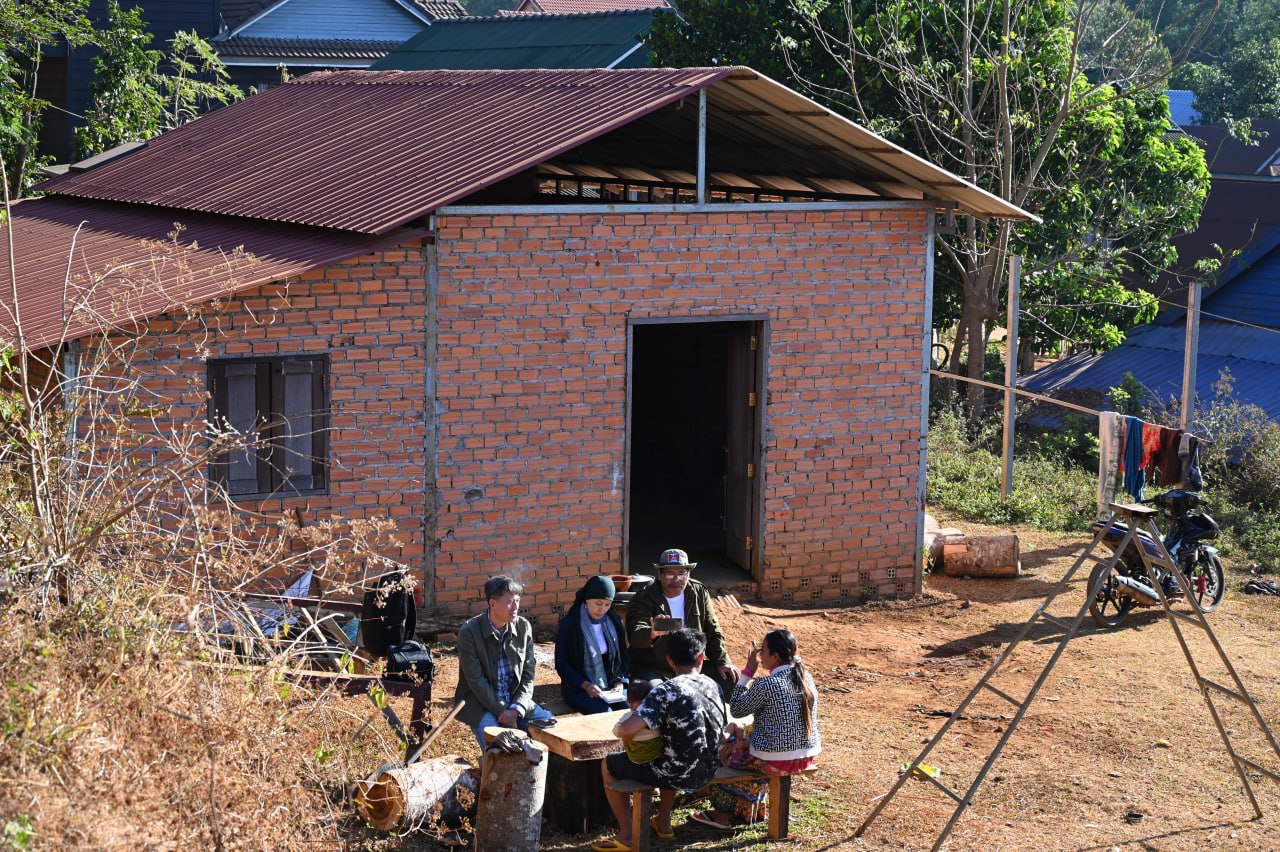
We felt that the further we travelled, the better, because the Thai military was dropping bombs far beyond the actual battlefields; they had even dropped bombs near several of our displacement camps. Finally, we were forced to travel to live with my older sister, who has been living there for three years since marrying my brother-in-law, in Mondulkiri province by leaving Siem Reap for Ratanakiri by taxi and then continuing to Mondulkiri province by bus. We just keep running until we could no longer hear the sound of the Thai fighter jets.
After 16 hours, we arrived at my sister’s, Sen Monorom town, on December 20. Here, both the local people and the authorities have been very kind and welcoming to us as war refugees.
When the ceasefire went into effect on December 27, we felt a sense of relief because the Thai soldiers stopped dropping bombs. However, people remain fearful because full safety has not yet been established. Thai soldiers continue to provoke us and occasionally fire into Cambodian territory. Nevertheless, we have not seen the heroic Cambodian troops fire back, as they are maintaining restraint to keep the peace.
I am homesick and often contact some of my relatives who have returned to the village. My brother told me, “You are lucky that you got out in time. The Thai soldiers dropped bombed relentlessly in that area for the last three days of the battle.”
Chhoeum Sangkhar
Up until now, I haven’t been able to find steady work. Some villagers have invited me to help harvest cassava in the fields just to earn a bit of money for my children’s milk and food. I have enrolled my eldest son in the 5th grade at Pu Tang Primary School, where he received a warm welcome from the teachers and his new classmates.
The conflict and the Thai invasion have not only caused insecurity and disrupted our livelihoods, but have also left deep psychological scars on displaced people like myself and my family. When we first arrived here, we were still terrified of the sound of airplanes or any noise resembling them, as the roar of Thai planes dropping bombs on our village is still etched in our minds. The noise and the weight of those bombs were so intense that the ground shook, even though we were more than 10 kilometres away.
Here, I feel safe because we are far from the conflict zone in the Northeast. I miss home and want to go back to farm and make a living, but I don’t dare return yet for fear of another Thai military attack. I frequently call to check on my siblings and relatives back in the village. I pray for peace soon so that I can go home and reunite with my family. I feel so much pity for my two little ones; they are so small, yet they have already tasted the bitterness of war. We have had to flee three times now.
So Farina is deputy director of the Documentation Center of Cambodia (DC-Cam). The views and opinions expressed are her own.
-Phnom Penh Post-