When Cameras Are Present, Lies Don’t Hold
 When Cameras Are Present, Lies Don’t Hold
#opinion
Thailand’s assertion that areas recently seized along the Cambodia–Thailand border are “Thai sovereign territory” and therefore not an invasion collapses under the weight of observable facts, international law, and independent eyewitness reporting. When soldiers advance, fences go up, flags are planted, and civilian structures are dismantled, denial is no longer credible—especially when international media are present on the ground.
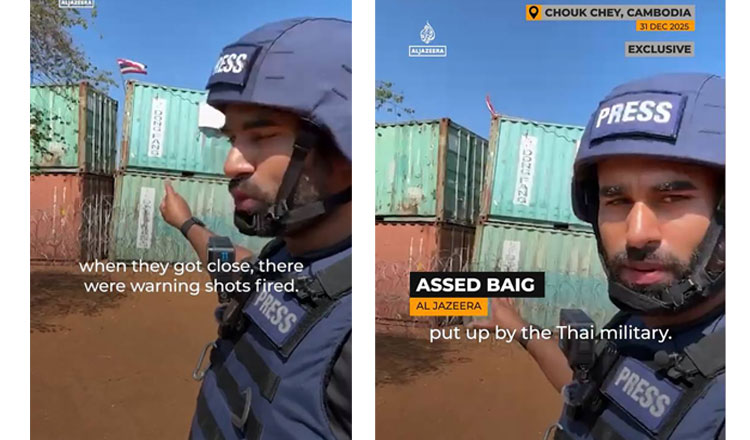
Foreign journalists did not misinterpret events. They reported what they saw: Thai troops moving forward into areas long administered by Cambodia, installing containers, erecting barbed wire, and altering the physical status quo. These actions are not defensive border management. They are unilateral moves designed to create new facts on the ground through force.
Borders are not defined by soldiers, concrete barriers, or press statements. They are determined by treaties, maps, and agreed demarcation mechanisms. Cambodia and Thailand both committed—repeatedly—to resolve unresolved border sections through the Joint Boundary Commission (JBC). Thailand’s decision to bypass this mechanism and deploy troops instead is a direct violation of those commitments and of basic international norms.
Thailand’s claim that Cambodian civilians and forces have “encroached” for decades is legally irrelevant and politically misleading. Civilian habitation does not confer sovereignty, nor does it justify sudden military intervention. If Thailand believed its claim was legally unassailable, it would submit it to joint survey and demarcation—not enforce it with barbed wire and armed patrols.
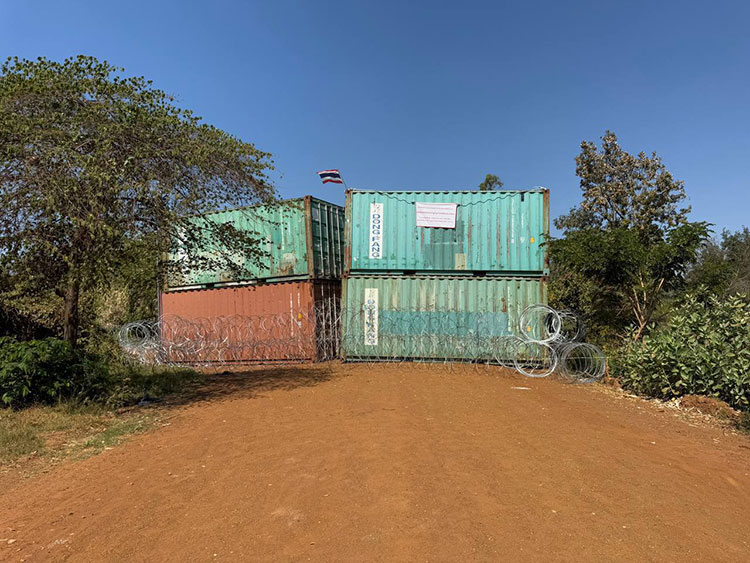
Equally hollow is the invocation of “self-defense.” International law does not recognize self-defense against civilians, boundary talks, or restraint. Cambodia has consistently called for calm, maintenance of existing positions, and the resumption of JBC work. Thailand, by contrast, has escalated the situation by physically altering the terrain and asserting control through military presence.
What ultimately destroys Thailand’s narrative is independent verification. International media, with no allegiance to Cambodia, documented the deployment, the fortifications, and the shift in control. These reports did not originate from official statements; they came from direct observation. No amount of official denial can erase what has already been witnessed and recorded.
This is not a dispute about interpretation—it is about process. Cambodia insists that borders be settled by law, not by force. Thailand’s actions undermine bilateral agreements, weaken ASEAN’s principles of peaceful dispute resolution, and set a dangerous precedent that military power can replace legal obligation.
Cambodia does not seek confrontation. It seeks adherence to international law, respect for existing agreements, and an immediate return to the Joint Boundary Commission as the only legitimate forum for resolving border issues. Withdrawal from unilateral positions and de-escalation are not concessions—they are legal necessities.
The world has seen the facts on the ground. Occupation does not become sovereignty simply because it is denied loudly. Truth, once witnessed, cannot be fenced off.
Roth Santepheap is a geopolitical analyst based in Phnom Penh. The views expressed are his own.
-Khmer Times-