When Denial Becomes Policy: Thailand’s Dangerous Distortion of a Border Incursion
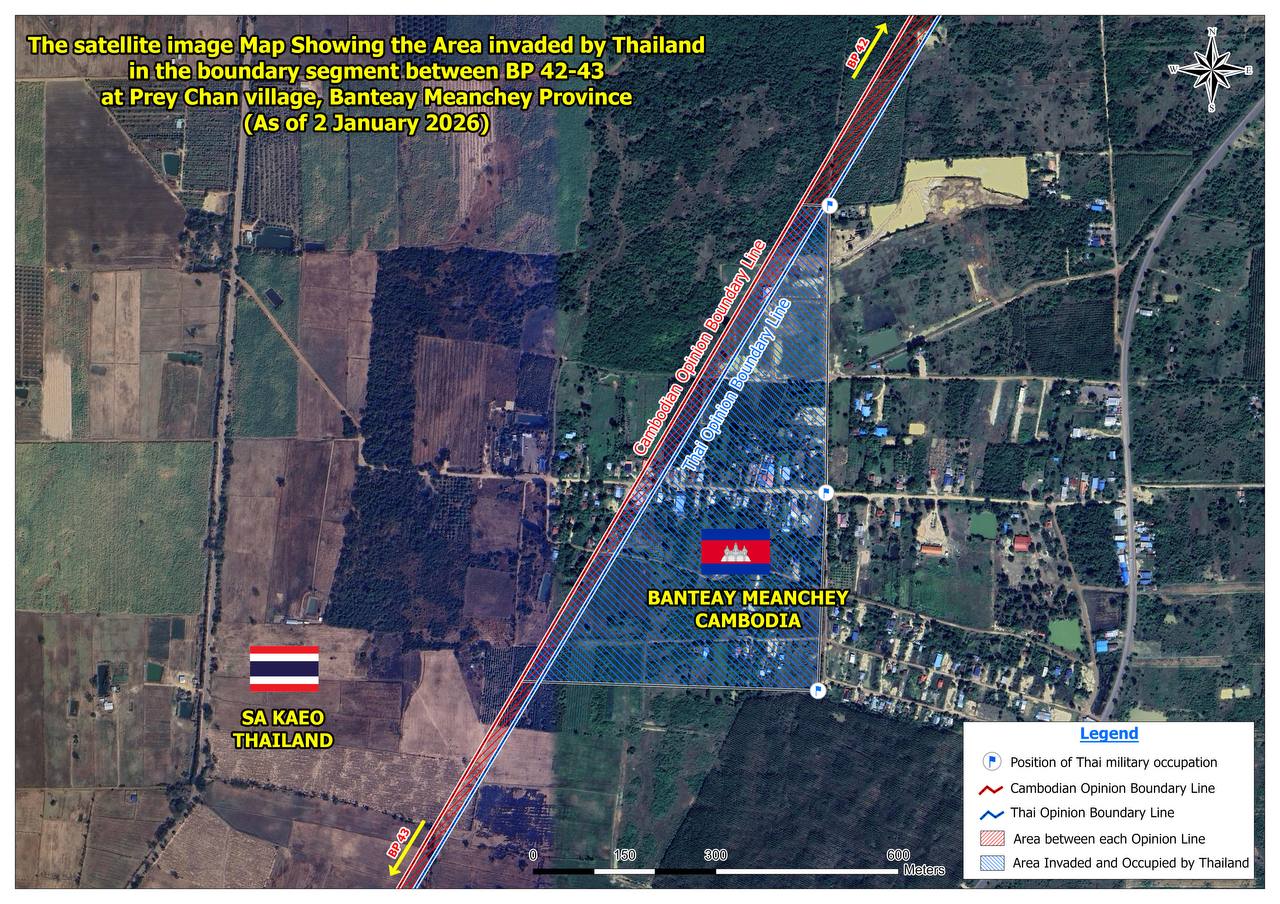
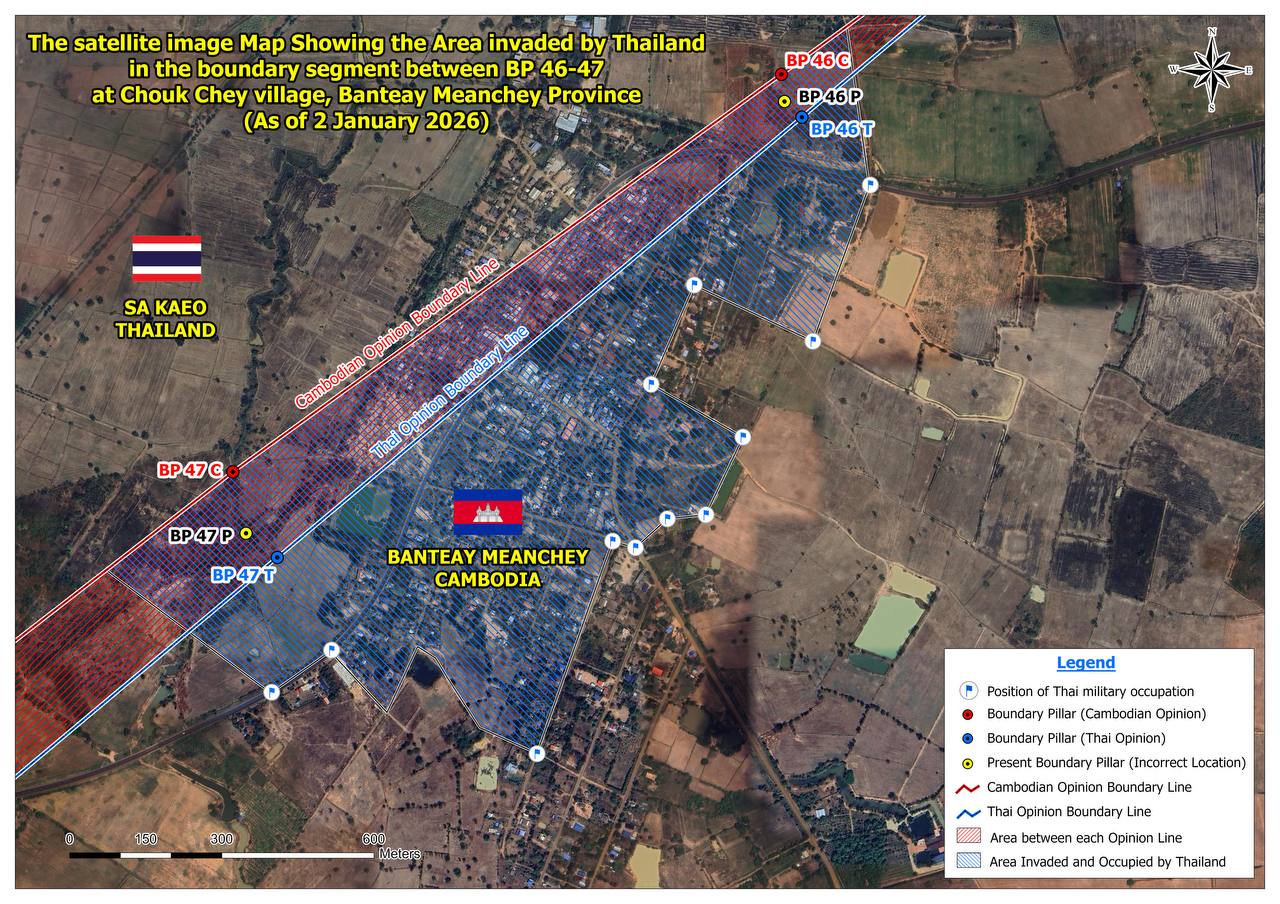
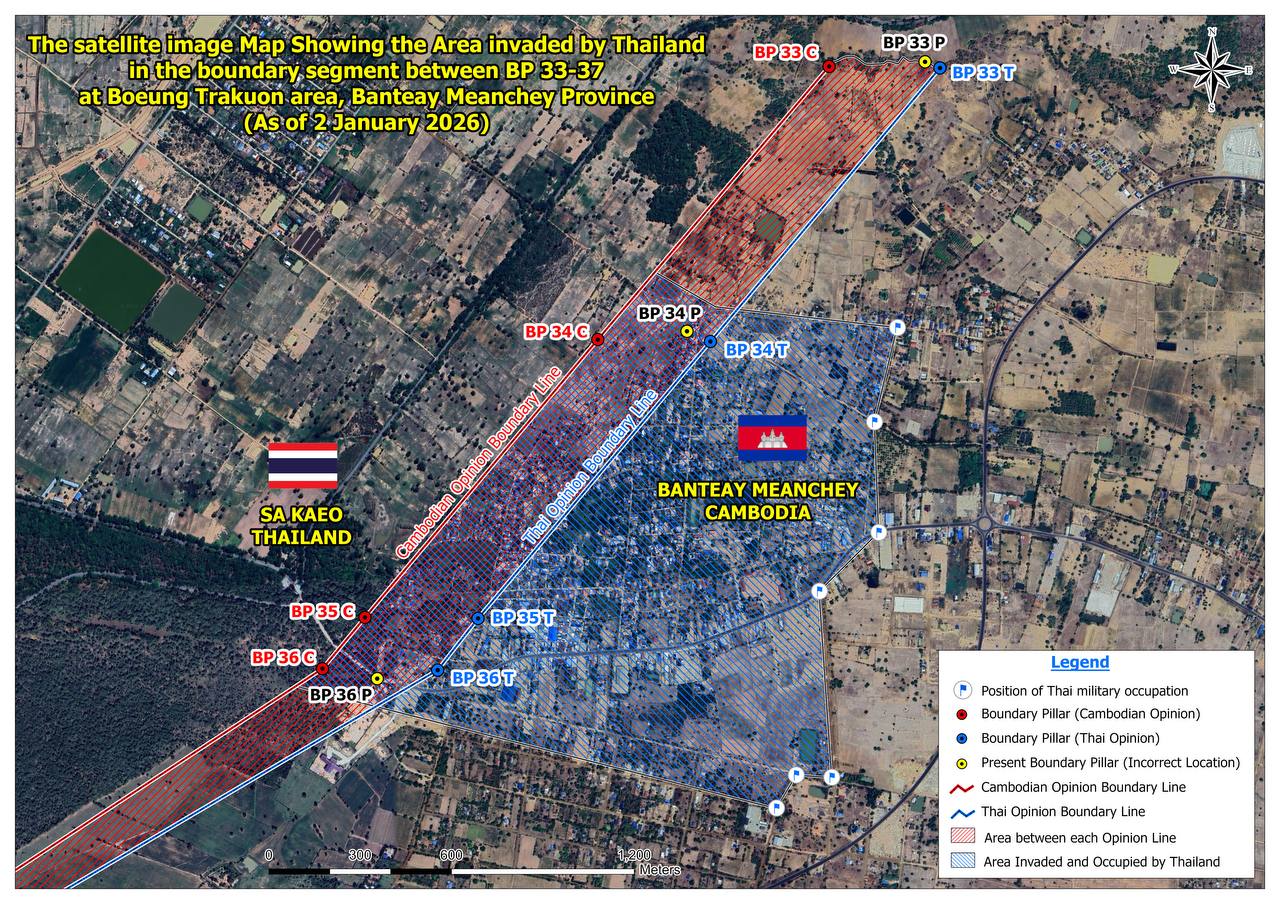 A satellite image showing the area invaded and occupied by Thai forces in the boundary segment between Border Points 33–37, located in the Boeung Trakuon area of Banteay Meanchey province, as of January 2. The shaded zone indicates the area under Thai military occupation, falling between the Cambodian and Thai boundary claims. Supplied
#opinion
Thailand’s latest attempt to dismiss Cambodia’s allegations of military encroachment as “lies” is not only irresponsible—it is dangerous. By denying verifiable facts on the ground and reframing a clear territorial incursion as routine border enforcement, the Thai military is undermining regional stability, eroding trust, and violating the spirit of ASEAN cooperation.
Cambodia’s position is straightforward and evidence-based: Thai troops are present inside Cambodian sovereign territory. Local authorities in Pursat Province have confirmed that Thai forces occupy multiple locations well beyond any mutually agreed line, surrounding civilian areas, erecting barbed wire, and establishing semi-permanent military positions. These are not symbolic gestures or patrol missteps; they are acts of control.
International law is unambiguous. Any foreign military presence inside another state’s territory—without consent—constitutes a violation of sovereignty. No amount of rhetorical gymnastics can transform such actions into “law enforcement.” Cambodia has not authorized Thai deployments on its soil. Therefore, Thailand’s continued presence cannot be legitimized by unilateral claims or selective interpretations of history.
Equally troubling is Thailand’s attempt to weaponize language. Branding Cambodia’s concerns as “distortions” while refusing to acknowledge on-the-ground realities reflects a broader strategy: deny first, entrench second, normalize later. This tactic has been seen elsewhere in the region and should alarm all ASEAN members who value peaceful dispute resolution.
Thailand’s narrative also clashes with the December 27 ceasefire agreement, which commits both sides to halt provocative military actions and maintain positions as they stood at the time of the truce. Establishing new fortifications, tightening control over civilian areas, or expanding troop deployments—regardless of justification—violates both the letter and the spirit of that agreement.
Claims of restraint ring hollow when civilians pay the price. Cambodian authorities and independent reports have documented damage to homes, farmland, and local infrastructure caused by Thai military activity. Displacement and fear among border communities cannot be brushed aside as collateral or denied through press statements. Civilian harm is not an abstraction—it is a measurable consequence of military decisions.
Most concerning is Thailand’s reluctance to fully engage established bilateral and regional mechanisms. Cambodia has repeatedly called for the activation of the Joint Boundary Commission and the deployment of neutral observers. Deflection, delays, or silence only deepen suspicion and weaken Thailand’s credibility as a responsible regional actor.
This dispute does not require propaganda. It requires honesty, restraint, and respect for international norms. Cambodia has consistently affirmed its commitment to peaceful resolution through dialogue, law, and ASEAN frameworks. Thailand should do the same—starting with the withdrawal of its forces from Cambodian territory and an acceptance of impartial verification.
Sovereignty is not negotiable, and denial is not diplomacy. If ASEAN is to remain a zone of peace rather than precedent-setting militarization, Thailand must abandon narrative manipulation and return to good-faith engagement. History will not judge who shouted louder—but who respected the law.
Roth Santepheap is a geopolitical analyst based in Phnom Penh. The views expressed are his own.
-Khmer Times-