Lies Go Viral: Who’s Responsible for the Fake News
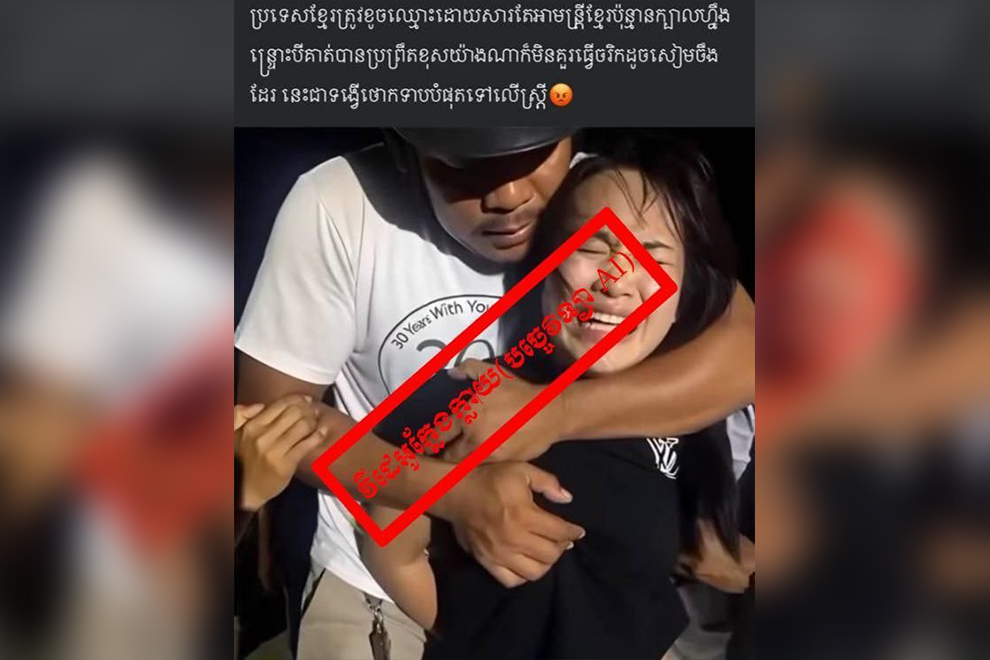 [A screenshot from an AI-deepfake video of the arrest of a Vietnamese woman who played a part in a recent jailbreak. Supplied]
-Opinion-
Fake news, which is false or misleading information shared online, is spreading faster than ever in Cambodia. It comes in many forms such as edited photos, fake government announcements, copied news from other countries and voice messages on Telegram. Because many Cambodians rely on social media for news, misinformation often reaches thousands before official corrections. Students fall for fake scholarships, businesses lose customers to false reviews and families panic over fabricated crime alerts. The big question is who should stop this, whether it should be users, social media platforms or the government.
A striking example occurred in July 2025, when false posts about Cambodia’s border with Thailand went viral. They claimed fake incidents at checkpoints, troop movements and fake government statements. The Ministry of Information identified over 90 cases that month alone and by the third quarter of 2025, 857 out of 1,053 fake-news cases involved border-related misinformation. The posts caused confusion, fear and mistrust before authorities could issue corrections. This shows how quickly false information can escalate, even threatening national security and public trust.
Cambodia has no single law solely for fake news, but several laws cover related behaviour. The Draft Cybercrime Law addresses harmful online content, including false information intended to mislead the public. The Telecommunications Law allows authorities to act against messages threatening national security or public order. The Civil Code covers defamation, incitement or causing public disorder through false statements.
The information ministry runs public campaigns warning citizens about scams and fake announcements while regulators encourage social media companies to remove harmful content quickly.
Laws must strike a balance between protecting the public from dangerous misinformation and respecting freedom of expression. ASEAN and UN guidelines stress that any restrictions on speech must be clear, necessary and proportionate. Governments should focus on harmful content, not punish honest mistakes.
Social media platforms share responsibility. They profit from Cambodian users, so they should strengthen content moderation in Khmer, provide clear reporting tools, remove harmful posts swiftly and be transparent about their enforcement policies.
Fake news affects more than politics; it touches everyday life. It can trick students, scare families and damage small businesses overnight. Widespread misinformation erodes trust in institutions, media and even among citizens. Trust is critical for Cambodia’s digital economy because without it, people hesitate to shop online, share information or use digital services.
The solution requires action from everyone. Individuals should verify information before sharing it. Universities can teach digital literacy, helping students spot fake news. Platforms must improve moderation and fact-checking. The government should continue awareness campaigns and ensure laws target harmful misinformation while protecting free speech.
Cambodia’s fake-news problem requires shared responsibility under a clear legal framework. The government must enforce existing laws such as the Civil Code, the Telecommunications Law and the Draft Cybercrime Law, while ensuring that restrictions on speech remain legal, necessary and proportionate.
Social media platforms have a duty to improve Khmer-language moderation and remove harmful misinformation quickly. Individuals also carry a civic responsibility to verify information before sharing. Only through this balanced approach of government regulation, platform accountability and responsible use can Cambodia effectively address fake news while protecting fundamental freedoms.
Sos Mohamat Jamal and Dy Jhonny are Cambodian university students with a keen interest in digital media, law and social issues. The views and opinions expressed are their own.
-The Phnom Penh Post-