
Editorial 83 – Climate Change Touches Every Web
 Editorial 83 – Climate Change Touches Every Web
Opening Thought
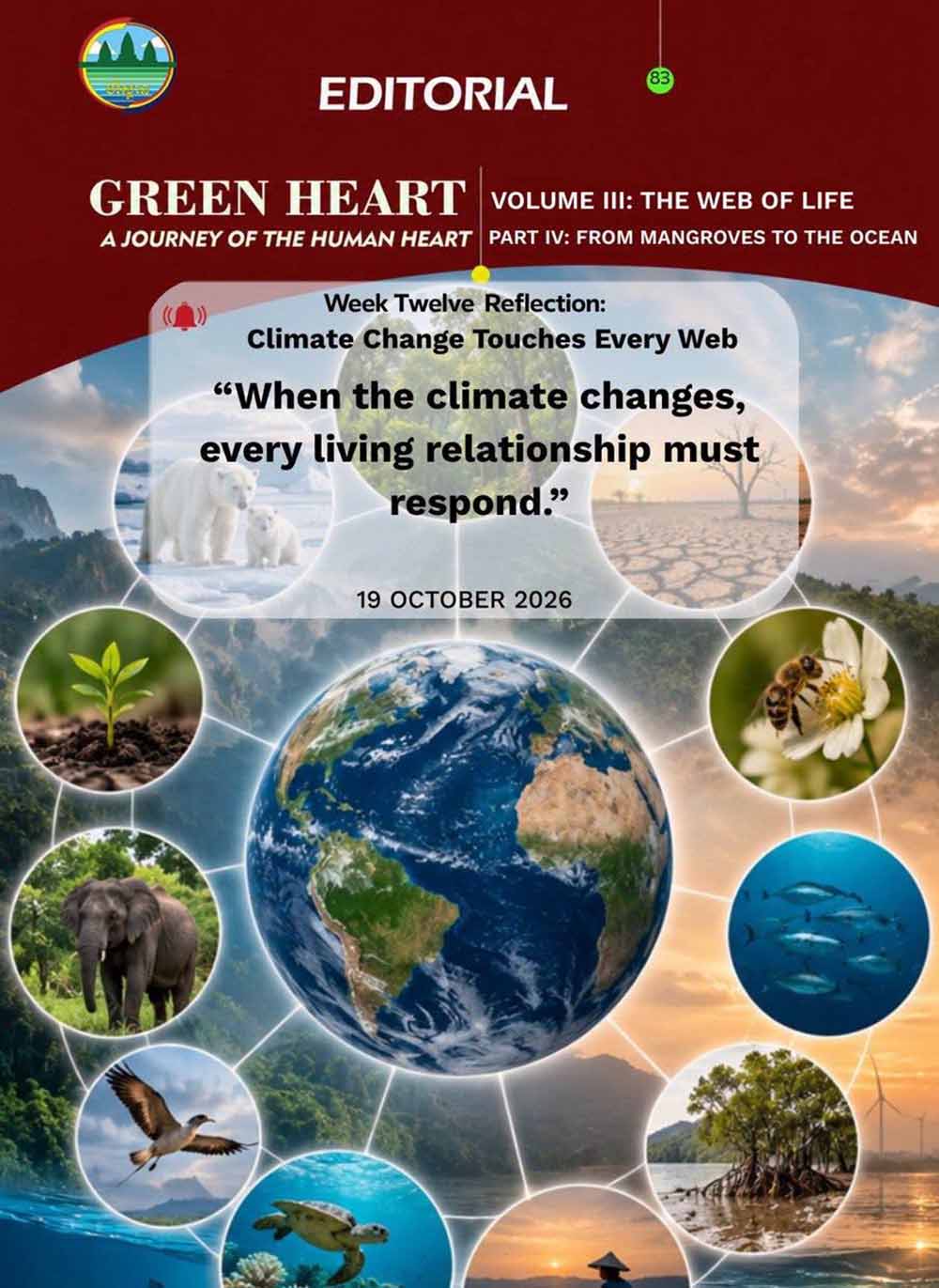
“When the climate changes, every living relationship must respond.”
Editorial
Climate is the long-term pattern of temperature, rainfall, wind, seasons, and extremes. Human activities—especially burning fossil fuels, land-use change, and industrial processes—have increased greenhouse gases and are warming the planet.
Warming does not affect every place equally. Heat extremes, rainfall, drought, floods, fire weather, ice, sea level, and storms change in different ways across regions. Reliable local information is needed for specific decisions.
Ecosystems respond through shifts in range, timing, growth, reproduction, migration, and mortality. A plant may flower earlier, but its pollinator may not change at the same rate. A fish may move toward cooler water, while fishing communities and protected boundaries remain fixed.
Climate change often adds pressure to ecosystems already affected by habitat loss, pollution, overuse, or invasive species. A healthy, connected system may have more options for adaptation than a fragmented one.
Mitigation reduces the causes of climate change by cutting greenhouse-gas emissions and protecting or increasing carbon storage. Adaptation reduces harm from impacts already occurring or expected. The world needs both.
Nature-based approaches—such as protecting forests, wetlands, mangroves, and soils—can contribute to mitigation and adaptation while supporting biodiversity and communities. They must have ecological integrity, respect rights, and avoid being used as excuses to continue avoidable emissions.
Technology, policy, finance, education, and behavior all matter. No student is responsible for solving climate change alone. Young people can learn, conserve energy, reduce waste, care for ecosystems, support truthful discussion, and prepare for local risks.
Climate communication should be honest without destroying hope. The problem is serious, impacts are already occurring, and choices still influence how much warming and harm the future experiences. Every avoided amount matters.
Buddhist values offer steady guidance: recognize causes, reduce craving, practice compassion, act responsibly, and avoid despair. Hope is not the belief that everything will be easy. It is the decision that wise action remains worthwhile.
Climate change touches every web, but cooperation can also travel through every web of human society. Knowledge, courage, technology, policy, and compassion can reinforce one another.
The future is not fixed. It is being influenced now.
Avoiding one unit of pollution may seem abstract, yet cumulative emissions shape long-term warming. Every reduction contributes, especially when large institutions and systems change. Personal practice should inspire collective responsibility, not substitute for it.
Climate fairness asks who contributed most, who faces the greatest risk, and who has resources to respond. Compassionate solutions support vulnerable communities while transforming the systems producing emissions.
Buddhist Reflection
Right effort is sustained action guided by understanding, not panic. We acknowledge suffering and its causes, cultivate helpful conditions, and continue even when results require time.
Today’s Reflection
What relationship in nature could be disrupted if two connected species respond differently to warming?
Today’s Action
Choose one local climate risk and identify one mitigation action, one adaptation action, and one trusted source.
Today’s Pledge
Today I will face climate change with truth, compassion, cooperation, and determined hope.
When we protect nature, we protect all beings—including ourselves.