Cambodia Deserves South Korea’s Friendship, Not Suspicion
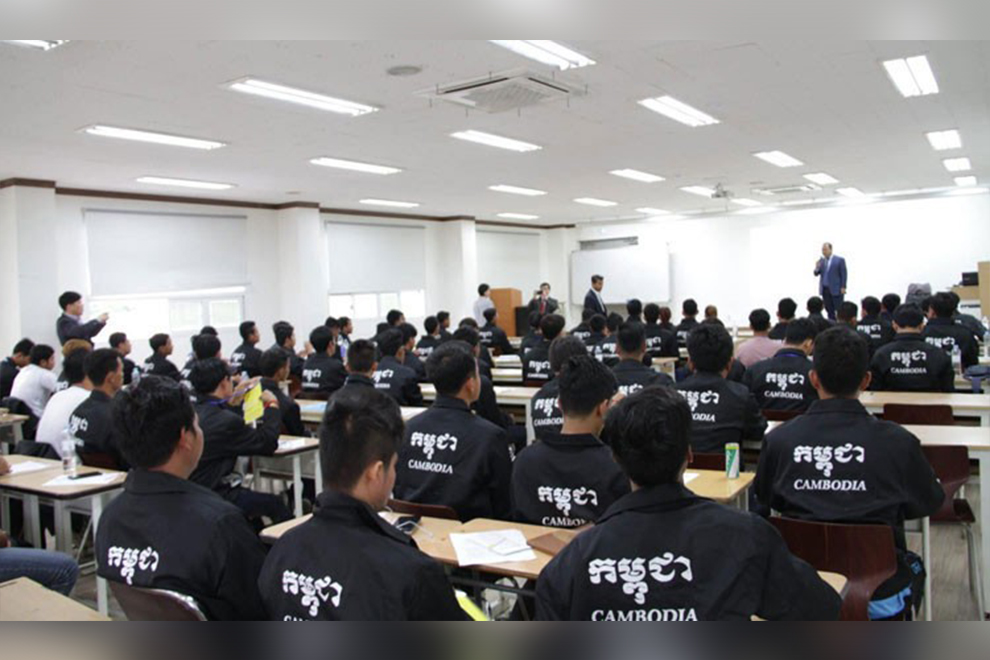 Former Cambodian ambassador Long Dimanche meets with Cambodian migrant workers in South Korea. Supplied
#opinion
The shadow of a heartbreaking tragedy, the death of South Korean student Park Min-ho in Cambodia’s Kampot province last August, has ignited understandable grief and anger across South Korea. Lured by false promises of opportunity, Park fell victim to a ruthless online scam operation that ended in his torture and murder.
The incident, however, is not a story of Cambodian culpability but one of transnational crime exploiting vulnerable nations. As a Cambodian voice reaching out in solidarity, we urge South Koreans — policymakers, media and citizens alike — to see the full picture: Cambodia is a victim in this saga, not the villain, and our two countries must unite against the real perpetrators while rejecting discrimination that harms innocent lives.
The facts of the case reveal a network far removed from Cambodian origins. The suspects, primarily foreign nationals, operated scam compounds in remote areas like Bokor Mountain, preying on victims from around the world, including Koreans.
Cambodian authorities swiftly arrested three key suspects charging them with murder and online fraud. In a joint effort, the Cambodian government coordinated with South Korean officials to raid the scam villa in Rolous village and apprehend additional individuals. The alleged ringleader, a foreign national surnamed Ham, was captured in Pattaya, Thailand.
Far from obstructing justice, Cambodia’s Ministry of Interior pledged full collaboration with South Korea, providing briefings and legal documents to ensure transparency. This level of cooperation underscores Cambodia’s commitment to eradicating these crimes, which have ensnared thousands of our own citizens as forced labourers in these very compounds.
Yet, some South Korean media narratives have painted Cambodia broadly as a “hub of crime”, fuelling misconceptions that overlook the reality: these operations are dominated by foreign syndicates that infiltrate porous borders across Southeast Asia. Cambodia has been a prime target due to its economic vulnerabilities.
Blaming Cambodia ignores the regional dynamics, where neighbouring Thailand has not only hosted fleeing scammers but has escalated tensions by bombing alleged scam sites on Cambodian soil, endangering innocent lives in the process. Thai authorities have accused Cambodia of harbouring these operations, yet intelligence shows scam gangs relocating from Thailand to Cambodian and Myanmar areas precisely because of crackdowns elsewhere.
As a smaller nation, Cambodia lacks the resources to combat these well-funded networks alone, making it more victim than enabler. South Korean media must report these nuances to deliver justice, not perpetuate stereotypes that strain our friendship.
This misinterpretation has real human costs, extending to the 70,000-plus Cambodian workers in South Korea who contribute diligently to South Korea’s economy in factories, farms and homes. In the wake of Park’s death, reports of discrimination have surged: employers refusing Cambodian hires, online hate speech labelling Cambodian as “dangerous” and even calls to slash E-9 visa quotas for Cambodian nationals.
Cambodian migrants have organised protests in Seoul to denounce this stigma, pleading for recognition that they, too, abhor these crimes. South Korean labour minister Kim Young-hoon wisely rejected quota cuts, noting they would unfairly punish the innocent and undermine bilateral ties.
We echo Professor Choi Hang-sub’s call: Critique our government if needed, but do not let anger devolve into hatred toward everyday Cambodians. These workers send remittances that bolster Cambodia’s economy and foster cultural exchange — let’s protect, not alienate them.
Moreover, this moment invites reflection on broader relations. South Korea has historically critiqued Cambodia’s close ties with China, viewing them as a geopolitical risk. Yet, under President Lee Jae-myung, Seoul is actively pursuing its own “full-scale restoration” of relations with Beijing. Just this month, President Lee visited China, meeting Xi Jinping to expand economic cooperation, cultural exchanges and even seek mediation on North Korea issues. Bilateral trade hit $273 billion in 2024, and the summit paved the way for 2026 as a year of renewed partnership.
South Korea and China provide visa exemption for tourists from each other’s countries to promote people-to-people exchange and tourists among the two countries, so how can South Korea blame Cambodia just because it has good relations with China? Cambodian people still need to apply for a visa before travelling to China while Koreans receive one for free, so why highlight Cambodia’s relations with China?
If South Korea recognises the value of engaging China amid regional tensions, why fault Cambodia for doing the same? Cambodia’s relationship with China has brought infrastructure and investment, much like Seoul’s evolving diplomacy. Hypocrisy here only weakens potential alliances.
South Korea and Cambodia share a vision for prosperity and peace. Both countries have collaborated on development projects, tourism, and now, combating scams — let’s build on that. Joint task forces could target these networks at their roots, sharing intelligence and resources. Cultural programs could heal divides, reminding both countries of the shared humanity. Cambodia aspires to be a steadfast friend to South Korea and the world, but friendship requires fairness.
In honouring Park Min-ho’s memory, let Cambodia and South Korea pursue justice through truth and cooperation, not division. Cambodia stands ready to work hand-in-hand with South Korea for a safer, more equitable future. It’s time to turn grief into solidarity.
Dr. Seun Sam is a policy analyst at the Royal Academy of Cambodia. The views and opinions expressed are his own.
-The Phnom Penh Post-