Online Attention Should Not be Pursued at any Cost
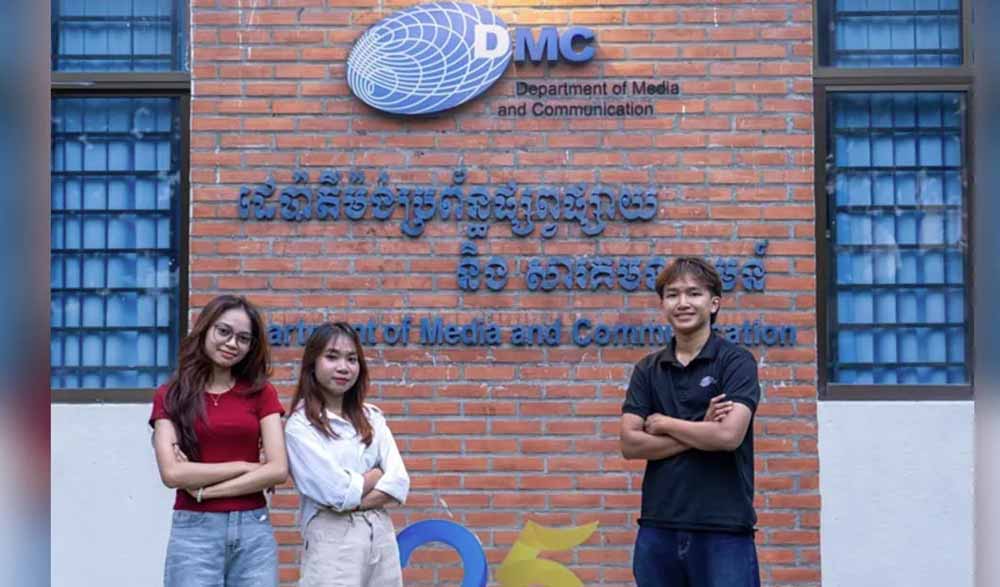 From left: Students Khoem Chakriya, Keo Socheata and Rith Rasmey Kanann pose in front of the Department of Media and Communication sign at the Royal University of Phnom Penh. Supplied
#Opinion
Some online arguments involving well-known personalities can attract attention very quickly. Posts about personal disputes, accusations, relationship problems or celebrity conflict can stay on Facebook and TikTok feeds for days.
By contrast, useful videos about education, books, culture, history or social issues often receive far less attention. Many young people see this difference when they scroll online.
The focus here is not all entertainment or comedy. It is gossip-driven posts, livestream arguments and content that turns private conflict into public attention.
Some creators are learning to use conflict as a regular way to build their audience, promote products and earn money. Once conflict becomes a tool for attention, the people involved can easily lose their dignity, privacy and trust.
Social media is now part of daily life in Cambodia. DataReportal estimated that Cambodia had 14 million active social media accounts in October 2025, equal to about 78 per cent of the population. That figure does not mean every account is an individual, but it still shows how wide the reach of social media has become.
Recent public attention around content creators shows why this issue should be taken seriously. The Ministry of Social Affairs, Veterans and Youth Rehabilitation has warned against using children in online content that violates their rights, dignity and privacy, especially when the purpose is to attract attention, entertain audiences or generate revenue. The Ministry of Information has also warned journalists, influencers and creators against content that is insulting, discriminatory or embarrassing, although the statement did not offer specific definitions.
These are sensitive issues, and this article does not seek to settle any legal debate. But the warnings illustrate why creators need to think more carefully before turning people’s dignity, family problems or personal conflict into content.
Creators have more influence than many people think. They decide what to record, what to post, what caption to write and whether to turn someone else’s problem into entertainment. They also decide whether a livestream will help to clarify an issue or simply gives people more space to insult each other.
Some creators may say they are only giving audiences what they want. But creators also shape what audiences expect. If gossip, arguments, and personal attacks are posted again and again, viewers may start to treat this content as normal entertainment.
This can also become a business model. Some local businesses appear to promote products through high-engagement creators whose audiences are built partly on drama or controversy. A product mention may get quick visibility, but it can also help reward the kind of content that weakens online discussion.
Gossip becomes more harmful when it mixes with unverified claims. UNESCO has reported that many digital content creators around the world do not regularly check facts before sharing information, although many say they want to learn how to do so.
In Cambodia, where rumours and online arguments can spread quickly, weak fact checking can damage reputations and create conflict beyond the screen. A post that looks entertaining to one viewer may be painful or harmful to the person being talked about.
Audiences are part of this too. Every view, comment and share sends a signal. When people say they dislike online drama but continue to watch and share it, they help make it more profitable.
Still, creators should carry the first responsibility because they are the ones producing and framing the content. They know when a private disagreement is being turned into a public show. They usually know when someone’s embarrassment is being used for attention.
This does not mean Cambodia should reject humour, entertainment or lively online discussion. Social media can be creative, useful and enjoyable. Many creators use it to teach, explain, entertain, promote local culture, sell products honestly or discuss real social issues.
The problem begins when attention becomes more important than ethics. It begins when people’s conflict, embarrassment or vulnerability becomes regular material for profit.
Schools and families can help young people understand this. Digital literacy should not only teach students how to identify fake news. It should also teach them to ask simple questions before they share: Who may be hurt by this post? Is the information verified? Am I sharing something useful, or only helping a conflict become bigger?
Advertisers also have a choice. Businesses should think carefully before paying for visibility from creators whose audience is built mainly on gossip or humiliation. Fast attention may help sell a product today, but it can also connect a brand to content that many people later see as irresponsible.
Cambodia’s digital space will not improve through one warning, one law or one campaign. It will improve when creators, audiences, and advertisers stop treating views as the only measure of success.
Creators do not need to be perfect. But they should be honest about the influence they have. When thousands of people watch them, their choices affect more than their own page.
A stronger online culture starts with a simple decision: do not build attention by lowering someone else’s dignity.
Views may bring income, but they should not come at any cost.
Keo Socheata, Khoem Chakriya and Rith Rasmey Kanann are students at the Department of Media and Communication, Royal University of Phnom Penh. This op-ed was developed as part of a Public Relations class project and revised with editorial guidance. The views and opinions expressed are their own.
-Phnom Penh Post-