Editorial 45 – Clouds Are Travelers
 Editorial 45 – Clouds Are Travelers
Opening Thought
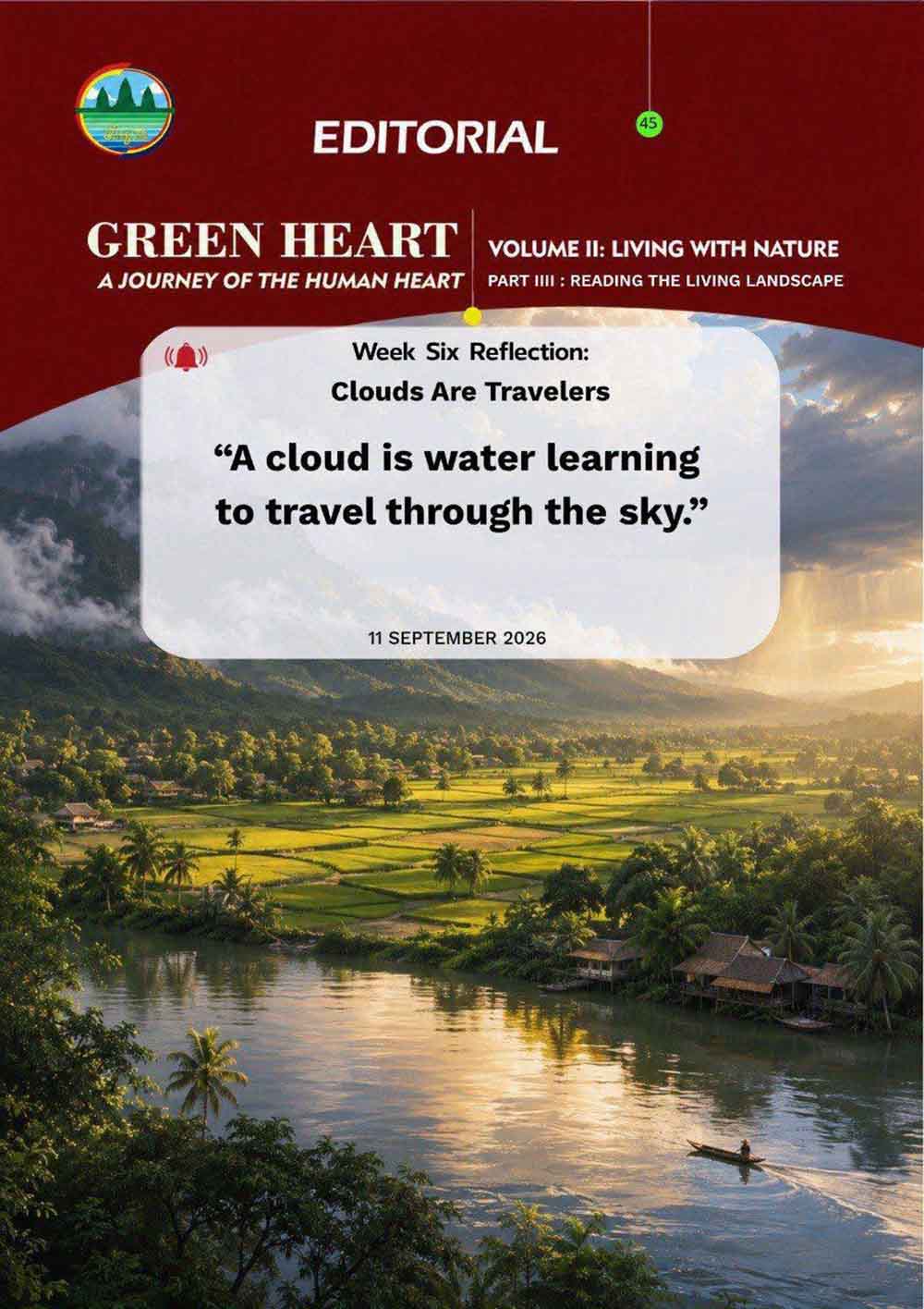
“A cloud is water learning to travel through the sky.”
Editorial
Clouds look light enough to float like thoughts, but they contain countless tiny water droplets, ice crystals, or both. They form when moist air rises and cools enough for water vapor to condense around small particles.
Cloud shapes reveal atmospheric conditions. Some are thin and high, some rise like towers, and others spread in broad layers. Meteorologists study them along with temperature, pressure, humidity, wind, and satellite data to understand weather.
Clouds are part of water’s movement. Moisture evaporated from oceans, lakes, soil, and plants enters the atmosphere. Winds transport it. Under the right conditions, it returns as rain, snow, or other precipitation.
Not every cloud produces rain at the ground, and not every dark sky becomes a storm. Weather prediction involves uncertainty because the atmosphere is complex. Reliable forecasts express probabilities and are updated as conditions change.
Clouds affect more than rainfall. They reflect some incoming sunlight and trap some outgoing heat, influencing temperature. Their role depends on type, height, time, and location. Scientists study clouds closely because they are important in weather and climate.
For farmers and communities, clouds can carry hope or warning. Rain may nourish crops and refill supplies; severe storms may threaten life and property. Respect means using forecasts, following official warnings, and preparing without panic.
Cloud watching can also cultivate attention. Lie or sit in a safe shaded place and observe how forms arise, change, and disappear. The sky demonstrates impermanence without needing words.
No nation owns a cloud. Water lifted from one region may fall in another. The atmosphere carries gifts across borders and reminds us that cooperation is natural to the planet.
When rain finally falls, the cloud seems to vanish, but its water has simply changed place. It may enter a seed, river, well, animal, or person.
The traveler continues. By caring for land and water wherever the rain arrives, we welcome the cloud’s gift and prepare it for its next journey.
Clouds also connect imagination with discipline. We may see animals or castles in their shapes, then ask scientific questions about height, movement, and moisture. Wonder and measurement do not compete; together they create a fuller way of knowing the sky.
Curiosity gives the traveler a name; humility lets its mystery remain.
Buddhist Reflection
Clouds are a clear image of impermanence. Form gathers through conditions, changes, and passes without becoming meaningless. Watching this calmly can help us accept change while responding wisely to the present moment.
Today’s Reflection
What can clouds teach me about change without loss of purpose?
Today’s Action
Observe clouds for ten minutes from a safe place. Sketch their change and compare your observation with a reliable forecast.
Today’s Pledge
Today I will meet change with attention and receive the sky’s gifts responsibly.
When we protect nature, we protect all beings—including ourselves