Editorial 100 – Shade Is Public Care
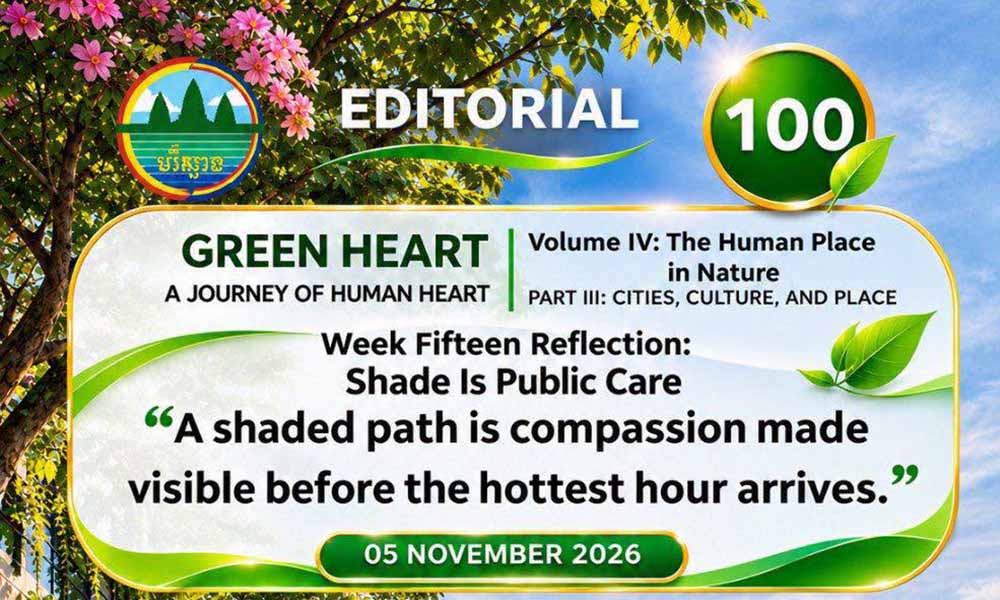 Editorial 100 – Shade Is Public Care
Opening Thought
“A shaded path is compassion made visible before the hottest hour arrives.”
Editorial
On a hot day, shade can determine whether a walk is comfortable, exhausting, or dangerous. Trees, roofs, awnings, shelters, and building orientation create shade in different ways.
Heat risk depends on temperature, humidity, sunlight, wind, activity, clothing, health, and access to water or cooling. Children, older adults, outdoor workers, pregnant people, and those with certain conditions may face greater risk.
Tree shade offers cooling, habitat, beauty, and other benefits, but trees require time, water, soil, space, and maintenance. Poor species or placement can damage infrastructure, block visibility, trigger allergies, or fail in drought.
Built shade can provide immediate protection at bus stops, school grounds, markets, clinics, and walking routes. It can be designed with ventilation, solar panels, rain collection, or seating where appropriate.
The most effective shade is located where people need it. Mapping who walks, waits, works, plays, and rests reveals priorities. A decorative tree far from a path does not protect the person standing in the sun.
Public-care planning also considers time. A structure may shade a place in the morning but not during afternoon heat. A young tree may cast little shade for years. Sun-angle studies and community observation improve design.
Shade should not become a privilege limited to private gardens, vehicles, or commercial spaces. Public routes and gathering places need thermal safety, especially where people cannot choose another time or mode of travel.
Heat plans include shade alongside drinking water, cool spaces, work-rest schedules, warnings, healthcare, emergency response, and building improvements. No one measure is enough.
Students can help by mapping hot and shaded areas with teacher guidance. They should avoid outdoor work during dangerous heat and recognize signs of heat illness according to local health advice.
Shade is a form of preparation. It offers help before someone collapses, without asking who deserves relief.
When a city places shade where vulnerable people need it, infrastructure becomes compassion. The cooled path quietly says, “We expected you, and your safety matters.”
Maintenance keeps that promise. Dead trees, broken roofs, missing seats, or blocked walkways can turn planned shade into an empty symbol. Budgets for watering, pruning, inspection, cleaning, and repair are part of heat protection from the beginning.
Community reporting can help, but responsibility must remain clear so hazards receive timely professional attention.
Buddhist Reflection
Compassion anticipates suffering rather than waiting to witness it. Creating shade is generosity directed toward unknown people and future hot days.
Today’s Reflection
Who most needs shade in my school or community, and at what time?
Today’s Action
Create a safe heat-and-shade map for one route. Mark existing shade, gaps, water, and places needing expert attention.
Today’s Pledge
Today I will support shade and heat safety as public expressions of care.
When we protect nature, we protect all beings—including ourselves.