APF resolution backs Cambodia’s sovereignty and border position
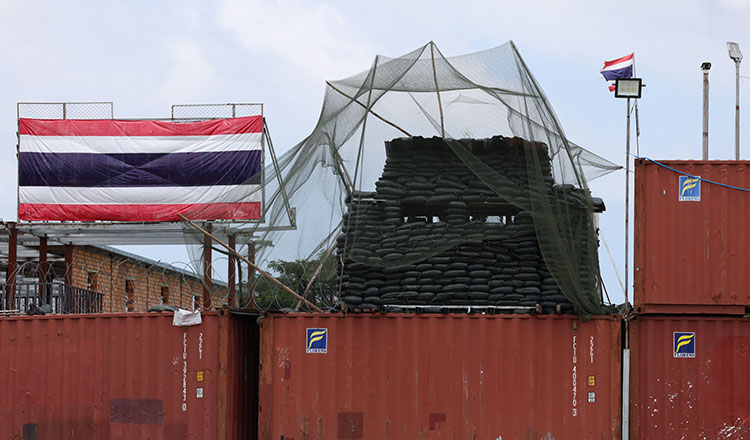 Containers, barbed wire and Thai flag deployed by the Thai military in the Thmar Da area, Pursat province of Cambodia. KT/Khem Sovannara
Synopsis: The Parliamentary Assembly of the Francophonie has called international attention to the Cambodia–Thailand border dispute, reinforcing calls for dialogue, respect for international law and peaceful resolution, says Senate leader.
Cambodia has achieved a major diplomatic success through parliamentary diplomacy after the Parliamentary Assembly of the Francophonie (APF) adopted a historic resolution reaffirming the Kingdom’s sovereignty and territorial integrity, Senate Second Vice-President Thun Vathana said.
Speaking at a dialogue between Senate and commune leaders from Kandal province at the Solidarity Palace on July 13, Vathana said the resolution demonstrated growing international recognition of Cambodia’s position on the border dispute with Thailand.
“The Political Commission of the Parliamentary Assembly of the Francophonie adopted a historic resolution supporting and respecting Cambodia’s sovereignty and territorial integrity,” he said.
“This is a major success and a genuine act of justice for Cambodia, which has suffered violations of its territorial integrity.”
The resolution was adopted during the 51st Annual Session of the APF in Yaoundé, Cameroon, on July 11. It reaffirmed the organisation’s commitment to international law and called for respect for Cambodia’s sovereignty and territorial integrity amid border tensions with Thailand.
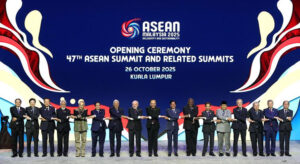
The APF urged all parties to adhere to the ceasefire and the Kuala Lumpur Joint Peace Declaration made by the prime ministers of Cambodia and Thailand in October last year, avoid any actions that could increase tensions, and settle disputes peacefully using established methods, especially the Joint Boundary Commission (JBC).
The resolution also expressed concern over reported ceasefire violations, civilian casualties, displacement of border communities and damage to cultural and religious sites, including UNESCO World Heritage sites.
Vathana said the APF decision underscored the effectiveness of Cambodia’s parliamentary diplomacy in advancing the country’s interests on the international stage and promoting peaceful conflict resolution through dialogue and international law.
While highlighting the diplomatic achievement, the Senate leader stressed the importance of effective governance at the grassroots level, praising the contributions of women leaders serving in the communes.
“Public service exists for the benefit of the people, and citizens highly value officials when services are delivered quickly, transparently and accurately,” he said.
He said commune and council members are key to ensuring timely and inclusive public service delivery, particularly for women, children, the elderly and persons with disabilities.
Vathana encouraged local leaders to continue strengthening public trust by improving service quality and responsiveness to citizens’ needs.
The forum brought together women leaders from the Senate and sub-national administrations in an open and constructive discussion, allowing participants to exchange experiences and best practices aimed at enhancing the quality of public services at the local level.
The APF session on July 11 also saw Senate First Vice-President Ouch Borith elected as the organisation’s Regional Delegate for Asia-Pacific for the 2026–2028 term, strengthening Cambodia’s role within the Francophone parliamentary community.
Kin Phea, director-general of the International Relations Institute of Cambodia, said the APF’s appeal carries diplomatic and political weight, even though it is not a legally binding decision like a court ruling or a resolution under the United Nations legal framework.
“The key message of this appeal is that the Cambodia–Thailand border issue is no longer merely a bilateral matter between the two countries but has attracted the attention of the international community,” he said.
“The APF’s call for respect for territorial sovereignty, the inviolability of borders, and the avoidance of unilateral actions is fully consistent with Cambodia’s long-standing position that border disputes should be resolved in accordance with international law, internationally recognised maps, and peaceful mechanisms. This strengthens Cambodia’s legal and diplomatic position.”
At the same time, the statement conveys a message to Thailand that unilateral actions, attempts to create new facts on the ground, or the use of military force will not gain acceptance from the international community, Phea added.
“I believe the priority is not to ask the world to side with Cambodia but rather to stand with the law, the facts, and peace. The international community should encourage all parties to respect territorial sovereignty and borders established through treaties, internationally recognised maps, and international law – not borders imposed through the use of force, the creation of facts on the ground, or unilateral map-making by any country,” he said.
Phea said Cambodia should expect international forums such as the United Nations, ASEAN, regional parliamentary bodies, and other international parliamentary organisations to continue issuing clear political messages opposing unilateral actions and the use of force along the border.
“A single appeal is not enough. There must be sustained follow-up, continued encouragement for sincere negotiations, and support for the technical mechanisms that both parties have agreed upon,” he added.
“Most importantly, the international community should help create an environment in which respect for international law becomes a practical reality rather than merely diplomatic rhetoric.”
-Khmer Times-