UN rights envoy stands by border report, invites Thai input
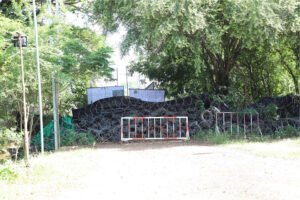
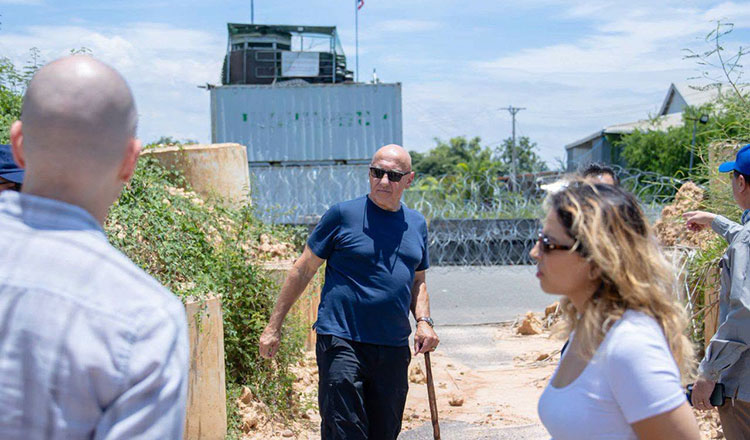 UN Special Rapporteur Thomas Andrews (C) visits the border to observe the mass displacement caused by continued Thai blockades on Cambodian territory, on July 27. Banteay Meanchey Provincial Administration
Synopsis: Special Rapporteur Thomas Andrews defends his assessment of mass displacement, while Phnom Penh backs his findings as an accurate depiction of conditions on the ground.
United Nations Special Rapporteur on the Situation of Human Rights in Cambodia Thomas Andrews has stood by his findings on the border situation following first-hand observation supported by official statistics, amid protests from Thailand.
Meanwhile, the Cambodian government supports Andrews’s report as independent verification of the situation on the ground.
On July 31, Andrews presented his report following a 10-day visit to Cambodia. He highlighted the humanitarian impact of the Cambodia-Thailand border conflict after visiting displacement sites in Banteay Meanchey province.
Andrews said about 20,000 of the 650,000 Cambodians evacuated during last year’s conflict remain displaced, with families reporting the loss of homes and livelihoods. He observed damaged properties, destroyed businesses and unexploded ordnance near the border, calling on both nations to ensure the safe return of civilians under international law and the 27 December 2025 ceasefire agreement.
Thai Foreign Minister Sihasak Phuangketkeow dismissed the report as one-sided, stating Thailand would not accept the conclusions and planned to lodge a protest at the UN.
The UN rapporteur responded to the criticism in a social media statement on Thursday, stressing that he welcomed feedback from Thailand. Andrews noted he had sent the Thai government an advance draft concerning the border conflict two days before publication.
“While I did not receive a response to that communication, I remain open and eager to discuss the Thai government’s perspective,” he said.
Regarding Thailand’s refutation of figures citing 650,000 displaced citizens, Andrews clarified that he used statistics from UN reports. He added that his reference to those displaced relies on human rights concerns that apply regardless of conflicting territorial claims.
Andrews said he will reach out to the Thai government again while preparing his final report for submission to the UN Human Rights Council next month.
“I hope that I will be able to engage with Thai officials so that I might learn their perspective before my report is published,” he said. “I cannot stress enough the importance of resolving the border conflict swiftly and peacefully so that people can return to their homes, enjoy a stable and secure environment, and seize the economic opportunities that border trade can provide.”
Andrews added that he remains eager to work with both governments to address human rights challenges associated with the conflict.
“Because whether one is Thai or Cambodian, human rights matter,” he said.
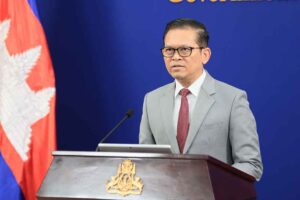
Cambodia’s Ministry of Foreign Affairs and International Cooperation backed the report as transparent and accurate.
“Consistent with its international obligations and commitments to human rights under the core human rights treaties it has ratified, Cambodia provided the Special Rapporteur full access to places of detention, a displacement site and the border region and facilitated meetings with relevant officials at every level while fostering an environment conducive to independent engagement with civil society and activists,” the ministry said in a Friday statement.
“This continued cooperation is underpinned by Cambodia’s confidence in the United Nations’ established mechanisms and the Special Rapporteur’s professionalism in conducting independent scrutiny based on factual realities on the ground.”
The ministry noted that displacement figures referenced in the statement are consistent with data compiled by UN agencies and humanitarian partners operating in the border region.
“Cambodia further notes that while recent public statements from Thai authorities dispute the precise figures, they nonetheless confirm that many Cambodian civilians have been displaced and remain unable to return to their homes due to Thailand’s unlawful occupation of Cambodia’s territory,” the statement said.
“Cambodia welcomes continued independent verification of this situation by relevant agencies and accredited diplomatic missions and stands ready to facilitate further visits to the affected areas.”
The ministry said the government remains committed to bringing displaced citizens home, citing commitments in the Joint Statement of December 2025 signed with Thailand following last year’s clashes.
“Cambodia calls for the immediate, full, and effective implementation of this commitment, in its entirety, through the existing bilateral mechanisms established for this purpose, particularly the prompt resumption of the survey and demarcation work of the Joint Boundary Commission (JBC) so that every displaced civilian is able to return home,” it said.
“Cambodia will continue to engage with the Human Rights Council on all matters raised by the Special Rapporteur and looks forward to a full and constructive discussion of the situation at the Council’s next session.”
Seun Sam, a policy analyst at the Royal Academy of Cambodia, said Andrews’s response to Thailand is appropriate and reflects Thailand’s failure to address UN communications and bilateral agreements.
“Andrews has stated that before holding the press conference, he had sent a draft statement to the Thai side. However, Thailand did not respond or provide any comments on the draft that Tom Andrews had sent,” Sam said. “This means that Thailand did not attach importance to the United Nations.”
He added that the Thai side is attempting to conceal realities regarding border actions from the international community.
“It does not attach importance to peace efforts and instead attempts to deny and dispute the facts while also making false claims and using disparaging language toward the United Nations,” he said. “However, neighbouring countries of Thailand already know that this is a pattern – a strategy that the Thai side has repeatedly employed. It uses a strategy of denying, accusing and distorting the situation.”
Youk Chhang, director of the Documentation Center of Cambodia, said the UN special rapporteur’s comments highlight that human rights apply regardless of nationality.
“The Thai government’s responsibility for upholding human rights extends equally as much to Cambodians as to Thai citizens, to the annoyance of the Thai government,” Youk said.
He added that the principle runs counter to the Thai military’s presence on Cambodian territory and political objectives along the border.
“This is not the first time the Thai government has exercised this policy, and unfortunately, it is probably not the last, but if history offers any indication of how the border situation will be resolved, then Cambodia should be optimistic and patient that the situation will be rectified eventually,” he said. -Khmer Times-