Military action not the answer to Cambodia-Thailand border dispute, says scholar
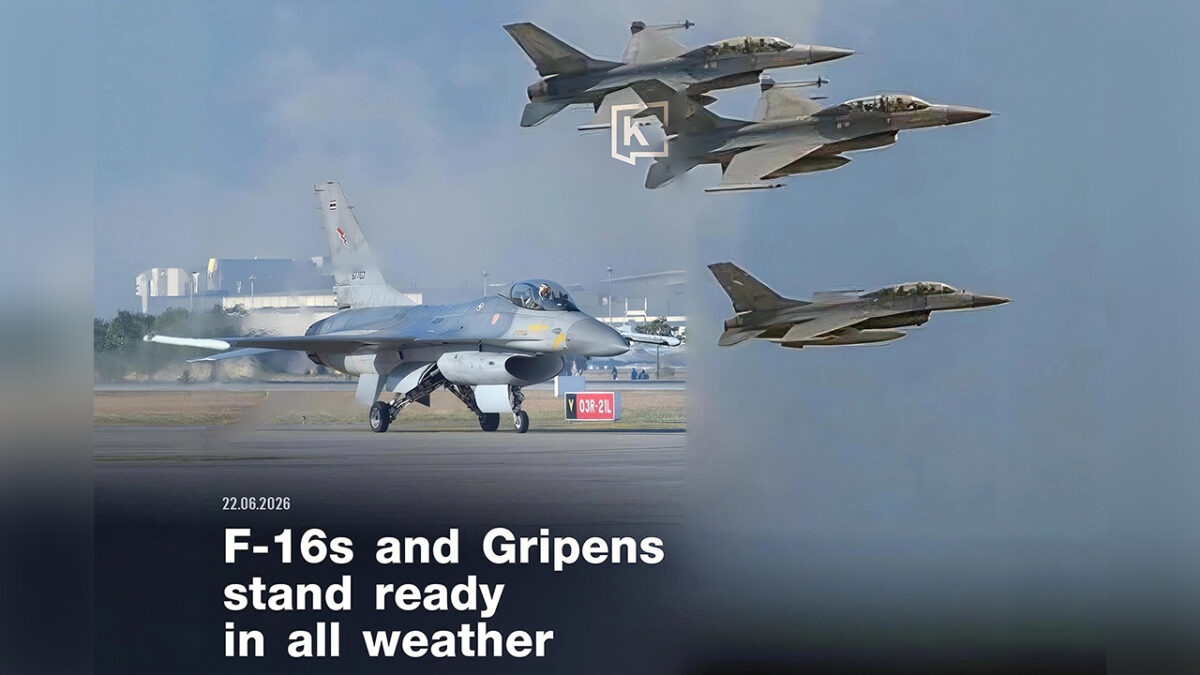 The Thai media has repeatedly reported that Thai fighter jets are on round-the-clock standby. Supplied
#National
A senior Cambodian foreign policy scholar has warned that military approaches will not resolve the long-running Cambodia-Thailand border dispute, urging both countries to pursue reconciliation, restore normal bilateral relations and allow existing border mechanisms to complete their work.
Speaking at a recent forum organised by the Lowy Institute on whether ASEAN can meet Indo-Pacific security challenges, Pou Sothirak, senior advisor to the Cambodian Center for Regional Studies (CCRS), said Cambodia and Thailand should not allow unresolved sections of their border to undermine decades of friendship and economic interdependence.
“They should not rely on military solutions to their border dispute. Instead, they should exercise empathy and mutual respect toward one another and seek a peaceful settlement,” Sothirak wrote, in a social media post summarising his remarks at the event.
He described Cambodia and Thailand as “eternal neighbours” that share deep bonds of friendship as well as economic ties, adding that both countries should focus on reconciliation, normalisation and peaceful coexistence for the benefit of their respective peoples.
Sothirak’s remarks come as tensions between Phnom Penh and Bangkok remain elevated following armed clashes and political disagreements that have strained diplomatic and economic relations over the past year.
He argued that the Joint Boundary Commission (JBC), the bilateral mechanism tasked with border demarcation, should be allowed to continue its work to delineate the more than 800 kilometres of shared border that remain under discussion.
Sothirak also proposed a roadmap toward restoring normalcy, including the gradual reopening of international border checkpoints and the full restoration of embassy operations in Phnom Penh and Bangkok.
However, such a process faces significant political obstacles.
On the Cambodian side, Senate president Hun Sen has repeatedly stated that Cambodia did not initiate the border closures, arguing that restrictions and disruptions were first imposed by Thailand.
He has maintained that Cambodia is prepared to withstand a prolonged closure, once saying the country could keep the border closed for “500 years” if necessary.
Hun Sen has also taken a hard line on cross-border trade, announcing a strict ban on the import of goods transported overland from Thailand as relations deteriorated.
Thai leaders, meanwhile, have consistently maintained that Thailand’s actions are aimed at protecting its sovereignty and security interests.
Thai Prime Minister Anutin Charnvirakul and other senior officials have repeatedly accused Cambodia of provoking tensions, while insisting that Thailand has no intention of reopening border crossings until conditions improve.
The dispute has also been accompanied by military sabre-rattling. Cambodia has criticised Thailand’s deployment of military assets along parts of the border, including flights by F-16 fighter jets, which Phnom Penh has portrayed as escalating tensions rather than fostering dialogue.
Cambodian officials have repeatedly emphasised that the country remains committed to peaceful mechanisms for dispute resolution.
In recent months, Phnom Penh has publicly stated that it sent several official communications to Bangkok seeking to convene meetings of the Joint Boundary Commission and advance border talks.
Cambodian officials say progress has been slow because Thailand repeatedly postponed or delayed discussions for various reasons.
Despite these frustrations, Cambodia has continued to call for negotiations under existing bilateral frameworks, including the JBC and the General Border Committee (GBC), while also pursuing international legal avenues on maritime disputes under the UN Convention on the Law of the Sea (UNCLOS).
For Sothirak, sustained diplomacy remains the only viable path forward.
To prevent tensions from escalating into a broader conflict, he said regional and international actors have an important role to play.
“The UN and ASEAN, as well as other friends of both sides… must ensure effective ceasefire agreements,” he said.
ASEAN has already played a significant role in reducing tensions. Under the chairmanship of Malaysia, the regional bloc facilitated diplomatic engagement and supported efforts to prevent further escalation.
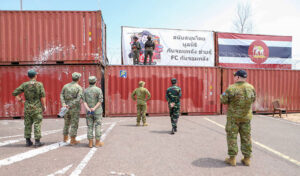
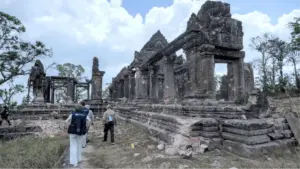
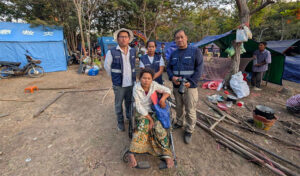
More recently, ambassadors and military observers from ASEAN members have visited areas affected by the conflict, including temporary shelters and border communities where thousands of Cambodian civilians remain displaced.
Their visits have been viewed by Cambodian officials as an important demonstration of regional solidarity and support for peaceful conflict resolution.
Sothirak said Cambodia and Thailand should not allow unresolved border issues to overshadow the broader relationship that has existed for generations.
Instead, he argued, both countries should choose dialogue over confrontation and peaceful coexistence over military competition.
“Both countries should focus on reconciliation, normalisation and peaceful coexistence for the benefit of their nations and people,” he said.
-Phnom Penh Post-