Thailand Provokes New Military Activities After Revoking the 2001 MOU
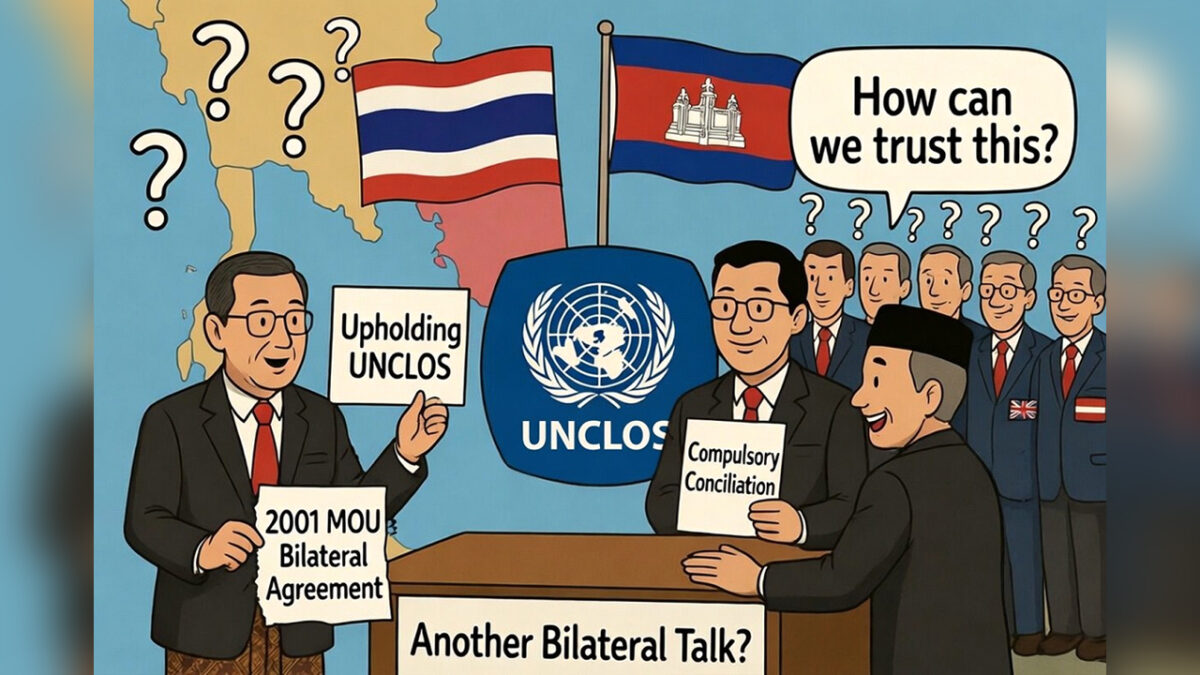 Thailand Provokes New Military Activities After Revoking the 2001 MOU
In a move that has sent ripples across Southeast Asia, Thailand unilaterally terminated the 2001 Memorandum of Understanding (MOU) with Cambodia regarding overlapping maritime claims in the Gulf of Thailand. Signed on June 18, 2001, this bilateral agreement provided the sole formal framework for peacefully negotiating maritime boundaries and exploring joint development of hydrocarbon resources in a contested area spanning approximately 26,000 square kilometres.
Far from fostering resolution, Thailand’s abrupt withdrawal on May 5, 2026, has not only stalled progress but appears to have emboldened provocative military posturing, raising serious concerns about regional stability.
Cambodia has consistently approached these issues with patience and commitment to international norms. The revocation, however, exposes a troubling pattern: Thailand proposes international mechanisms only to retreat when they demand accountability, repeatedly shifting positions in ways that erode trust between neighbours. How can Cambodia — or the international community — place faith in a partner that treats agreements as disposable?
The 2001 MOU: A Framework for Peaceful Resolution
The 2001 MOU was born of goodwill. It outlined two main tracks: delimitation of boundaries in certain areas and joint development in others, all grounded in international law. For over two decades, it served as the primary channel for dialogue despite limited progress — only five rounds of talks occurred. Both nations recognised the potential for shared prosperity through oil and gas exploration in the Gulf.
Thailand’s decision to scrap it unilaterally, citing lack of progress, ignores the mutual nature of the agreement. Cambodia expressed regret, noting that the MOU embodied political will for peaceful resolution. Termination does not erase Cambodia’s legitimate maritime rights, which are protected under broader international law. Yet Thailand’s action disrupts a carefully balanced status quo, especially amid lingering tensions from the 2025 border clashes that resulted in casualties and displacements.
Flip-Flopping on UNCLOS: From Proposal to Rejection
Thailand initially advocated shifting to the UN Convention on the Law of the Sea (UNCLOS) as the new framework after termination. Both countries are parties to UNCLOS, which provides established mechanisms for maritime disputes, including compulsory conciliation under Annex V. Cambodia, demonstrating good faith and a rules-based approach, agreed to pursue this path.
To the surprise of many, Thailand then reversed course. Reports indicate that after Cambodia embraced compulsory conciliation, Thai officials urged a return to bilateral talks — precisely the format undermined by the MOU’s revocation. This inconsistency is not isolated. It reflects a strategy of tactical manoeuvring rather than genuine commitment to resolution.
Cambodia’s leadership, including former prime minister Hun Sen, has firmly rejected reverting to bilateral negotiations post-revocation. Why negotiate under conditions dictated solely by one side when the bilateral framework has been discarded? Cambodia’s pivot to UNCLOS compulsory conciliation upholds the convention’s spirit: objective, transparent dispute settlement that prioritises law over power asymmetries.
A History of Disrespect for Agreements and International Law
This episode fits a broader pattern. Thailand has a track record of inconsistent adherence to bilateral deals and international obligations in its relations with Cambodia. Historical land border disputes, such as those around Preah Vihear, have repeatedly escalated due to domestic Thai politics rather than legal merits. The International Court of Justice (ICJ) has ruled on such matters, yet implementation often faces resistance.
In the maritime domain, Thailand’s actions undermine the very principles it claims to champion. UNCLOS emphasises equitable solutions, good faith negotiations and compulsory procedures when bilateral efforts fail. By revoking the MOU and then balking at conciliation, Thailand signals that it prefers ambiguity — where larger naval capabilities or political leverage might prevail — over clear legal boundaries. This disrespects not only Cambodia but the rules-based international order that smaller nations rely upon.
Recent military activities exacerbate these concerns. Following the MOU revocation, reports of heightened naval presence, patrols, and incidents in disputed waters have surfaced. Such provocations risk miscalculation, especially after the 2025 conflicts that saw artillery, airstrikes and civilian impacts. Cambodia has reaffirmed ceasefires and sought de-escalation, yet Thailand’s moves appear designed to pressure rather than partner.
Why Trust Is Eroding
Trust between nations is not granted; it is earned through consistency, respect for commitments and adherence to shared rules. Thailand’s repeated changes of position — proposing UNCLOS, then rejecting its compulsory elements; signing the MOU, then scrapping it without meaningful progress — make reliable partnership impossible. Cambodia has invested decades in dialogue. In contrast, Thailand’s approach seems driven by internal politics, resource nationalism or strategic posturing in the Gulf of Thailand’s energy-rich waters.
For Cambodia, a developing nation focused on stability and growth under Prime Minister Hun Manet, this unpredictability poses direct threats to sovereignty, economic development and security. Maritime resources represent future prosperity for both peoples, but unilateralism risks turning potential cooperation into confrontation. ASEAN, as a regional body, must urge restraint and dialogue grounded in law, not power. External partners, including major powers with interests in Indo-Pacific stability, should note how such behaviour affects smaller states’ confidence in multilateralism.
Cambodia’s Principled Stand: Law Over Chaos
Cambodia remains committed to peaceful resolution. By ratifying UNCLOS fully and pursuing compulsory conciliation, Phnom Penh demonstrates maturity and confidence in international justice. This is not escalation; it is adherence to the treaty both nations have joined. Cambodia’s rights to its continental shelf, exclusive economic zone and historic waters are well-established and unaffected by the MOU’s termination.
The Kingdom calls on Thailand to honour the spirit of good neighbourliness. Revoking frameworks without alternatives, followed by military posturing, only heightens risks. True leadership would embrace transparent legal processes that deliver equitable outcomes benefiting both populations — through joint development where possible, or clear delimitation where necessary.
A Call for Regional Responsibility
As Southeast Asia navigates complex geopolitics, including South China Sea tensions, neighbours like Cambodia and Thailand must model cooperation. Unilateral revocation of agreements, policy flip-flops and provocative military activities set dangerous precedents. They undermine ASEAN’s credibility as a zone of peace and prosperity.
Cambodia urges Thailand to reconsider its approach: return to good-faith engagement under UNCLOS principles, cease actions that militarise disputes, and rebuild trust through deeds, not words. The people of both nations deserve leaders who prioritise shared futures over short-term gains. Without consistency and respect for law, trust cannot exist — and without trust, peace remains fragile. The Gulf holds immense potential. Let it become a sea of cooperation, not contention. Cambodia stands ready, anchored in international law. The question remains: will Thailand match that commitment, or continue a pattern that provokes instability?
Dr. Seun Sam is a political analyst of the Royal Academy of Cambodia. The views and opinions expressed are his own.