
The Poipet Raid: Sovereignty, Scams and the Myth of ‘Illegal Detention’
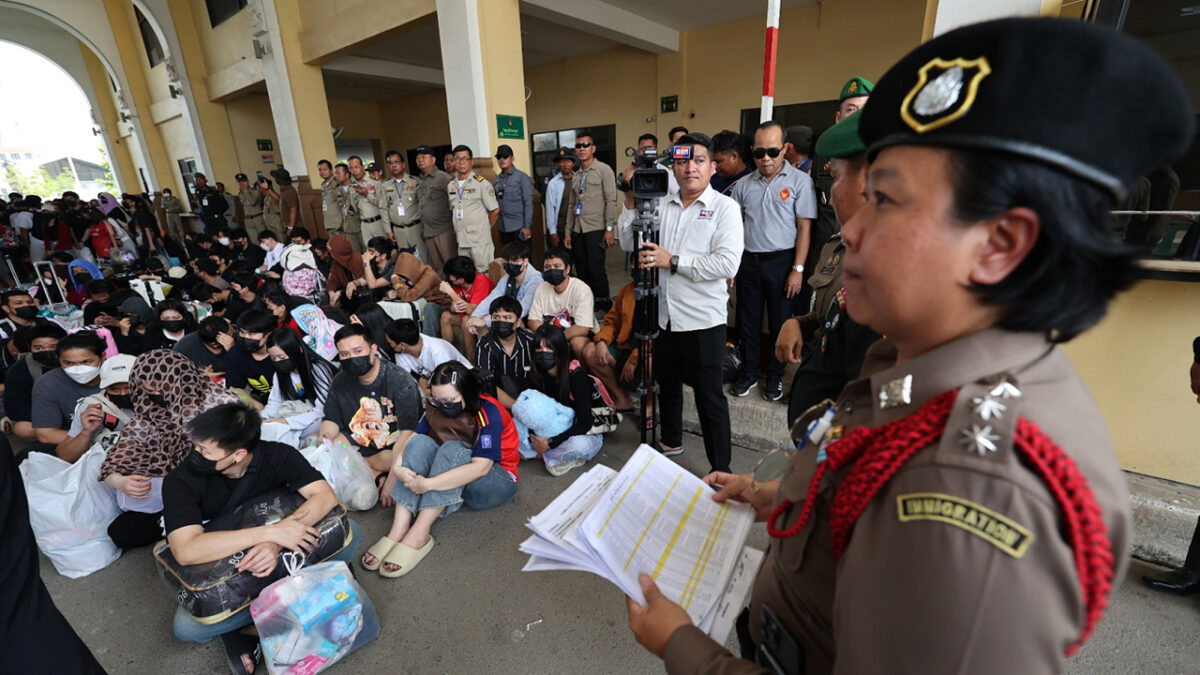 The deportation of 635 Thai scammers was conducted through the Poipet International Border Checkpoint on April 30. Supplied
In recent days, a flurry of sensationalist headlines has emerged from across the border, painting a dark picture of Cambodian law enforcement operations in Poipet. Phrases like “Thais held captive” and “illegal detention” have dominated the Thai media cycle following a major crackdown on a 13-story complex in Banteay Meanchey. However, a cold, legal objective look at the facts reveals a narrative far removed from these emotional outcries. What occurred in Poipet was not a breach of human rights; it was a necessary, industrial scale “cyber-cleanup” that serves the security of both nations.
Beyond the Headlines: The Reality of the 13-Story Hub
The target of the operation was an imposing 13-story building in Poipet’s Kbal Spean 2 village — a location that had long been flagged for suspicious activities. When Cambodian authorities moved in, they did not find “hostages”; they found a massive, sophisticated infrastructure dedicated to online scams.
Among the 635 Thai nationals identified on-site, the vast majority were not victims of a sudden kidnapping. They were individuals found within the belly of a criminal enterprise that has plagued Southeast Asia for years. To label the administrative processing of these individuals as “detention” is to fundamentally misunderstand the nature of law enforcement. When hundreds of foreign nationals are found at a crime scene, a state has a sovereign duty to secure the area, verify identities, and establish the degree of involvement for every person present.
Cleaning a Regional Mess: A Sustained Commitment
This crackdown is not an isolated event; it is a manifestation of Cambodia’s unwavering commitment to cleaning up a regional mess that has been exacerbated by external actors. For too long, regional hubs — including those within neighbouring borders — have served as distribution networks and logistical pipelines for these scam syndicates.
Cambodia is no longer willing to be the dumping ground for these illicit operations. This operation serves as a definitive warning: the era of impunity is over. Our commitment to dismantling these hubs is “on the go” and will remain a permanent fixture of our national security agenda. We are systematically purging these criminal elements, regardless of their origin, to ensure that the region is no longer a playground for digital predators.
Addressing the Root: Nationality and Involvement
It is crucial to address the uncomfortable truth that the neighbours are not merely passive distribution hubs; there is a significant level of direct involvement by their own nationals in the leadership and execution of these scam operations. The high number of foreign nationals found at the heart of these syndicates proves that this is a home-grown problem being exported into Cambodia.
By focusing solely on the “victim” narrative, foreign media overlooks the reality that many of their own citizens are active participants and architects of these digital crimes. Cambodia is taking the heat for cleaning up a mess that began with the direct involvement of these foreign nationalities, and our resolve to shut down these operations will continue until every such hub is dismantled.
Administrative Law vs. Sensationalism
The Thai media’s portrayal of these events risks damaging the very bilateral cooperation required to fight cross-border crime. From a legal standpoint, the actions taken by the Cambodian National Police are standard administrative measures. Under the Law on Immigration, when foreign nationals are found involved in illegal operations or residing without proper status, they are subject to administrative detention solely for the purpose of processing.
This is a preliminary step toward a final, dignified deportation. Rather than “captives”, these individuals are in a transition phase. Cambodian authorities are working in lockstep with Thai counterparts to coordinate their safe return. This is not the behaviour of a hostile neighbour; it is the behaviour of a responsible state conducting a transparent legal procedure.
Cambodia is Doing the Heavy Lifting
For too long, Cambodia has been unfairly characterised as a passive host for these scam syndicates. The Poipet raid is a loud, clear signal that the “cleanup” is in full swing. By dismantling these operations, Cambodia is actively protecting Thai citizens — the primary targets of these scams — from losing their life savings. If the Thai media continues to frame law enforcement as “illegal detention”, it creates a “moral hazard” where criminals can hide behind the veil of victimhood the moment the police knock on the door. Bilateral trust is built on facts, not hyperbole.
The Way Forward: Diplomacy Over Drama
Regional frameworks emphasise one thing: joint responsibility. Cybercrime knows no borders, and its perpetrators are often as mobile as the data they steal. Cambodia remains committed to being a pillar of regional security. The 635 Thai nationals currently being processed were returned home through official channels, following the completion of legal protocols.
It is time for the media across the border to trade their sensationalist lens for one of professional scrutiny. The Poipet operation was a victory for the rule of law. It is a win for every Thai and Cambodian citizen who has ever been a victim of an online scam. To see it as anything less is a disservice to the officers on the front lines and the truth itself.
Panhavuth Long is founder and attorney at law at Pan & Associates Lawfirm. The views and opinions expressed are his own.