82% of displaced Cambodians return home as ceasefire holds
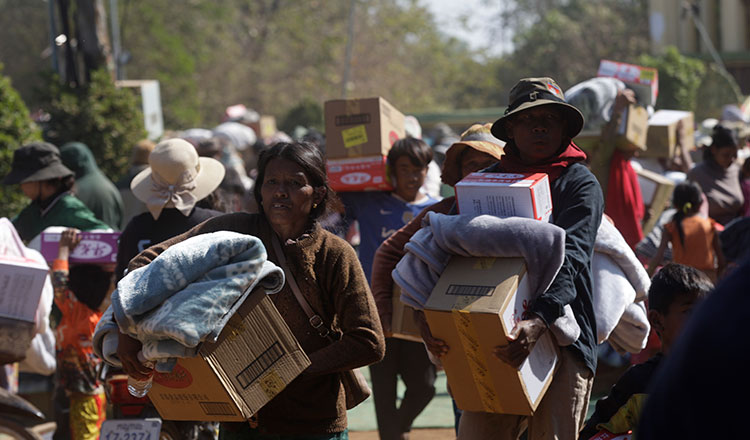 Photo: Thousands of displaced families receive Chinese aid at a ceremony at Bat Thkav Pagoda Refugee Centre in Chong Kal commune, Oddar Meanchey province’s Chong Kal district, earlier this month. KT/Chor Sokunthea
#National
Synopsis: Government says public services gradually resuming in affected areas, though some remain closed over security concerns.
More than 82% of the 640,000 Cambodians displaced by a festering border conflict with Thailand have returned home as the ceasefire between the two Southeast Asian neighbours holds amid Phnom Penh warning Bangkok its actions continue to undermine de-escalation efforts.
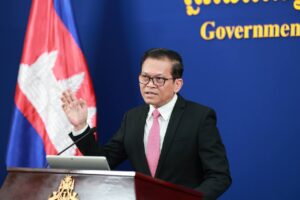
Government spokesman Pen Bona said Cambodia maintains a firm stance in safeguarding the border with Thailand as a legacy of the Indochina–Siam Boundary Commission, in full compliance with international law. This includes the principle of non-alteration of borders, the Franco–Siam treaties and conventions, the maps and boundary demarcation records of the Indochina–Siam Boundary Commission, as well as the agreements and related documents previously agreed upon by both sides.
Cambodia does not recognise alteration of the border by force, he emphasised.
A report released by Minister of Interior Sar Sokha, describing the situation from 6am on January 23 to the same time next day, the ministry said aggressive moves by Thai forces have affected seven provinces—Preah Vihear, Oddar Meanchey, Banteay Meanchey, Battambang, Pursat, Koh Kong and Siem Reap—causing widespread displacement and damage to infrastructure.
The ministry said that with 1,255 more displaced people returning home during the latest reporting period, the number of returnees reached nearly 530,000—about 82% of the 640,000 forced from their homes. However, 116,779 people—including 61,455 women and 38,230 children—remain in displacement camps.
Public services are gradually resuming in several affected provinces, though some facilities remain closed over security concerns. In Oddar Meanchey, 242 schools, 34 hospitals and health centres, along with provincial, district and commune administrations and police stations, have reopened. However, 18 schools and seven health facilities remain closed.
In Banteay Meanchey, most public institutions have resumed operations, though five schools and one health centre are still shut. In Preah Vihear, 32 schools and 12 health facilities have reopened, while 29 schools and 14 health centres remain closed.
No new damage was reported during the latest period, but the ministry reiterated the scale of destruction since December 7, 2025. Damage to private property includes 980 houses, apartments and hotels, gas stations, vehicles, warehouses, mobile phone towers, water facilities and agricultural assets.
Public infrastructure losses include schools, hospitals, government offices, pagodas, bridges, roads, markets, electricity facilities and ancient temples as local authorities continue to weigh the impact.
The Interior Ministry said provincial administrations remain focused on caring for the displaced by providing food, shelter, clean water, electricity, healthcare, sanitation and security, while also coordinating humanitarian assistance.
-Khmer Times-