
Why the Pacific Must Act Now on Solar and Battery Waste
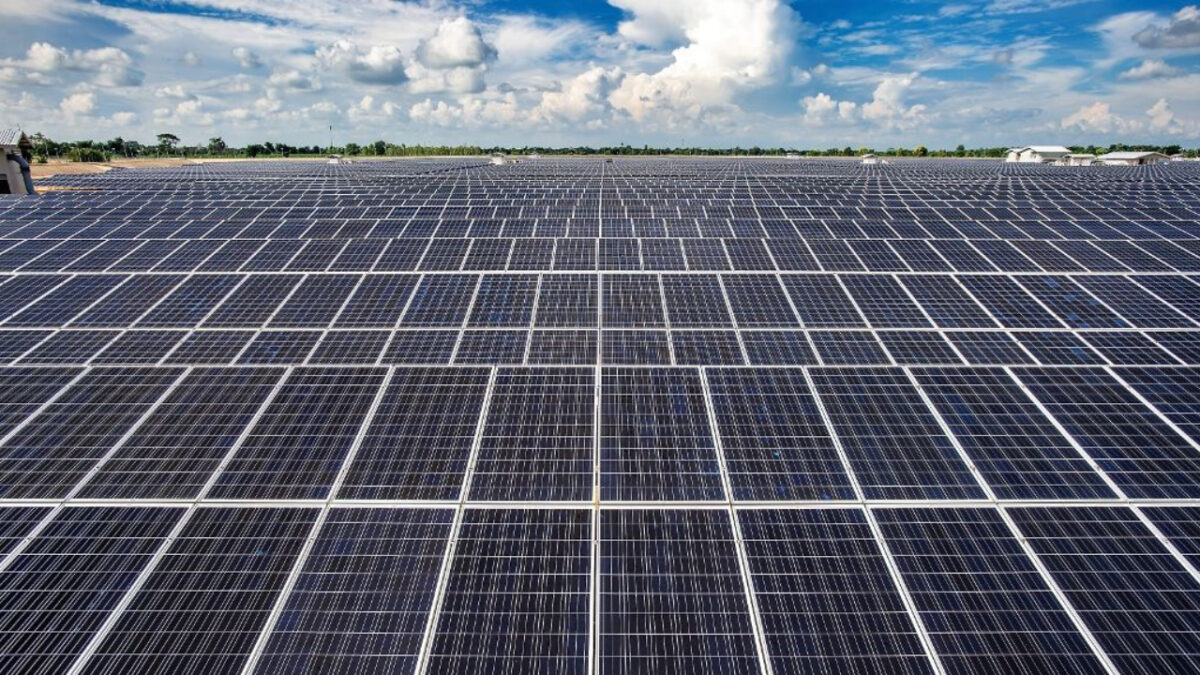 One of the many large-scale solar energy parks that are becoming a common site in Cambodia. ADB
#opinion
Across the Pacific, solar panels are a now familiar sight: powering health posts, brightening schools and strengthening energy security in outer islands. Solar deployment has surged from 30 megawatts in 2015 to over 100 MW in 2025, and is projected to exceed 220 MW by 2030, representing thousands of panels spread over the region. That is a big win for clean energy — but it is also creating a new kind of waste problem that almost no one has planned for.
Lead-acid batteries, once the main way to store power, now form a declining but significant legacy waste stream. Newer lithium-ion systems are less toxic and longer lasting, but they are also piling up when damaged, degraded or replaced.
But while generation grows rapidly, no developing Pacific economy yet has a system in place to safely manage solar panels or lead-acid and lithium-ion batteries at end of life or when they are damaged or rendered obsolete. Most are simply stored in ad hoc piles beside utility depots or government yards. As renewable systems age and are rendered inoperative, often due to harsh weather, low quality imports or cyclone damage, unmanaged stockpiles rise and risks intensify.
The risk is not abstract. Lithium batteries can go into thermal runaway — overheating and catching fire in ways that are very hard to control. Thousands of such fires are reported worldwide every year.
Damaged or deteriorating solar panels may release hazardous substances into the surrounding environment, potentially contaminating soil over time. In many islands, panels and batteries sit outdoors without fire protection, weatherproofing or ventilation. Add in harsh weather, cyclone damage, low‑quality imports and the Pacific’s isolation — no local recycling facilities, expensive and complex shipping rules for hazardous waste — and you have a slow‑burn crisis building on the edge of the ocean.
The good news is that this is still a solvable problem — if the region’s governments treat it as a shared challenge rather than 14 separate headaches. A regional circular‑economy system, coordinated through the Pacific Energy Regulators Alliance (OPERA), could give small island markets the kind of scale and structure they cannot achieve alone.
The first building block is the Pacific Renewable Energy Asset Registry (PREAR), a shared data system that tracks every solar panel and battery from import to retirement. Right now, very few Pacific countries keep a reliable database of what’s been installed, where and when it’s likely to fail. PREAR would change that. With a clear map of assets and their expected end‑of‑life, governments and utilities can plan storage sites, export schedules and safety upgrades instead of reacting after piles have already become dangerous.
The second pillar is a common extended producer responsibility programme, or EPR, where importers and manufacturers help pay for collection, storage, transport and recycling of solar panels, containers, and batteries. A harmonised EPR fee would create a pool of money for end-of-life management that countries now lack. A set share of these funds — say 20%–30% — can be reserved for “second life” and reuse so equipment isn’t scrapped prematurely. While a full system is being designed and agreed, simple import levies could start flowing money into safe storage and early export pilot projects.
That “second life” piece is crucial. Many used electric vehicle batteries still hold most of their original capacity. With proper testing and certification — which OPERA could coordinate — these can become community microgrid storage, backup for schools and clinics, or disaster-readiness kits.
Underperforming solar modules can be reused in lower-demand settings instead of going straight to a dump or ship. This keeps costs down, cuts imports and squeezes far more value out of every donated or subsidised asset.
To get to a working circular system, the Pacific needs a simple, phased roadmap. In the next two years, the focus should be on safety and data: launch a Pacific end-of-life readiness program for new installations, set battery storage and fire-safety rules, identify and upgrade safe national storage sites, and require end of life plans for all new projects.
Between two and five years, countries can adopt EPR regulation, start charging EPR fees, run consolidation sites, enforce decommissioning rules and launch second life pilots, such as microgrids powered by repurposed EV batteries.
Beyond five years, the aim is full circularity: dedicated export hubs serving the region, landfilling of panels and lithium batteries phased out, PREAR data feeding into national planning, and standards and EPR updated as technology changes.
The Pacific’s renewable-energy shift is one of the region’s quiet success stories. But without a plan for what happens when today’s solar arrays and batteries wear out, that success could leave a toxic legacy.
A regional system built around OPERA, a shared registry, common standards, and a fair EPR‑based funding model can turn a looming waste problem into a new strength.
𝐴𝑖𝑚𝑒𝑒 𝐻𝑎𝑚𝑝𝑒𝑙–𝑀𝑖𝑙𝑎𝑔𝑟𝑜𝑠𝑎 is 𝑆𝑒𝑛𝑖𝑜𝑟 𝑈𝑟𝑏𝑎𝑛 𝐷𝑒𝑣𝑒𝑙𝑜𝑝𝑚𝑒𝑛𝑡 𝑆𝑝𝑒𝑐𝑖𝑎𝑙𝑖𝑠𝑡, 𝐴𝐷𝐵, 𝑎𝑛𝑑 𝑅𝑎𝑓𝑎𝑦𝑖𝑙 𝐴𝑏𝑏𝑎𝑠𝑜𝑣, 𝑆𝑒𝑛𝑖𝑜𝑟 𝐸𝑛𝑒𝑟𝑔𝑦 𝑆𝑝𝑒𝑐𝑖𝑎𝑙𝑖𝑠𝑡, 𝐴𝐷𝐵. The views and opinions expressed are their own.
-Phnom Penh Post-