A Cambodian perspective on Vietnam’s leadership transition
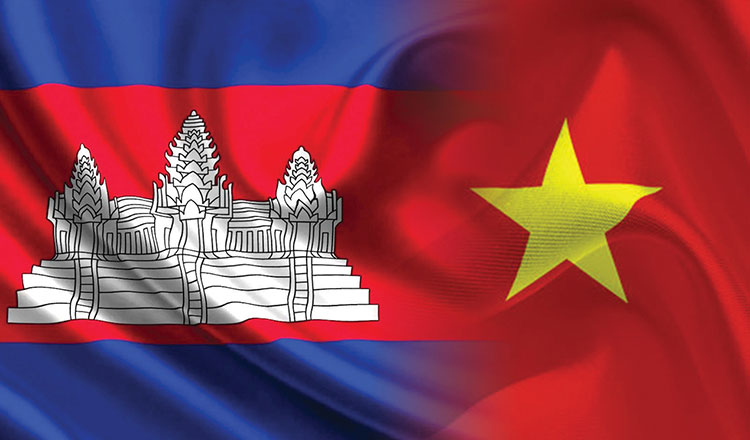 Beyond a border, Cambodia and Vietnam share an interest in protecting regional peace for their development agendas. Khmer Times
#editorial
Cambodia and Vietnam possess a profound, shared interest in safeguarding regional peace as the foundation for synchronised industrialisation. By strategically aligning their development agendas, both countries can forge a shoulder-to-shoulder economic partnership that transforms geographic proximity into a powerful engine for mutual prosperity.
In recent years, Vietnam has undergone a significant leadership transition across key party and state positions, fundamentally reshaping the country’s governance.
From a Western perspective, the concentration of key leadership roles under To Lam—most notably his election as General Secretary on August 3, 2024, followed by his presidential election on April 7, 2026—is frequently interpreted as a significant consolidation of power. This dual-role authority is seen as a move to centralise control within the Communist Party, reinforcing the influence of a singular, dominant political figure.
To some Cambodian observers, Vietnam’s current trajectory appears to emulate the Chinese model of governance.
This comparison is bolstered by the exceptionally close ties between the Chinese and Vietnamese Communist Parties—a relationship robust enough to transcend bilateral disputes.
Nonetheless, two key developments suggest an alternative hypothesis to the idea that To Lam is simply mimicking the Chinese model.
First, Vietnam is navigating essential yet high-stakes state reforms, characterised by a relentless anti-corruption campaign and a significant downsizing of institutional bureaucracies. These sweeping and often perilous reforms necessitate a “strongman” at the helm to manage potential backlash from entrenched interest groups who stand to lose previous entitlements.
Second, the recent appointment of a new Prime Minister suggests that the Vietnamese system retains a degree of flexibility rather than succumbing to a rigid, centralised structure. This transition demonstrates that there is still room for leadership turnover at the highest levels of government.
The new Prime Minister, Le Minh Hung, is not a member of President To Lam’s inner circle, nor does he hail from the security apparatus that the President controls. Instead, as a career technocrat and former Governor of the State Bank, his elevation signals that the Vietnamese political system continues to equally offer chances to competent technocrats loyal to the party beyond the party’s factional power-sharing arrangement.
The leadership transitions in Vietnam offer several strategic advantages for Cambodia.
First and foremost, President To Lam is a long-standing friend of Cambodia. His history of cultivating close personal ties with Samdech Techo Hun Sen dates back to his tenure as Minister of Public Security. Now, in his dual capacity as State President and General Secretary of the Communist Party of Vietnam (CPV), he can have direct communication access to both Samdech Techo Hun Sen—in his role as President of the Cambodian People’s Party (CPP)—and Prime Minister Samdech Thipadei Hun Manet.
The strength of this special relationship was recently demonstrated in an unprecedented high-level summit. On February 21, 2025, Mr Hun Sen and Mr Hun Manet made a historic overland journey to Ho Chi Minh City for the meeting which brought together the Political Bureau of the CPV and the Standing Committee of the CPP, co-chaired by General Secretary To Lam and CPP President (and Senate President) Hun Sen, underscoring a deep, institutionalised bond between the two nations’ leaderships.
Further cementing these ties, President To Lam conducted a state visit to Cambodia on February 6. This visit coincided with the 2026 Trilateral Party Summit in Phnom Penh, bringing together the senior leadership of the CPP, the CPV, and the Lao People’s Revolutionary Party (LPRP).
Second, President To Lam is increasingly recognised as a leader who prioritises regional peace and values dialogue over confrontation. His strategic rapprochement with China serves as a powerful testament to this philosophy.
Recognising that a conflict between Vietnam and China would be catastrophic for the region, he has sought to stabilise relations to ensure Southeast Asia does not become a theatre for a third world war or a proxy battleground for global superpowers. From the Vietnamese leadership’s perspective, the collective interest in maintaining peace far outweighs the constant tensions that neighbouring countries often endure.
Third, the appointment of the new Vietnamese Prime Minister—a staunchly economic-orientated technocrat—marks a significant point of convergence with Prime Minister Hun Manet, who brings his own academic expertise with a doctorate in economics from Bristol University. As Vietnam accelerates its ascent toward becoming the largest economy in the Mekong region as well as mainland Southeast Asia, and strives for advanced industrial status by 2045, its trajectory is perfectly positioned to complement Cambodia’s Vision 2050.
Both nations possess a profound, shared interest in safeguarding regional peace as the foundation for synchronised industrialisation. By strategically aligning their development agendas, Cambodia and Vietnam can forge a shoulder-to-shoulder economic partnership that transforms geographic proximity into a powerful engine for mutual prosperity.
As the way forward, it is only natural for Cambodia to double down on its exchanges with Vietnam. This effort should prioritise building deep connections among the new generation of leadership, spanning the ruling parties, government bureaucracies, academia, and the private sector.
While Vietnamese private investment has already found a foothold in Cambodia, the Cambodian private sector must become equally proactive in exploring and venturing businesses in Vietnam. This economic relationship should be a two-way street; as both nations grow, the integration of their business communities will serve as a vital engine for regional stability.
Ultimately, the path forward between Cambodia and Vietnam requires greater connectivity at every level and across every sector. In an era of global uncertainty, the focus must remain on deepening these ties rather than distancing them, ensuring that both peoples move towards prosperity in tandem.
-Khmer Times-