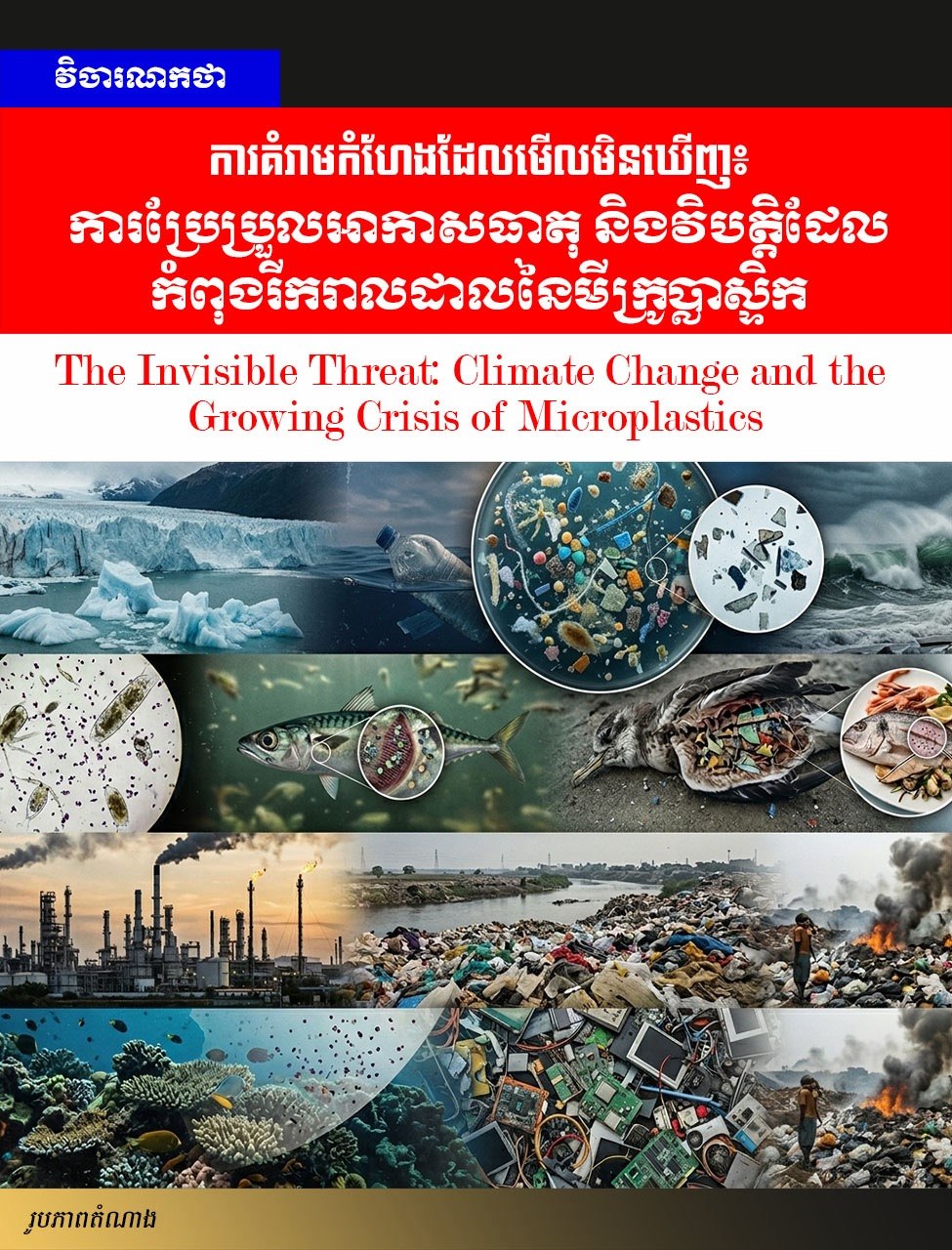
The Invisible threat: Climate change and the growing crisis of microplastics
#opinion
The global fight against climate change is often framed around carbon emissions, renewable energy, and rising temperatures. Yet another environmental crisis is quietly spreading across oceans, rivers, soil, air, and even the human body: microplastics. Though tiny in size, their impact is vast, and their relationship with climate change is deeper than many realise.
Microplastics—small plastic particles less than five millimetres in size—originate from degraded plastic waste, synthetic textiles, industrial products, and countless everyday materials. Once released into the environment, they are nearly impossible to remove completely. They travel through waterways, circulate in the atmosphere, and accumulate in ecosystems around the world.
The connection between plastics and climate change begins at production. Most plastics are derived from fossil fuels. Their extraction, refining, manufacturing, and transportation generate significant greenhouse gas emissions. As global plastic production continues to rise, so too does its contribution to climate change. If current trends continue, plastics could account for an increasingly large share of global carbon emissions in the coming decades.
But the relationship does not end there. Climate change accelerates the fragmentation of plastic waste into microplastics. Higher temperatures, stronger ultraviolet radiation, floods, storms, and ocean turbulence break down larger plastics more rapidly, increasing the spread of microscopic particles into nature.
Microplastics are now found from the deepest oceans to Arctic ice. Marine species ingest them, mistaking them for food. Fish, shellfish, seabirds, and even plankton carry these particles through the food chain. Ultimately, humans consume them through seafood, drinking water, and airborne exposure.
The consequences are not fully understood, but the warning signs are alarming. Scientists are increasingly studying links between microplastics and ecosystem disruption, reduced biodiversity, and potential human health risks. Their persistence in the environment means the problem will not disappear quickly—even if plastic production stopped tomorrow.
Climate change and microplastics also reinforce each other in indirect ways. Damaged ecosystems weakened by pollution become less resilient to climate stress. Coral reefs already suffering from warming oceans must also contend with plastic contamination. Mangroves and wetlands clogged with waste lose some of their capacity to absorb carbon and protect coastlines from storms.
Developing countries often bear the heaviest burden. Many faces rapid urbanisation and rising plastic consumption without adequate waste management systems. Rivers become conduits carrying plastic waste into oceans, while open burning of waste releases both toxic pollutants and greenhouse gases. Communities living near polluted waterways and coastlines face mounting environmental and health pressures.
Global frameworks addressing climate and pollution, including the Paris Agreement, increasingly recognise the need for integrated environmental solutions. Yet tackling microplastics requires more than recycling campaigns alone. It demands systemic change.
Governments must strengthen regulations on single-use plastics, improve waste management infrastructure, and encourage sustainable product design. Industries must reduce unnecessary plastic packaging and invest in biodegradable alternatives and circular economy systems. Consumers, meanwhile, must shift toward more responsible consumption patterns.
Equally important is international cooperation. Plastic pollution does not respect borders. A bottle discarded in one country may eventually fragment into microplastics thousands of kilometres away. The same interconnected world that enabled the plastic age must now cooperate to address its consequences.
The crisis of microplastics reveals a troubling reality about modern development: convenience often hides long-term environmental costs.
Tiny particles that cannot easily be seen are now shaping the health of ecosystems and potentially future generations.
Climate change is teaching the world that no environmental issue exists in isolation. The fight against rising temperatures must also include the fight against pollution, waste, and unsustainable consumption.
The danger of microplastics may be microscopic, but its implications for the planet are enormous.
-Khmer Times-